


Georgian Drawer End Tables
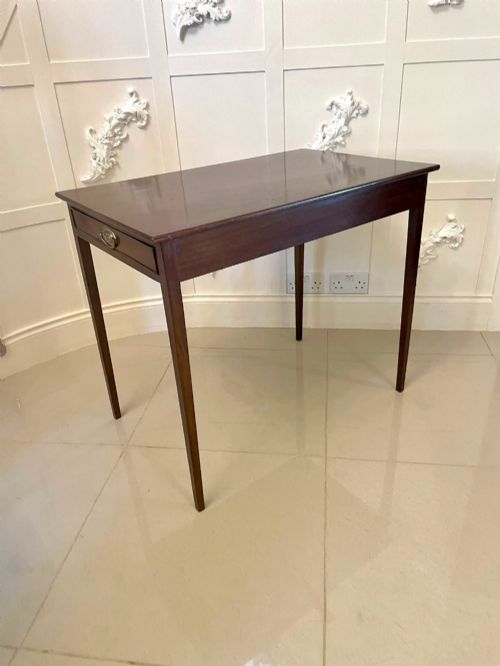
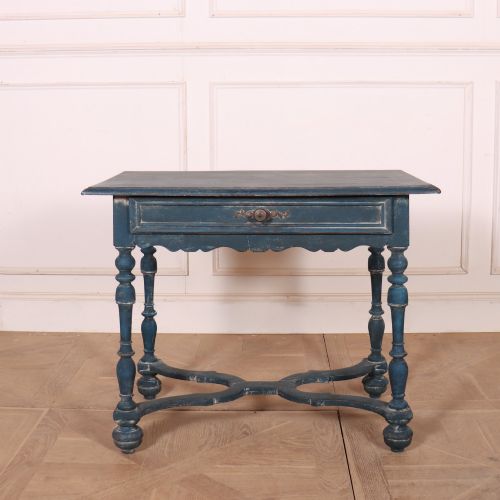
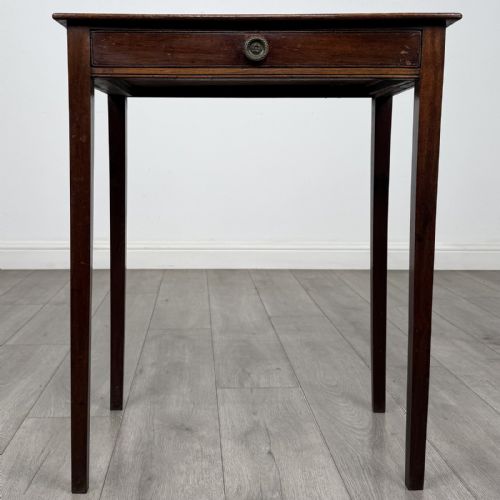
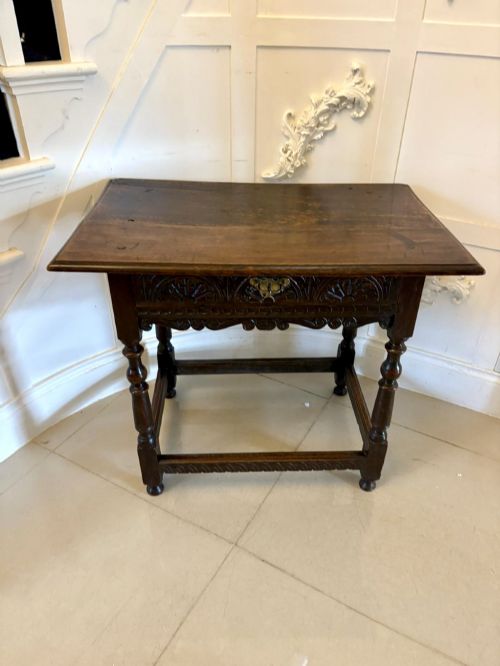
Georgian drawer end tables are compact timber tables designed for daily convenience, offering useful storage and surface space.
Georgian Drawer End Tables
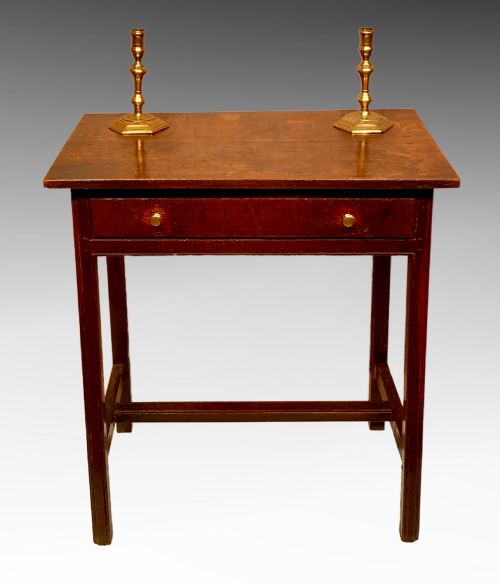
Georgian drawer end tables comprise a varied group of occasional, side, lamp, and work tables built with integrated drawers and timber frames. These pieces originate predominantly from the eighteenth and nineteenth centuries, including subsequent revivals, and function easily beside seating or beds.
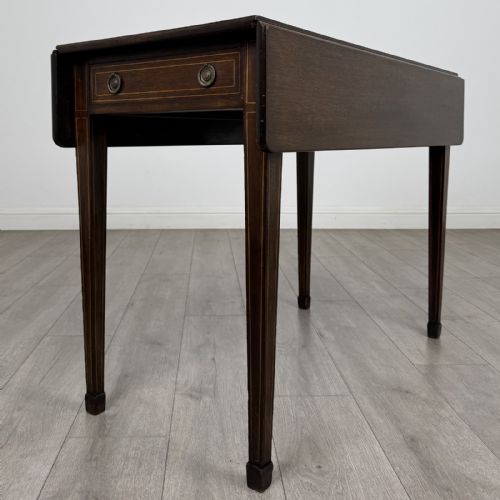
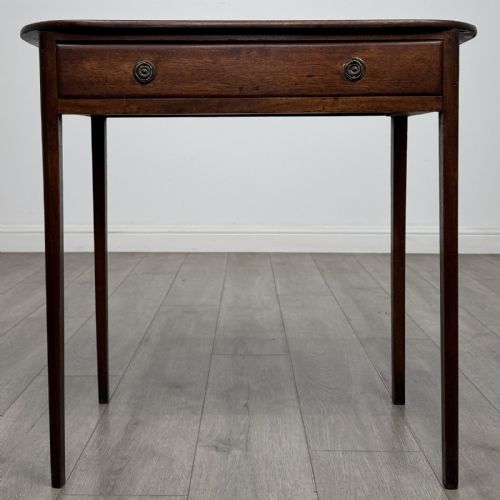
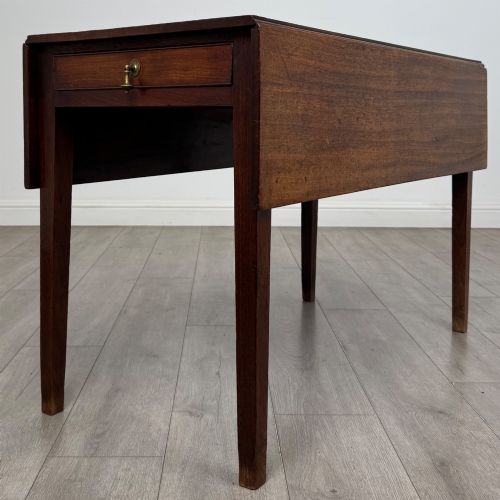
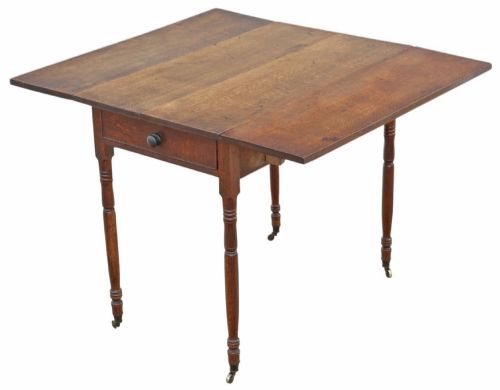
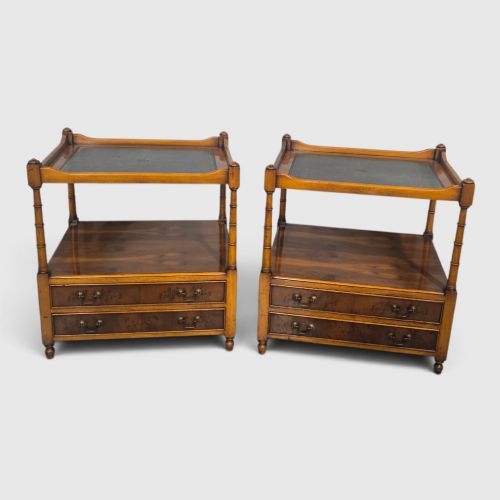
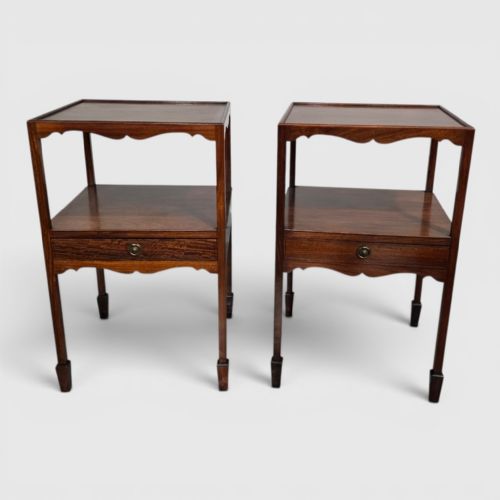
The selections on this page appear most frequently in mahogany and oak, taking forms such as Pembroke drop-leaf tables, sofa tables, and compact lamp tables. Buyers encounter single-drawer side tables alongside pairs built for bedside use.
Originating in periods spanning the Georgian era through to the Regency and William IV years, these tables exhibit practical proportions suited to modern rooms. Each piece balances a flat top surface with discreet drawer storage beneath.
How they were made
Cabinetmakers utilised solid timbers such as mahogany, oak, and walnut, frequently enhancing surfaces with satinwood, boxwood, or marquetry detailing. These woods were joined using traditional framing techniques to ensure structural stability across drop leaves and drawer units.
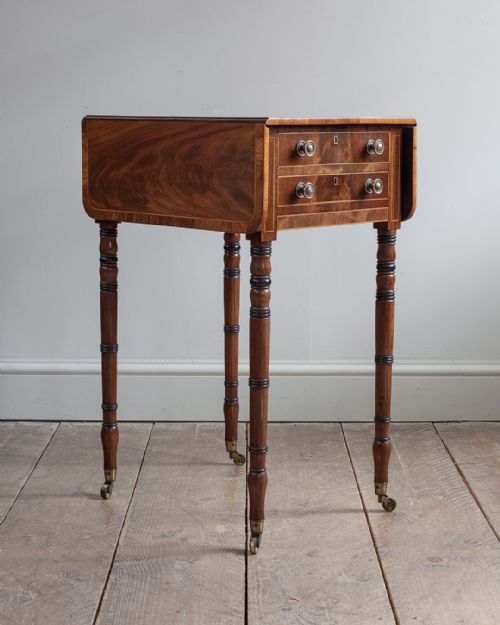
Metal hardware such as brass handles complements the wooden construction, while occasional examples incorporate leather inserts on the top surface. The physical structure relies on sturdy legs, ranging from simple uprights to lyre ends and bobbin turnings.
Makers hid miniature compartments inside work tables for sewing pins, proving eighteenth-century storage obsession matches our own.
What varies in quality
The refinement of timber selection and the precision of joinery set finer examples apart from simpler utility items. Superior pieces display carefully matched grain patterns, subtle inlay work, and robust drawer construction that operates smoothly.
Proportion and decorative restraint dictate the distinction between standard workshop output and exceptional cabinetmaking. The integration of secondary woods, brass fittings, and well-executed turning or carving marks the upper tiers of production.
The Georgian Drawer End Tables Glossary
- Pembroke table
- A small occasional table featuring two hinged drop leaves on opposing sides and typically one or more drawers. These versatile tables expanded easily for dining or writing.
- Sofa table
- A rectangular side table designed during the Regency period to stand directly in front of or beside a sofa. They usually incorporate drop leaves and double pedestals or trestle ends.
- Work table
- A compact table fitted with drawers or fabric bags designed for sewing and needlework supplies. They date commonly to the Regency and Victorian eras.
- Marquetry
- Decorative veneer work formed by fitting together small pieces of different coloured wood to create pictorial designs. This technique embellishes table tops and drawer fronts.
- Drop leaf
- A hinged flap of wood attached to the main top of a table that folds down when not in use. It allows the overall footprint of the furniture to adjust.
Georgian Drawer End Tables: Frequently Asked Questions
Where should I place a drawer end table?
These compact tables fit naturally beside a sofa, armchair, or bed where surface space and hidden storage prove useful. Their finished backs and modest proportions also allow them to stand freely against a hallway wall.
Avoid placing timber furniture directly next to active heat sources or in strong direct sunlight. Consistent indoor temperatures help preserve the polish and prevent the wood from warping over time.
What is the difference between a side table and a lamp table?
Side tables generally offer a broader surface area and deeper proportions suited for general placement around a room. Lamp tables are typically smaller square or round formats designed specifically to hold lighting.
Both forms frequently incorporate one or more drawers for small items. The terminology often overlaps depending on the historical period and the original catalogue descriptions.
How can I tell a Regency table from a Georgian one?
Georgian pieces often feature heavier proportions, straight or cabriole legs, and understated classical carved details. Mahogany and oak dominate these earlier eighteenth-century designs.
Regency furniture tends to incorporate bolder architectural elements, such as lyre ends, brass paw feet, and exotic veneers like satinwood. Lighter, more dramatic silhouettes define this later nineteenth-century aesthetic.