


Georgian Diamond Ring
These Georgian diamond ring examples unite hand-cut stones with warm yellow gold and silver settings, offering a tangible link to eighteenth and nineteenth-century craftsmanship.
Georgian Diamond Ring
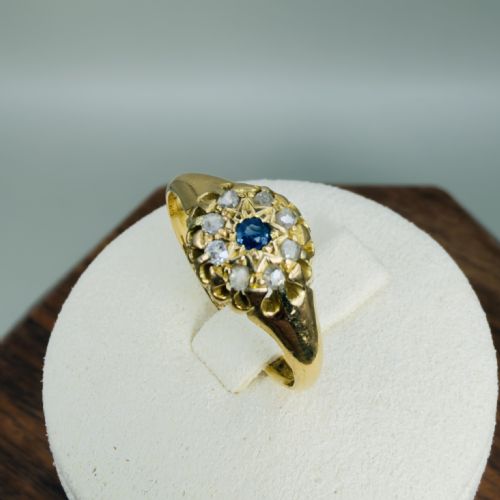
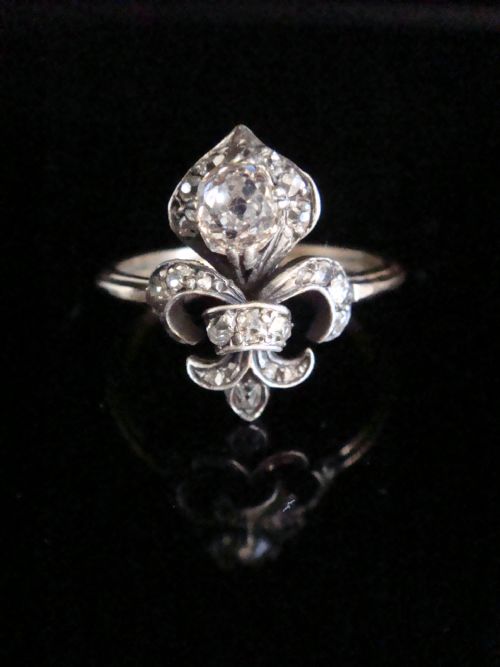
A georgian diamond ring represents an era of bespoke jewellery production where every gemstone was shaped by hand rather than standardised machinery. Buyers searching for a georgian diamond ring encounter pieces spanning the late eighteenth century into the nineteenth century, often featuring cluster designs or solitaire arrangements.
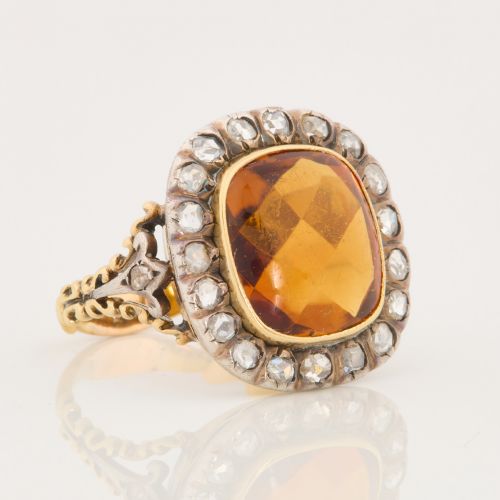
The versions most frequently met on this page combine silver-topped gold mounts with table, rose, or old-cut diamonds. Makers of the period frequently surrounded central diamonds with smaller accent stones or coloured gems such as garnets, spinels, and sapphires.
Many surviving examples incorporate sentimental elements, utilising blue or black enamel and pearl work alongside the diamonds to mark remembrance or affection. These rings reflect the distinct aesthetic priorities of the Georgian period, prioritising candlelight brilliance over sheer mathematical symmetry.
Evaluating Quality
Quality in these pieces rests upon the integrity of the original foil backing and setting work, as moisture damage behind closed-back stones alters the visual depth of the diamond. The crispness of hand-cut facets and the preservation of original enamel details separate finer survivals from heavily worn examples.
One past piece managed to squeeze a tiger's eye alongside a rose-cut diamond into a single Georgian ring.
The Georgian Diamond Ring Glossary
- Rose cut
- A diamond cut featuring a flat base and a domed crown set with triangular facets arranged in a symmetrical pattern. This style dates back centuries and produces a soft, shimmering reflection under low light.
- Old cut
- An early precursor to the modern brilliant cut, characterised by a smaller table, higher crown, and large culet facet. These stones were shaped entirely by hand.
- Closed-back setting
- A mounting style where the metal encloses the reverse side of the gemstone, often with coloured foil placed beneath the stone to enhance its colour and brilliance.
- Navette
- A boat-shaped ring design featuring an elongated silhouette pointed at both ends, popular during the late eighteenth and early nineteenth centuries.
- Collet setting
- A flat strip of metal wrapped securely around the girdle of a gemstone to hold it in place within the mounting.
Georgian Diamond Ring: Frequently Asked Questions
How do I care for a Georgian diamond ring?
These antique rings require gentle handling because their closed-back settings and historical foils are sensitive to water and harsh cleaning agents. Avoid submerging them in liquid, and remove them before washing hands or engaging in strenuous physical activity.
Store each piece individually in a lined box to protect the soft gold and delicate enamel work from friction. Periodic inspection by a specialist familiar with historical mounts ensures the integrity of the prongs and bezels.
Are these rings suitable for daily wear?
Due to their age and delicate construction methods, daily wear demands extra caution compared to modern jewellery. The low-profile rose-cut stones and thinner eighteenth-century bands are vulnerable to sharp impacts.
Many collectors reserve them for special occasions or wear them with mindful awareness to preserve the fragile metalwork and original gemstone settings.
What metals were used in Georgian rings?
Goldsmiths of this era predominantly employed 18ct yellow gold for the structural shanks of the rings. Silver was frequently soldered to the top surface of the gold mount to frame the diamonds.
This combination allowed jewellers to utilise the durability of gold while benefiting from the bright white appearance of silver to complement the stones.
How can I tell a Georgian ring from a Victorian one?
Georgian pieces often display hand-cut rose or old-cut diamonds set in closed-back silver-on-gold mounts with distinctive foil enhancements. The designs frequently lean towards closed cluster layouts, navette silhouettes, and heavy integration of mourning enamel.
Victorian jewellery shifted towards open-back settings, machine-assisted precision, and the introduction of different alloy standards like 9ct and 15ct gold alongside varied gemstone combinations.