

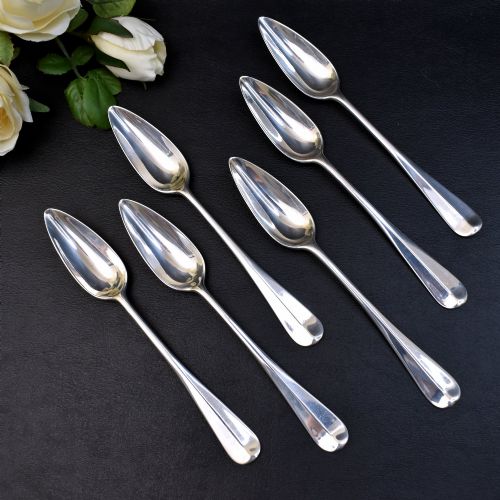


Georgian Dessert Cutlery
Georgian dessert cutlery brings polished silver and intricate pattern work to the table, offering a tangible link to the formal dining habits of past centuries.
Georgian Dessert Cutlery
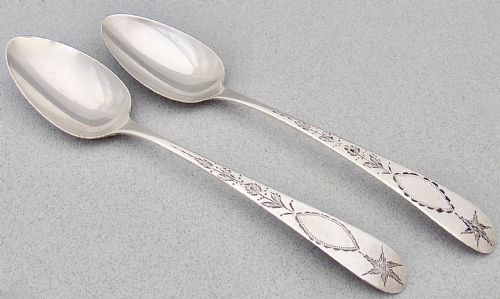
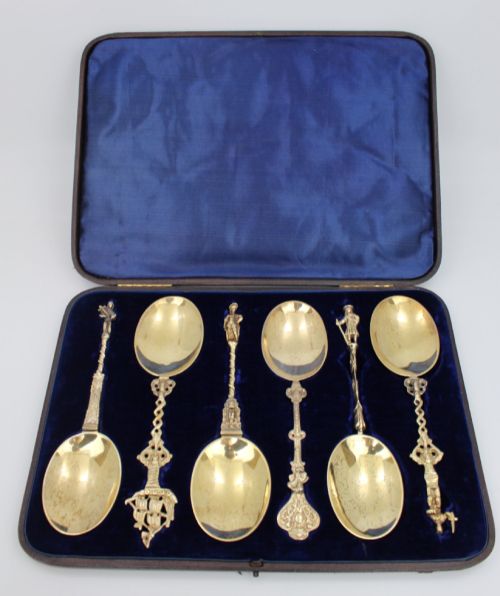
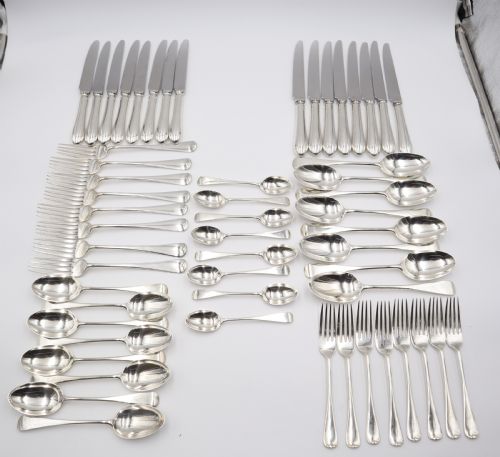
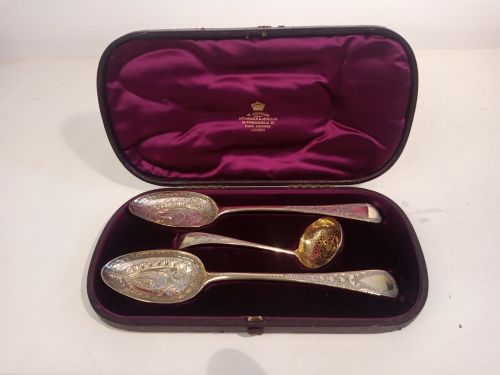
Georgian dessert cutlery encompasses specialised forks, spoons and knives designed specifically for the final course of a formal meal. These pieces range from delicate three-pronged forks to silver-gilt apostle spoons and berry spoons housed in fitted cases.
Buyers will most frequently encounter individual spoons or small matched sets bearing hallmarks from the early nineteenth century. These utensils often feature regional British assay marks, including those from Dublin, Edinburgh, London and Birmingham.
The objects span from the eighteenth century into the Victorian era and later, retaining the distinct styling of periods such as George II and the Regency. Many survive alongside textile linings in original velvet or silk fitted boxes.
Materials and construction
Silversmiths utilised sterling silver and silver-gilt as the primary materials for these dining utensils, often pairing them with steel components for cutting edges. The metal was shaped through hammering and casting before receiving detailed hand-engraved crests or patterned handles like Coburg and fiddle patterns.
Fabric elements such as velvet and silk line the fitted cases designed to protect the metalwork. Hallmarks stamped directly into the silver record the assay office, year and maker.
Specialised forms like grapefruit spoons and three-pronged dessert forks demonstrate the evolving requirements of table service across different generations.
Georgian Dessert Cutlery Retail Price Guide 2026
Typical asking prices for georgian dessert cutlery among the pieces listed under this phrase on Sellingantiques today, from the lower quarter to the upper quarter. They describe what is for sale here now, not the wider market.
Some nineteenth-century diners required three distinct prongs on their silver forks to successfully spear stubborn dessert fruits.
Assessing quality and craftsmanship
The distinction between standard examples and superior pieces rests on the crispness of the hand-engraved crests and the depth of the silver-gilt work. Pieces that retain their original fitted cases lined with silk and velvet command greater attention from collectors.
Completeness within a set influences how the cutlery presents on the table, particularly when dealing with matched groupings or cased sets of six. Maker attribution also plays a role, with identifiable workshops adding historical context to the physical object.
Deakin & Francis·John Pittar·Hamilton & Inches·E Coker·William Chawner II
The Georgian Dessert Cutlery Glossary
- Silver-gilt
- Sterling silver that has been coated with a thin layer of gold. This technique adds a warm, rich tone to the surface of spoons and forks.
- Hallmark
- An official stamp applied to precious metals indicating the standard of purity, the assay office, and the year of manufacture. These marks provide the primary evidence for dating antique cutlery.
- Berry spoon
- A large serving spoon, often originally Georgian, embossed and engraved at a later date with fruit and foliage designs. They were typically utilised for serving soft fruits.
- Fiddle pattern
- A traditional nineteenth-century flatware design characterised by a narrow stem that swells at the base into a shape resembling a fiddle. It remains one of the most recognisable styles in British silver.
- Canteen
- A fitted box, chest or case designed to hold a complete set of cutlery. These containers often feature internal slots lined with fabric to secure each individual piece.
Georgian Dessert Cutlery: Frequently Asked Questions
How do I use antique dessert cutlery today?
These silver pieces can still be utilised for serving fruit, puddings and desserts during formal or special meals. Their solid construction makes them fully functional for modern dining.
Hand washing with mild soap and drying immediately with a soft cloth will protect the silver and any underlying gilt surfaces from unnecessary wear.
Were these utensils made for specific foods?
Certain items within these collections served precise purposes, such as three-pronged forks designed for eating fruit or specialised spoons meant for berries and grapefruit.
Matching knives and forks often accompanied these services to handle the specific textures of nineteenth-century dessert courses.
How can I tell the date of silver cutlery?
Assay office marks and date letters stamped directly onto the metal provide the exact year of manufacture for British silver pieces. Comparing the handle style, such as fiddle or Coburg patterns, offers an immediate visual clue to the period.
Makers' marks also help narrow down the active years of the silversmith workshop responsible for the piece.
How should I store cased silver sets?
Original cases lined with velvet and silk help protect the silver from airborne pollutants that cause tarnishing. Keeping the box in a stable environment away from direct sunlight and damp conditions preserves both the interior fabric and the metal.
Regular, gentle handling prevents the hinges and clasps of antique presentation boxes from seizing up over time.