
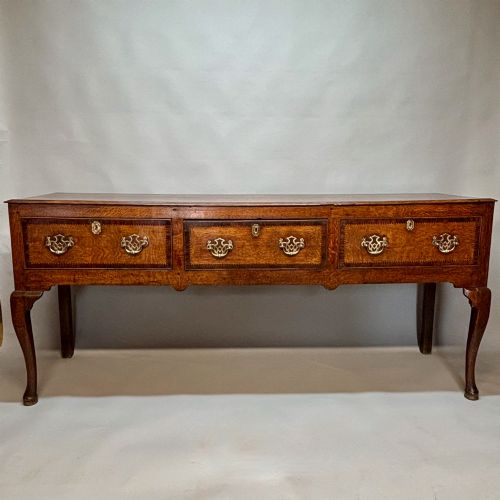
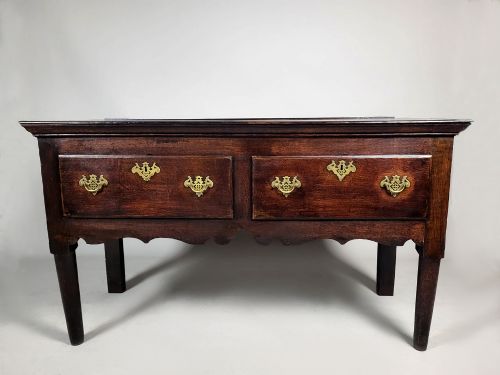
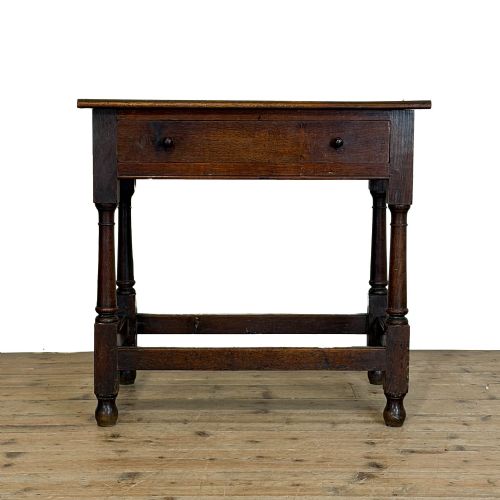
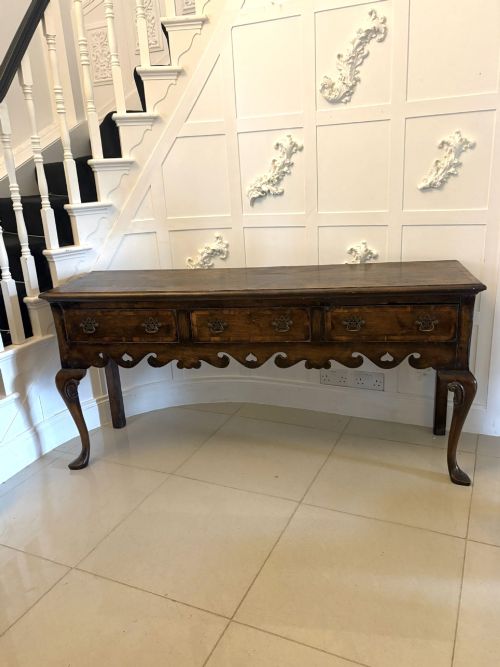
Georgian Country Server
A georgian country server offers robust regional utility, bringing solid timber construction and practical proportions to domestic spaces.
Georgian Country Server
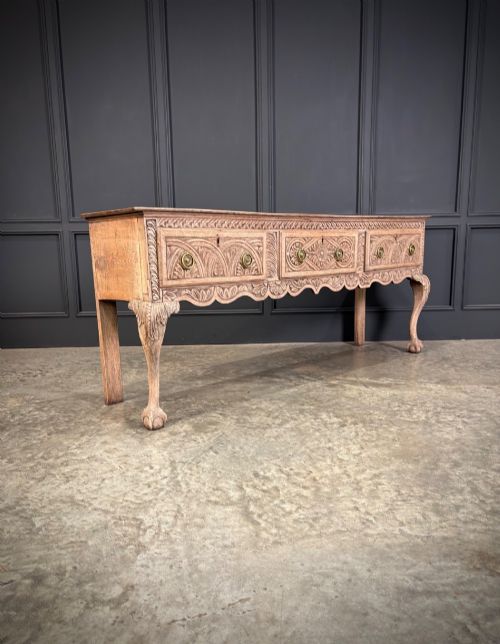
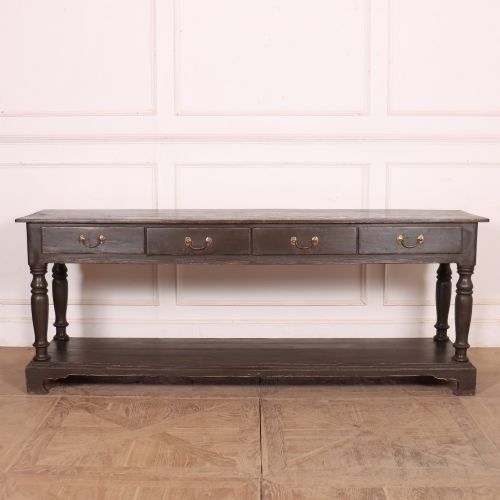
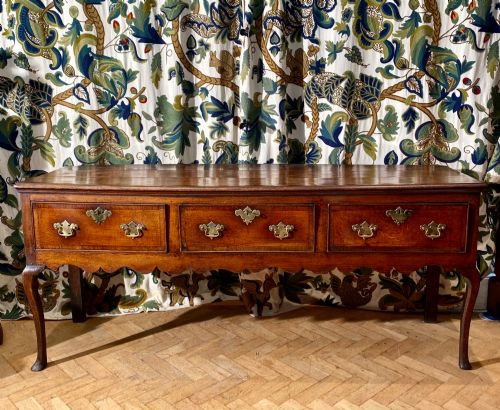
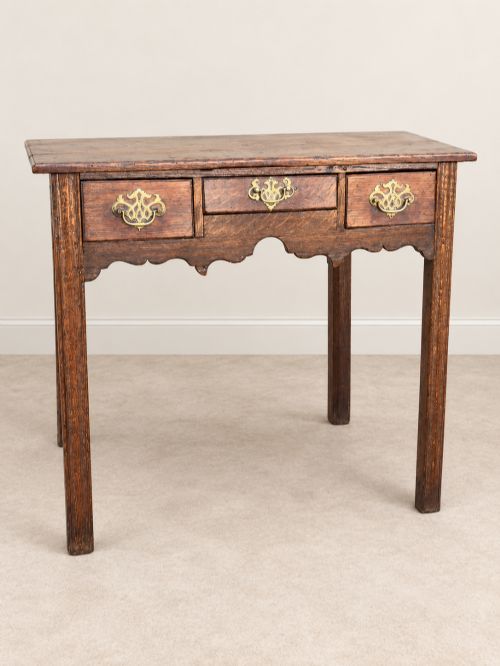
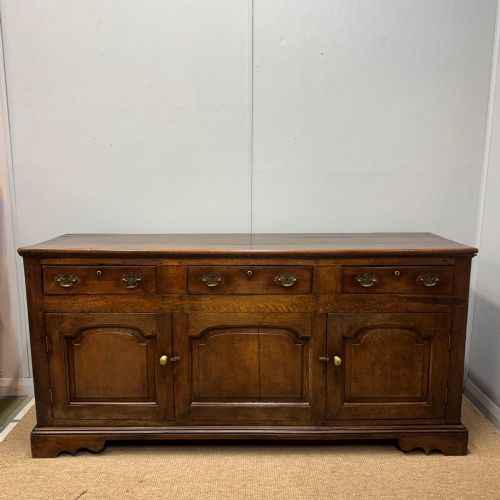
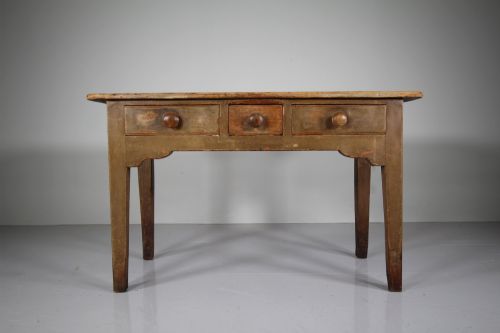
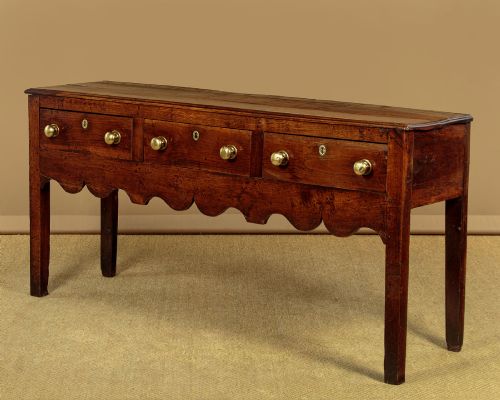
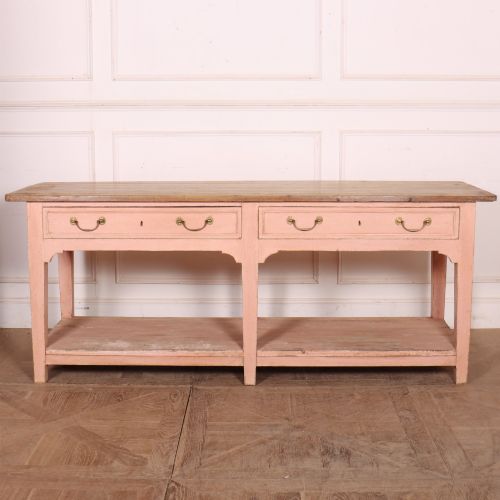
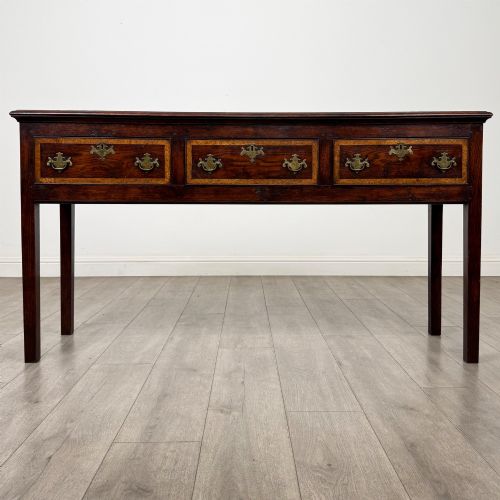
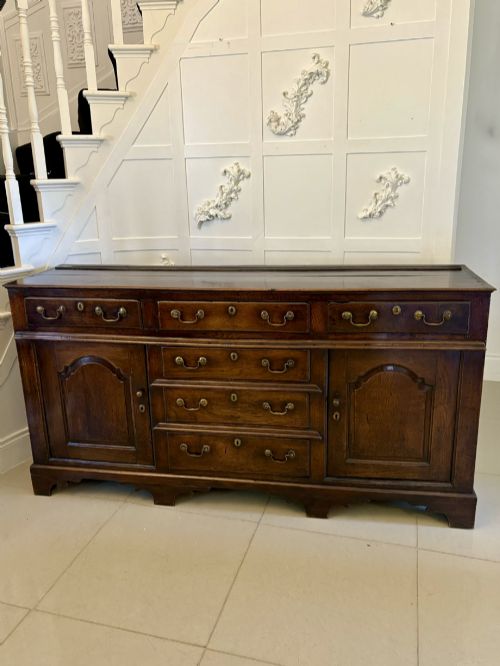
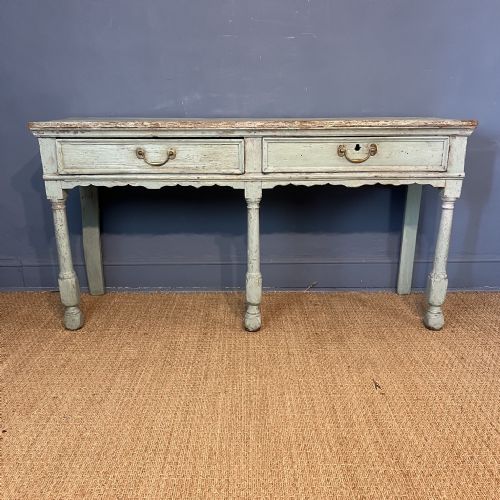
A georgian country server typically takes the form of a dresser base, sideboard, lowboy, or serving table produced during the eighteenth and nineteenth centuries. These pieces were built for rural domestic use, serving practical storage and preparation functions in kitchens, halls, and dining rooms.
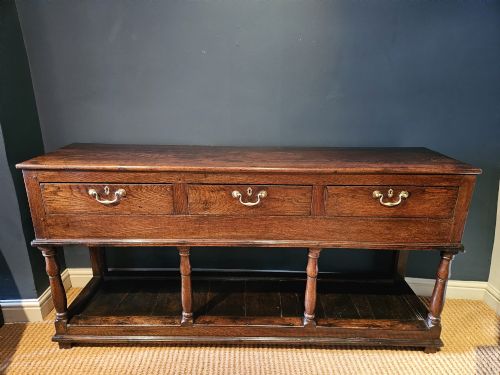
The versions most commonly met on this page include oak and pine dresser bases featuring potboard lower shelves, side tables, and lowboys. Regional variations appear from locations such as Wales, Lancashire, and Scotland, displaying distinct local construction habits and timber choices.
Makers working outside metropolitan centres relied on sturdy forms that prioritised long-term durability over elaborate ornamentation. The results are low-profile or long serving surfaces accompanied by drawers and cupboards suited to heavy daily use.
Materials and construction methods
Makers constructed these servers primarily from domestic hardwoods and softwoods, predominantly utilising solid oak, pine, elm, fruitwood, and sycamore. Timber selection depended on local availability, resulting in robust carcass frames designed to bear heavy weights.
Joinery techniques relied on pegged mortise and tenon frames, hand-cut dovetails for drawer construction, and boarded tops fixed with wooden buttons or dowels. Surfaces often received simple wax finishes, historical paint layers, or scrubbed treatments suited to utilitarian environments.
Separating the ordinary from the exceptional
The calibre of a georgian country server rests upon the integrity of its timber selection, the preservation of original surfaces, and structural untouchedness. Pieces retaining their original brass handles, unaltered potboard bases, and unblemished board tops command higher regard.
Proportion and regional character also dictate distinction, as well-balanced lowboys and crisp provincial carving elevate specific examples above standard utility furniture. Untouched patination accumulated over centuries provides the definitive visual depth collectors seek.
The Georgian Country Server Glossary
- Dresser base
- A low cabinet featuring drawers and sometimes cupboards, built without the upper shelving superstructure of a traditional dresser. It functions as a sideboard or serving table.
- Potboard
- A lower open shelf positioned near floor level between the legs of a dresser base or server. Historically, it stored heavy pots and kitchen utensils.
- Lowboy
- A small side table equipped with one or more tiers of drawers, standing on relatively tall legs. These pieces typically served domestic dressing or serving functions.
- Patina
- The surface sheen and colour depth developed by timber through age, handling, and wax polishing over generations. It indicates genuine historical use.
- Vernacular
- Furniture designed and built by local tradespeople for everyday regional needs rather than following strict London stylistic decrees. It reflects local materials and traditions.
Georgian Country Server: Frequently Asked Questions
What is a georgian country server?
A georgian country server is a heavy-duty provincial table or cabinet used for food preparation and storage. These pieces include lowboys, dresser bases, and serving tables made in rural workshops.
They provide long surfaces and drawer storage designed for practical domestic tasks rather than formal entertaining. Their construction relies on regional timbers and traditional joinery.
Where were these servers used?
These servers were used primarily in farmhouse kitchens, sculleries, and dining halls across Britain. They acted as central work stations for preparing meals and storing household utensils.
Over time, many migrated to hallways and living rooms as general utility furniture. Their sturdy proportions made them adaptable to various domestic spaces.
How do I care for antique oak?
Care for antique oak by maintaining a stable indoor environment away from direct heat sources and strong sunlight. Sudden temperature shifts can cause timber to split.
Apply traditional beeswax occasionally to nourish the wood and maintain its surface sheen. Avoid modern silicone-based polishes that damage historic finishes.
How can I tell the period?
Determine the period by examining construction methods, tool marks, timber shrinkage, and hardware fixings. Hand-cut dovetails and pegged joints point toward eighteenth-century manufacture.
Stylistic cues such as cabriole legs or Georgian proportions help narrow the date range. Comparing the wood patination with known examples confirms authenticity.