




Georgian Corner Wardrobe
A georgian corner wardrobe solves difficult room layouts with clever proportions, offering period character and fitted storage inside timber panelled doors.
Georgian Corner Wardrobe
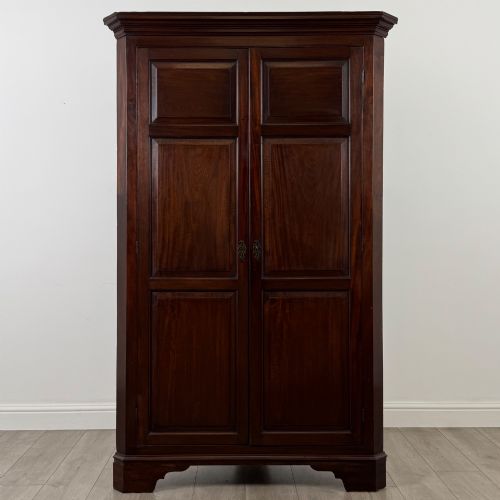
When you search for a georgian corner wardrobe, you encounter functional timber storage designed to fit neatly into the ninety-degree junction of two walls. The examples seen here span the Georgian and Regency periods, alongside later nineteenth-century interpretations built to similar architectural principles.
Most pieces on this page take the form of corner cabinets and corner cupboards rather than full-height freestanding wardrobes, utilising wall space efficiently while presenting panelled doors or glazed fronts to the room. The forms range from small hanging cupboards intended to mount on walls to larger two-door designs standing independently.
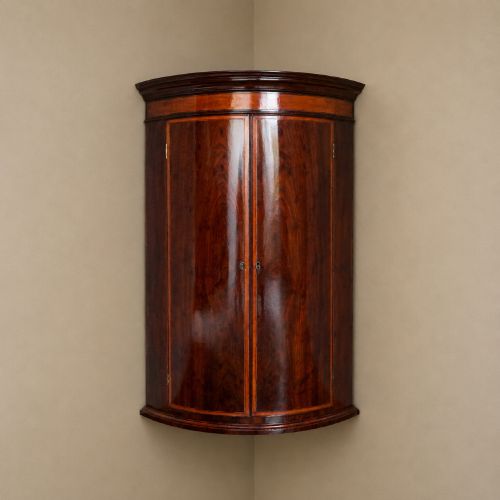
Makers from the eighteenth and nineteenth centuries constructed these units primarily in mahogany and oak, occasionally applying decorative techniques like chinoiserie lacquer or boxwood inlay to elevate their visual presence. These pieces reflect domestic needs of the period, turning neglected room angles into functional display and storage spaces.
How they were made
Cabinetmakers built these corner units using solid oak and rich mahogany timbers, selecting figured grains such as flame mahogany and plum pudding veneer for prominent door panels. Carpenters joined the primary carcase members securely to withstand the structural demands of wall mounting or corner placement.
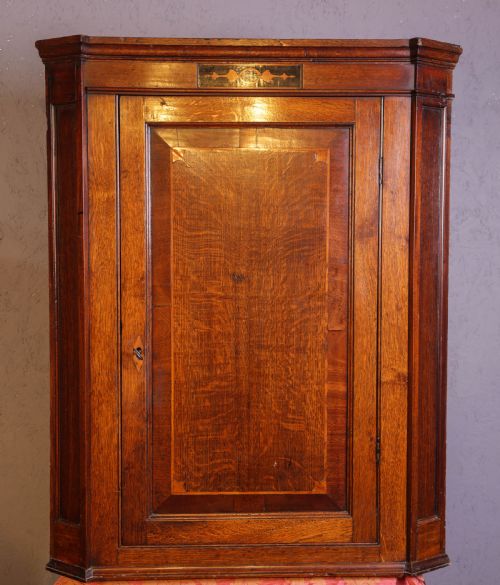
Surface decoration involved careful wood inlay using contrasting timbers like boxwood, alongside polished brass hardware and occasional gold leaf detailing on specialised lacquer finishes. Early pieces feature heavy panelled construction with pegged joints, demonstrating traditional joinery methods suited to domestic furniture of the era.
Georgian Corner Wardrobe Retail Price Guide 2026
Typical asking prices for georgian corner wardrobe among the pieces listed under this phrase on Sellingantiques today, from the lower quarter to the upper quarter. They describe what is for sale here now, not the wider market.
Listings feature mahogany and oak as the primary woods, accompanied by decorative accents in brass, boxwood, and gold leaf lacquer across eighteenth and nineteenth-century periods.
What varies in quality
The distinction between standard examples and superior pieces rests largely on the selection of timber figures and the finesse of surface ornamentation. Cabinets displaying choice cuts of flame mahogany or plum pudding timber demonstrate higher ambition from the original workshop.
Attention to detail in the door panels, such as fielded construction and precise boxwood inlay, separates basic utility furniture from pieces commissioned for principal rooms. The integration of period brasses and well-executed chinoiserie lacquer further elevates the standing of an individual cupboard.
The Georgian Corner Wardrobe Glossary
- Flame mahogany
- A decorative wood veneer showing a flickering flame-like grain pattern. Cabinetmakers selected this cut for primary visual surfaces on high-status eighteenth-century furniture.
- Chinoiserie
- European imitation of traditional Chinese artistic styles, typically featuring painted lacquer scenes. Artisans applied this decorative finish to specialised cabinets.
- Boxwood inlay
- Contrasting light-coloured wood inserted into recesses on a darker timber surface. This technique created geometric borders and decorative motifs on furniture.
- Fielded panel
- A wooden panel with bevelled edges thinning towards the margins to fit a frame groove. This construction method allows timber to expand and contract safely.
Georgian Corner Wardrobe: Frequently Asked Questions
How do I hang a wall corner cabinet?
Hanging corner cupboards require secure fixing to solid masonry or internal wall studs using robust bracket supports, given the substantial weight of solid mahogany and oak timber.
Professional installation ensures the cabinet level remains true and prevents structural strain on the original period joints.
What is the difference between a corner cabinet and a cupboard?
The terminology often overlaps in antique listings, though cabinets frequently denote pieces intended for display with glazed doors, while cupboards typically feature solid wooden panels.
Both forms share the triangular footprint designed to tuck directly into room corners.
How do I date a Georgian corner piece?
Dating relies on examining construction methods, timber choices, and hardware styles, with earlier eighteenth-century examples showing pegged oak frames and simple brasses.
Later Regency and nineteenth-century pieces often incorporate refined veneers like flame mahogany and more intricate boxwood stringing.
Can these fit modern bedroom layouts?
These compact corner units utilise awkward room angles effectively, providing useful surface storage without dominating floor space in smaller contemporary bedrooms.
Hanging variants free up the floor entirely while adding period architectural interest to plain walls.