

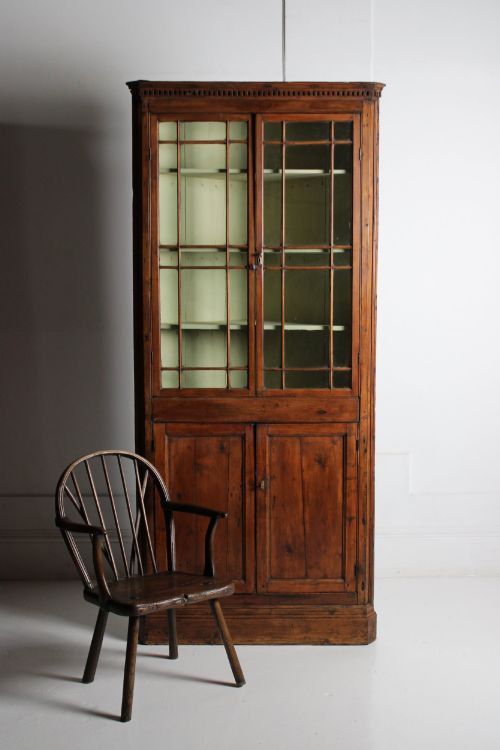
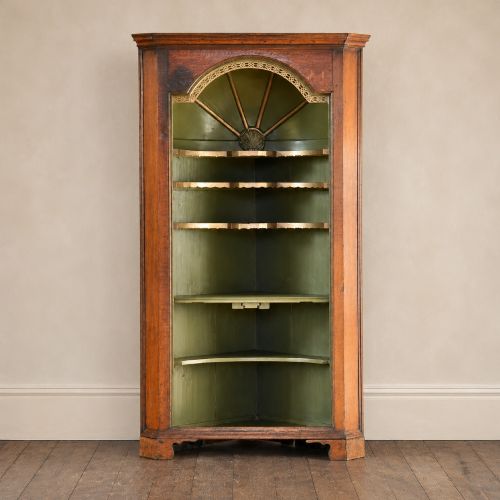
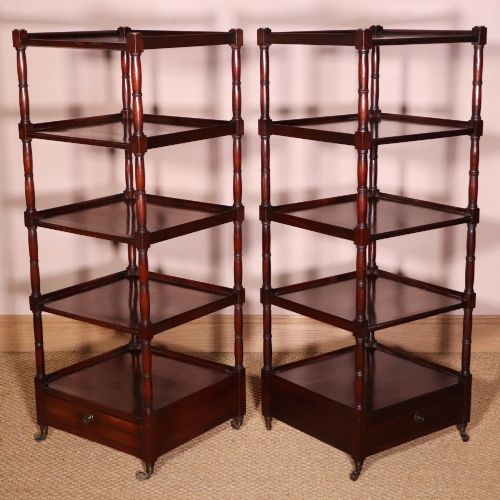
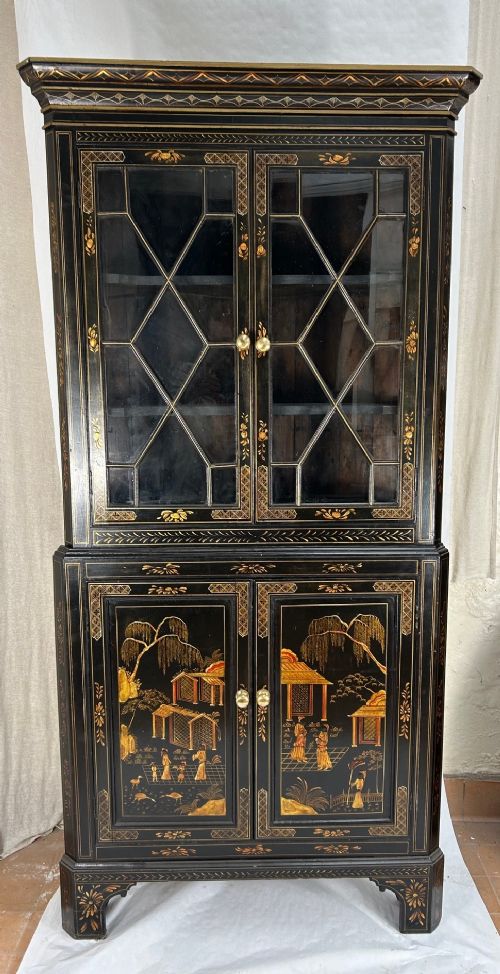


Georgian Corner Bookcase
A georgian corner bookcase solves the awkward problem of empty wall junctions by turning dead space into display.
Georgian Corner Bookcase
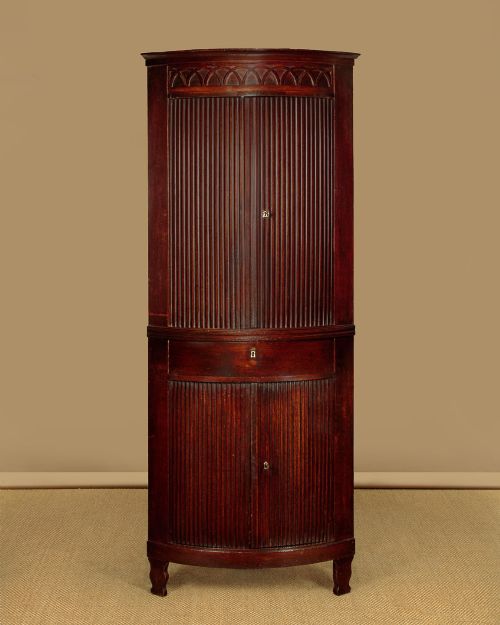
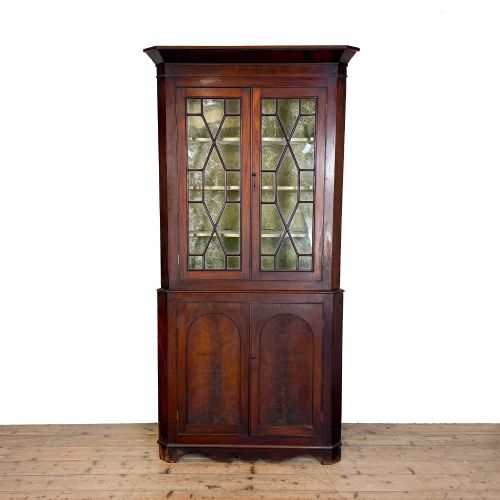
When you search for a georgian corner bookcase, you encounter a specialised form of furniture designed to fit snugly into the ninety-degree angle of a room. These pieces range from single-door wall-hung cupboards to towering double-height architectural units that anchor an entire library or parlour.
The versions most commonly met on this page date from the eighteenth and nineteenth centuries, spanning Georgian, Regency, and Edwardian revivals. They appear in configurations of solid mahogany, painted pine, and figured walnut, often featuring glazed upper doors or open shelves.
Makers constructed these cabinets to maximise domestic storage without crowding the floor plan. Many incorporate display sections above enclosed lower cupboards, balancing utility with decorative presence.
How they were made
Cabinetmakers relied heavily on dense timbers like mahogany and walnut for primary structures, frequently employing pine as a secondary wood for internal carcases and shelving. Planks were joined with traditional dovetails and secured with brass hardware.
Surface decoration involved finely figured veneers, satinwood inlay, and hand-applied lacquer or paint. Glazed doors utilised wooden astragals to hold individual panes of glass in geometric patterns.
Georgian Corner Bookcase Retail Price Guide 2026
Typical asking prices for georgian corner bookcase among the pieces listed under this phrase on Sellingantiques today, from the lower quarter to the upper quarter. They describe what is for sale here now, not the wider market.
What varies in quality
The standard of a georgian corner bookcase depends heavily on the choice of timber and the precision of its joinery. Superior examples display carefully matched grain patterns across the doors and crisp, hand-carved mouldings rather than cast plaster ornamentation.
Original glass panes, intact brass hinges, and well-executed internal shelving systems separate standard utility pieces from finer cabinet work. The integration of proportion and depth determines how gracefully the unit meets the walls.
The Georgian Corner Bookcase Glossary
- Astragal
- A small convex moulding used to divide panes of glass in a cabinet door. These wooden bars form the structural grid of glazed display sections.
- Bow front
- A convex curved cabinet front that projects outward from the corner. This curved profile requires skilled joinery to shape the doors and frame.
- Double height
- A tall cabinet built in two distinct stacked sections, usually comprising a lower cupboard and an upper display case. These imposing pieces reach toward the ceiling to maximise storage.
- Etagere
- A set of open tiered shelves used for displaying small objects or books. They offer lighter visual weight than enclosed corner cupboards.
- Whatnot
- A piece of freestanding furniture featuring multiple open tiers supported by slender upright posts. They gained popularity during the nineteenth century for holding books and ornaments.
Georgian Corner Bookcase: Frequently Asked Questions
Are corner bookcases difficult to place in modern rooms?
These cabinets utilise overlooked wall angles, making them surprisingly adaptable to modern room layouts where floor space is limited.
Because they recede into the corner, they provide substantial storage or display capacity without protruding aggressively into the main living area.
How do I distinguish between an original piece and a later revival?
Examination of the secondary woods, such as pine or oak used inside the carcase, helps reveal the actual age of the construction.
Tool marks, hand-cut dovetails, and the composition of the glass provide reliable physical evidence of the period.
What is the difference between a corner cabinet and an etagere?
Corner cabinets typically feature solid panelled or glazed doors designed to keep dust away from contents like books and porcelain.
Etageres and whatnots consist entirely of open shelves intended for immediate display and easy access.
Did these cabinets always have glass doors?
Many eighteenth-century iterations featured solid timber doors to conceal storage, whilst others incorporated glazed upper sections to showcase prized volumes.
Both forms were produced concurrently depending on whether the owner intended to display or store their collection.