



Georgian Copper Tub
A georgian copper tub brings warmth and heavy, hand-beaten utility to a room, valued for its rich metal tone and centuries of honest wear.
Georgian Copper Tub
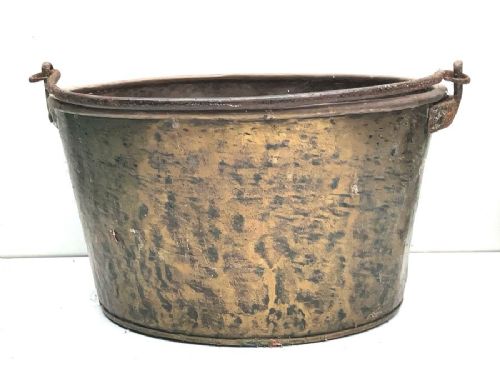
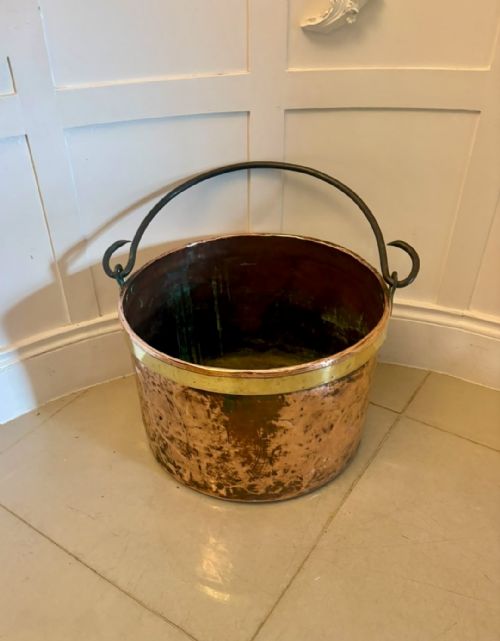
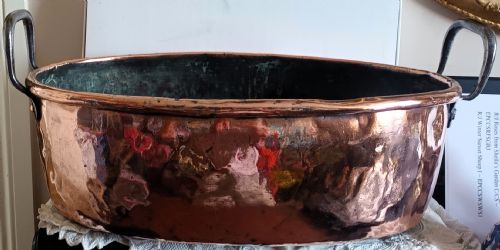
A georgian copper tub encompasses robust domestic and fireside vessels, spanning log bins, coal buckets, cream setting pans and large kitchen cookware. These items originate primarily from the eighteenth and early nineteenth centuries, carrying the solid proportions typical of the period.
The versions most commonly met on this page are log bins, fireside buckets, and dairy pans shaped from thick metal. They transition easily from utilitarian kitchen use to decorative planters and wine coolers in modern settings.
How they were made
Makers shaped these vessels from heavy sheets of copper, joining the seams with hand-hammered rivets to withstand daily kitchen and hearth labour. Wrought iron handles, brass mounts, and reinforced rims provided the necessary structural strength for heavy loads of water, cream, coal, or logs.
The metal was hammered and worked by hand over an anvil, leaving visible surface irregularities and tool marks that record the manual labour of the workshop. Rivets were set hot to pull the heavy plates tightly together as the metal cooled.
Georgian Copper Tub Retail Price Guide 2026
Typical asking prices for georgian copper tub among the pieces listed under this phrase on Sellingantiques today, from the lower quarter to the upper quarter. They describe what is for sale here now, not the wider market.
Object types recorded across the inventory include log bins, cream setting pans, fireside buckets, and Dutch brass wine coolers.
What varies in quality
Quality rests in the thickness of the metal plate and the integrity of the original joints, where heavier gauge copper resists denting and holds a truer circular form. Superior examples retain their original riveted construction and heavy iron or brass fittings without modern structural reinforcement.
The character of the surface age separates ordinary domestic vessels from finer display pieces, with deep, undisturbed patination and honest wear outweighing aggressive modern polishing. Proportion and the crispness of hand-beaten seams also mark the better workshops.
The Georgian Copper Tub Glossary
- Copper
- A malleable reddish-metal traditionally beaten into hollowware and vessels for its excellent thermal conductivity and resistance to rust. It develops a dark brown or green patination over centuries of exposure.
- Log bin
- A deep cylindrical vessel designed to hold firewood beside a fireplace. These containers often feature drop handles and reinforced rims to bear the weight of heavy timber.
- Cream setting pan
- A wide, shallow domestic vessel used in dairies to allow cream to rise to the surface of milk. Their broad diameters provided maximum surface area for skimming.
- Riveted
- A method of joining metal plates by inserting a metal pin through overlapping sheets and hammering the end flat. This mechanical fastening was essential before modern welding techniques existed.
- Jardiniere
- An ornamental pot or stand for holding plants and flowers, often manufactured from brass or copper. They frequently double as wine coolers in formal dining contexts.
Georgian Copper Tub: Frequently Asked Questions
How do I clean a copper tub?
Wash the surface gently using warm soapy water and a soft cloth to remove dust and surface grime without disturbing the aged surface layer. Avoid harsh chemical cleaners or abrasive pads that strip away the historical darkening accumulated over centuries.
Dry the metal thoroughly after washing to prevent water spotting. Letting the natural patination remain intact preserves the visual depth collectors look for.
Can I use these tubs for plants?
These vessels make excellent indoor planters and jardiniere stands, matching the original domestic recycling of old dairy pans and kitchenware. Line the interior with a suitable plastic insert if moisture contact needs to be managed.
Keep in mind that damp soil against ancient metal can accelerate corrosion over time. Placing a protective saucer inside safeguards the interior base from standing water.
Are these pieces watertight?
Many vessels retain their original soldered or riveted seams, but centuries of movement and shrinkage can compromise watertight integrity. Test the piece slowly before filling it with water for display as a planter or wine cooler.
Minor weeping at old joints can often be sealed discreetly from the inside if necessary. Most owners prefer to use an internal liner for active water holding.
How do I date a copper tub?
Examine the construction methods, noting hand-hammered marks, heavy riveted seams, and the composition of the iron or brass handles. Earlier pieces often display irregular hand-beaten plate edges rather than uniform modern machine rolling.
Compare the form against traditional domestic uses like cream setting or log storage that shifted in style across the eighteenth and nineteenth centuries. Material thickness and patination depth offer further clues to age.