

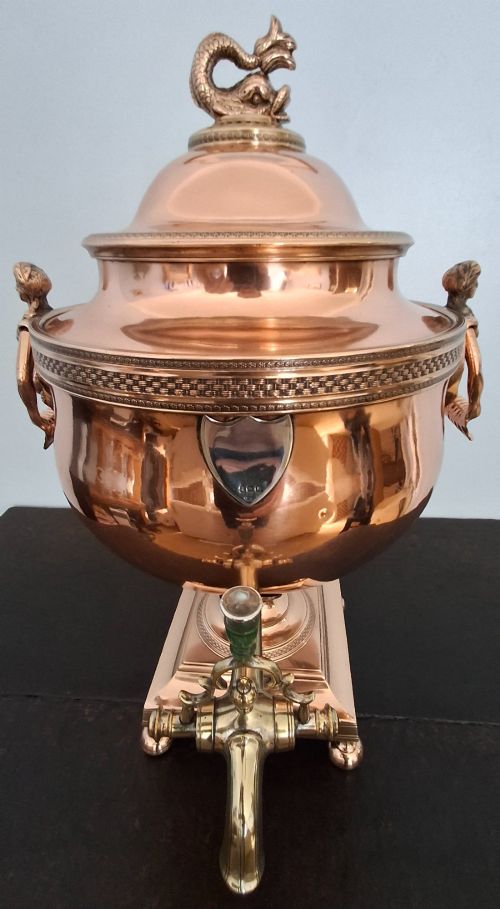
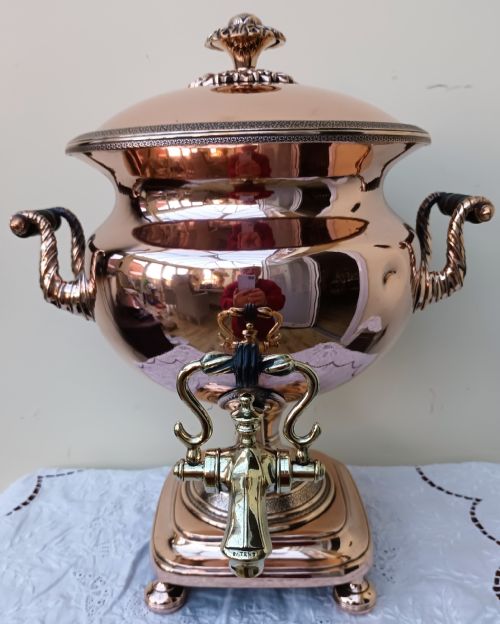


Georgian Copper Samovar
A georgian copper samovar brings heavy metal warmth and period presence to a room, offering both decorative weight and functional history.
Georgian Copper Samovar
A georgian copper samovar is a large vessel designed for heating water, often taking the form of a tea urn or water urn. These pieces represent domestic silver alternatives made for heating water during formal tea service in affluent households.
The versions most commonly met on this page date from the Georgian, Regency, and George III periods, spanning around 1800 and the early nineteenth century. They appear primarily in copper, sometimes paired with brass, bronze, or bell metal.
The forms vary from large hanging water urns to smaller, complete table samovars with original fittings. Buyers encounter pieces that combine utilitarian metalwork with ornate decorative styling characteristic of the period.
How they were made
Construction relies heavily on sheet copper shaped into substantial bodies, often enhanced with cast brass or bell metal for handles, spigots, and feet. These metals were selected for their thermal properties and durability.
Makers integrated contrasting details such as ebonised wood handles and bone fittings to manage heat and provide visual contrast against the warm tone of the copper and bronze surfaces.
Georgian Copper Samovar Retail Price Guide 2026
Typical asking prices for georgian copper samovar among the pieces listed under this phrase on Sellingantiques today, from the lower quarter to the upper quarter. They describe what is for sale here now, not the wider market.
Current listings feature pieces spanning the Georgian, Regency, and George III periods, predominantly constructed from copper, brass, and bell metal.
What varies in quality
Quality rests on the crispness of the cast mounts and the integrity of the original fittings, such as taps and handles. Pieces retaining their complete original elements stand apart from those altered or assembled from mixed parts.
The visual appeal depends on the finish, whether polished copper, bronzed copper, or patinated metal surfaces that show age evenly. Ornate decorative chasing and heavier metal gauge distinguish superior examples from plain utility vessels.
The Georgian Copper Samovar Glossary
- Samovar
- A heated metal container traditionally used to boil water for tea. These vessels typically feature an internal heating tube or a space for hot coals.
- Bell metal
- An alloy of copper and tin used for casting spigots and fittings. It provides a resonant quality and a bright metallic finish.
- Bronzed copper
- Copper treated to resemble bronze through chemical application or paint. This finish offers a darker, more uniform appearance than raw copper.
- Ebonised wood
- Timber treated to imitate ebony, commonly used for insulating handles on metal vessels. It provides a sharp black contrast to the surrounding metal.
Georgian Copper Samovar: Frequently Asked Questions
What is a georgian copper samovar?
A georgian copper samovar is a large metal vessel made around 1800 to heat water for tea. These pieces combine practical water heating functions with decorative metalwork.
They display the craftsmanship of the period through shaped copper bodies, cast brass taps, and wooden handles designed for daily domestic use.
How were they used?
These vessels were filled with water and heated for tea service in the dining room or drawing room. Servants or hosts operated the spigot to dispense hot water into teapots.
They served as both a functional kettle and a grand centrepiece during formal social gatherings.
How do I live with one?
A samovar works well displayed on a sideboard, side table, or as a focal point in a traditional room scheme. Their warm metallic tones complement wood furniture and ceramics.
Maintenance involves gentle cleaning to preserve the historical surface without removing the natural patina built up over centuries.
How do I tell periods apart?
Georgian and George III pieces often display robust proportions and restrained classical ornamentation typical of the late eighteenth century. Regency examples frequently introduce sleeker lines, bronzed finishes, and refined bronze mounts.
Examining the style of the handles, feet, and spigot helps narrow down the manufacturing decade.