



Georgian Carved Walnut Commode
A georgian carved walnut commode brings warm timber grain and stately storage into a room.
Georgian Carved Walnut Commode
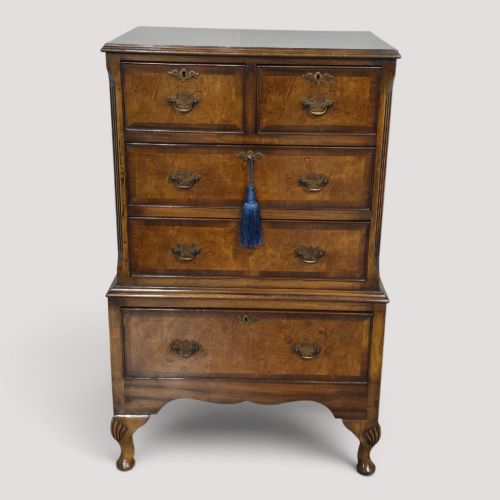
A georgian carved walnut commode is a storage cabinet or chest of drawers designed for domestic use. The pieces found here span the eighteenth century as well as later revival periods including Edwardian, nineteen-twenties, and nineteen-thirties interpretations.
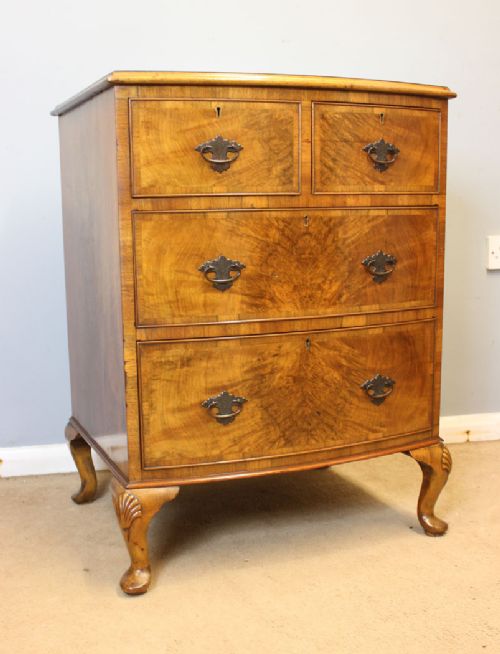
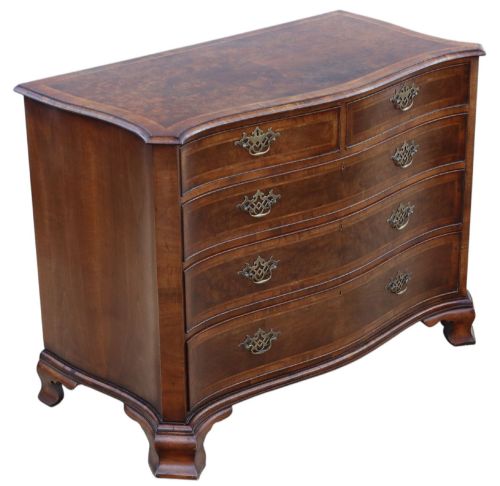
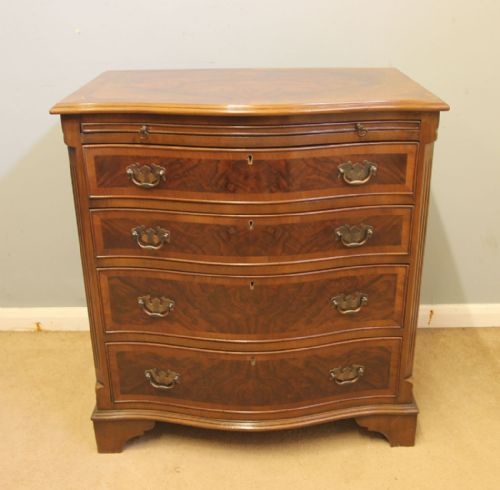
Most examples appear as chests of drawers, ranging from small proportions to serpentine shapes and block fronts. Walnut and burr walnut dominate the forms, often showing figured grain patterns across the drawer fronts.
Construction and materials
Cabinet makers utilised solid walnut, burr walnut, and walnut veneer over supportive secondary timbers like oak. Surfaces frequently display crossbanding to frame the figured grain of the main panels.
Brass hardware such as drop handles and escutcheons finish the drawer fronts on these storage cabinets. Construction methods rely on traditional joinery suited to the cabinet maker's craft.
Georgian Carved Walnut Commode Retail Price Guide 2026
Typical asking prices for georgian carved walnut commode among the pieces listed under this phrase on Sellingantiques today, from the lower quarter to the upper quarter. They describe what is for sale here now, not the wider market.
Assessing quality
Quality rests in the selection of the timber veneer and the crispness of the shaping, particularly on serpentine and block front examples. Highly figured burr walnut and balanced crossbanding separate finer pieces from simpler storage cabinets.
Proportion and scale dictate the visual weight of the furniture, with neat sizes and smaller footprints generally commanding greater attention from collectors of period walnut.
Maple & Co
The Georgian Carved Walnut Commode Glossary
- Burr walnut
- A figured wood grain obtained from walnut tree growths, valued for its complex circular patterns. Cabinet makers prized this veneer for principal drawer fronts.
- Serpentine
- A front shape curving outward in the centre and inward at the sides. This contour requires precise woodworking skills.
- Crossbanding
- A border technique where strips of veneer are laid perpendicular to the main grain. It creates a framed visual effect on table tops and drawer faces.
- Block front
- A cabinet face divided vertically into three sections, with the two outer sections projecting forward and the centre recessed. This form appears on heavier case pieces.
- Commode
- A low storage cabinet or chest of drawers. The term describes freestanding furniture used for domestic organisation.
Georgian Carved Walnut Commode: Frequently Asked Questions
What is a georgian carved walnut commode?
A georgian carved walnut commode is a freestanding chest of drawers or storage cabinet fashioned from walnut timber. These pieces provide functional storage while displaying rich wood grain.
They appear in various forms, from straightforward eighteenth-century chests to later revival interpretations featuring serpentine shapes and crossbanded veneers.
How do I date a walnut chest?
Dating relies on examining the timber selection, construction techniques, and hardware styles. Eighteenth-century pieces differ in internal framing and timber preparation from Edwardian and twentieth-century revivals.
Secondary woods like oak and the configuration of the drawer linings help establish the period of manufacture alongside surface characteristics.
Where were these cabinets used?
These storage pieces served primary domestic spaces such as bedrooms and withdrawing rooms. Their surfaces provided display areas for ornaments while the drawers held clothing or linens.
Country house examples and smaller neat-sized versions adapted easily to different rooms within period properties.
How do I care for walnut furniture?
Maintaining walnut furniture involves keeping pieces away from direct heat sources and strong sunlight that can dry the timber and fade the veneer. Regular dusting with a soft, dry cloth preserves the finish.
Occasional light treatment with appropriate wax helps maintain the lustre of the burr walnut and crossbanded surfaces without building up heavy residues.