

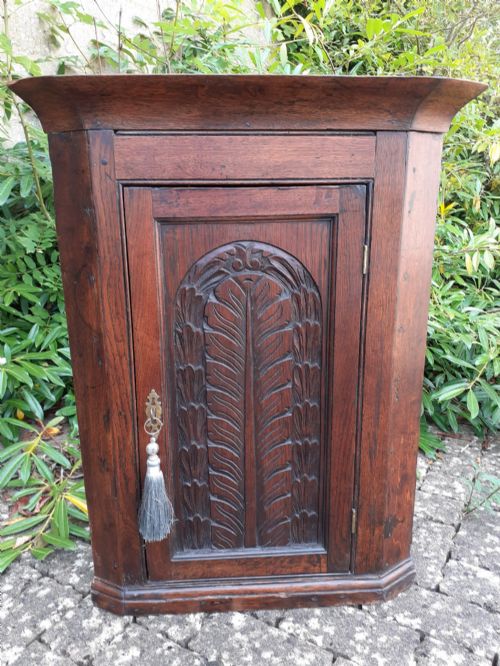


Georgian Carved Oak Cabinet
A georgian carved oak cabinet brings solid timber and regional craftsmanship directly into a room, offering practical storage with distinct period detail.
Georgian Carved Oak Cabinet
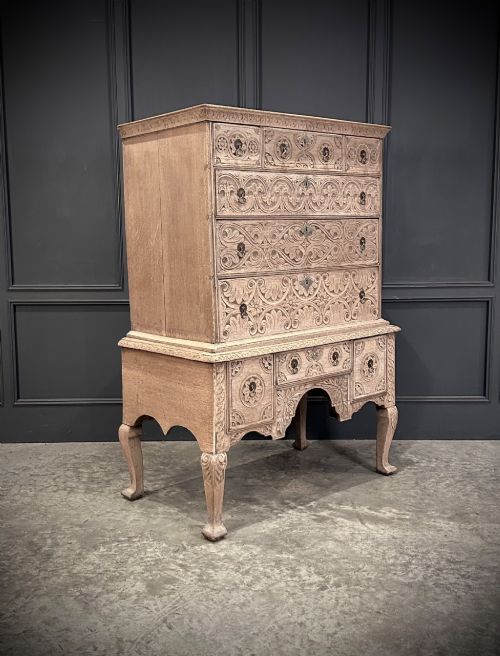
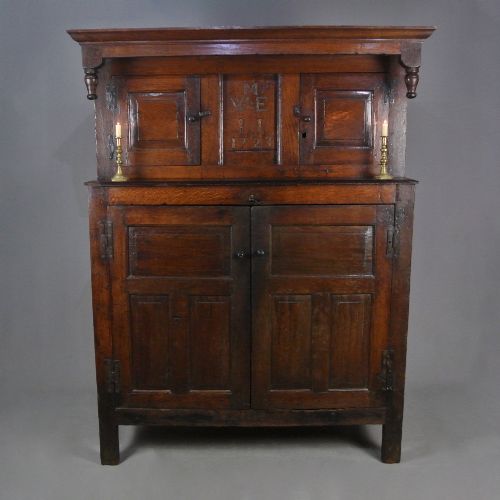
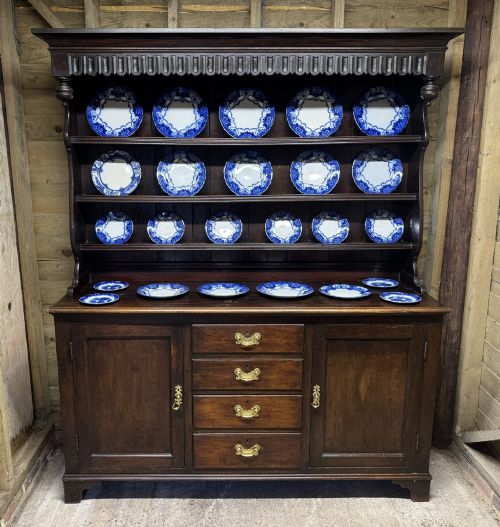
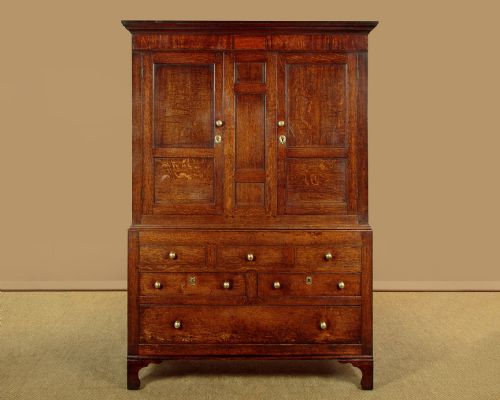
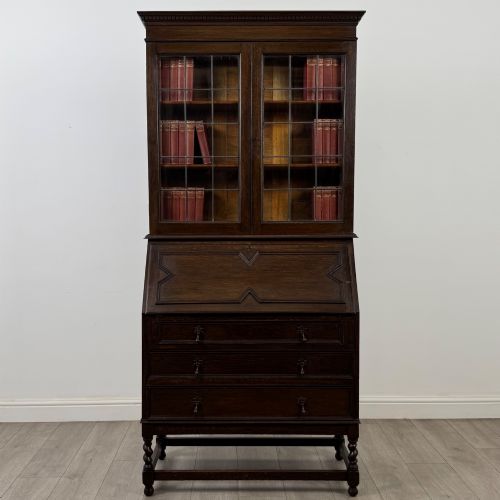
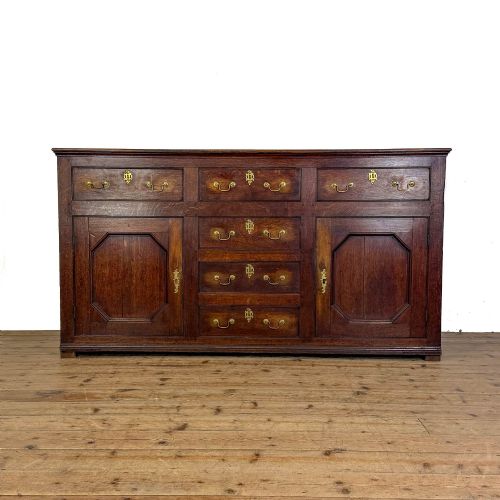
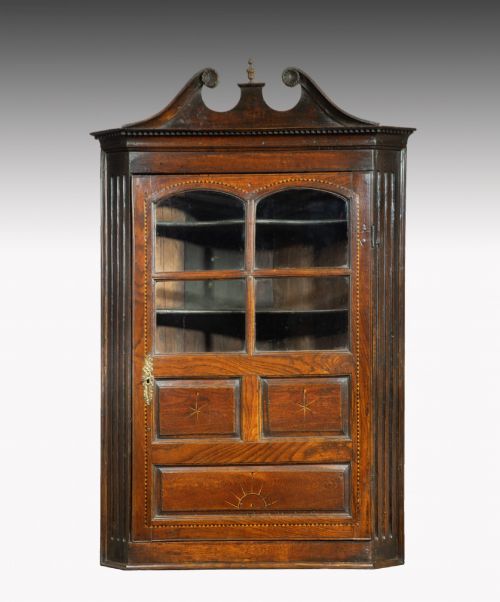
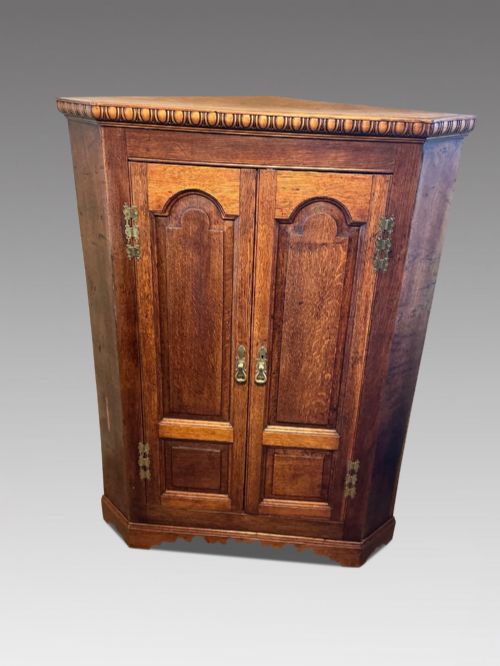
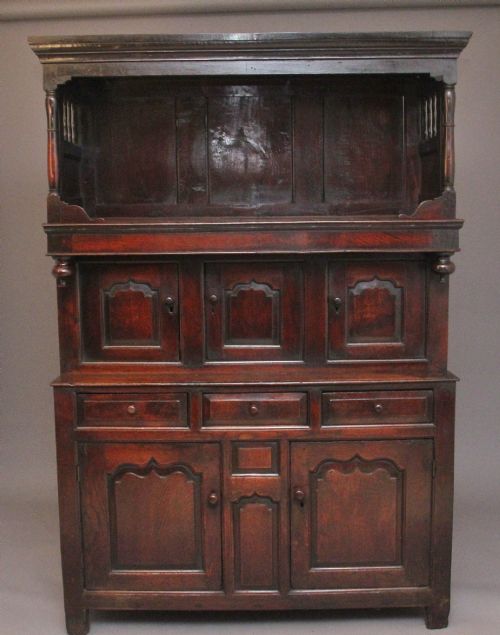
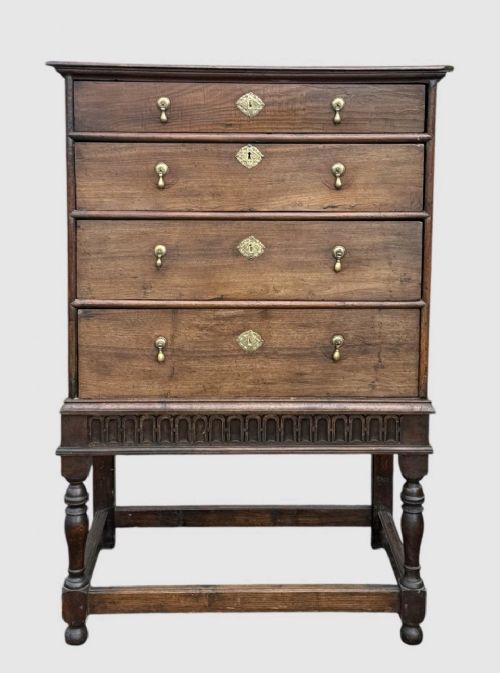
A georgian carved oak cabinet spans several regional and formal traditions, from corner cupboards and court cupboards to dressers and press cupboards made during the eighteenth and nineteenth centuries. Buyers searching this phrase meet hanging wall units, floor-standing corner cabinets, and larger storage pieces shaped by English and Welsh country makers.
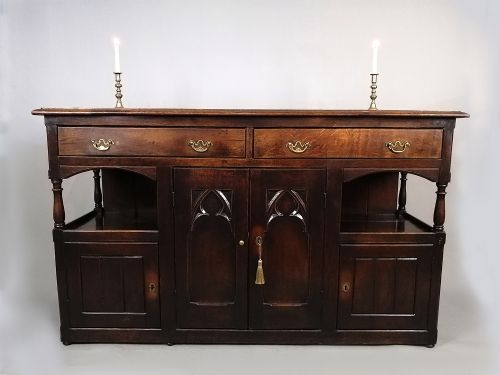
The selection ranges from simple provincial wall cupboards to substantial breakfront dresser bases and tridarns originating across different rural counties. Many examples date from the georgian period, often displaying carved panels, fielded doors, and traditional brass or iron hardware.
The form adapts to various domestic uses, serving as display storage for china or hidden space for household linens and provisions. Each piece reflects the functional requirements of eighteenth-century and nineteenth-century households while retaining the heavy timber construction characteristic of vernacular cabinetmaking.
How they were made
Makers utilised solid oak boards joined with traditional methods, framing heavy panels into stiles and rails to allow the timber to move naturally with humidity. Secondary woods like pine appear in internal shelving or drawer linings, whilst structural joints rely on pegs and mortise-and-tenon construction.
Surface decoration often involves hand carving directly into the dense oak, producing geometric patterns, scrolling foliage, or regional motifs peculiar to Welsh and English workshops. Blacksmiths provided functional iron hinges, latches, and locks that were fitted directly to the heavy doors alongside brass escutcheons.
Listings feature oak cabinets spanning the seventeenth, eighteenth, and nineteenth centuries alongside Edwardian interpretations.
What varies in quality
The division between standard provincial work and finer cabinetmaking rests upon the depth and crispness of the carved ornamentation, the selection of figured oak boards, and the integrity of the original hardware. Pieces retaining their early blacksmith-made iron hinges or original brass work command greater interest from collectors.
Proportion and structural survival dictate the standing of a piece within the market, with untouched surface patination and minimal timber replacement holding precedence over heavily restored examples. Regional distinctiveness, such as specific Welsh vernacular framing details or documented provenance, separates ordinary utility cupboards from exceptional survival pieces.
The Georgian Carved Oak Cabinet Glossary
- Tridarn
- A large Welsh three-tiered cupboard consisting of an upper canopy, a middle section with small doors or panels, and a lower base of drawers and cupboards. These substantial pieces represent some of the most complex vernacular furniture produced in rural workshops.
- Court Cupboard
- An early form of press or storage cupboard featuring recessed upper sections supported by carved posts or columns. They date primarily from the seventeenth and early eighteenth centuries and provide heavy, enclosed domestic storage.
- Deuddarn
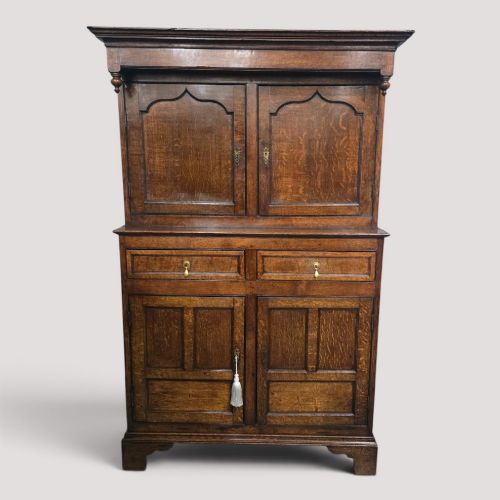
- A traditional Welsh two-part cupboard featuring panelled doors and internal shelving for household provisions. The term distinguishes these regional Welsh pieces from standard English press cupboards of the same era.
- Escutcheon
- A protective metal plate surrounding a keyhole, usually made of brass or iron on these cabinets. It prevents the timber around the lock from splitting during daily use.
- Fielded Panel
- A wooden panel with bevelled edges that fit into a surrounding groove in a frame, allowing the timber to expand and contract seasonally. This technique prevents warping in heavy oak furniture.
Georgian Carved Oak Cabinet: Frequently Asked Questions
How do I identify a Georgian oak cabinet?
Look for heavy solid oak construction, traditional pegged joints, and characteristic period mouldings or carved ornamentation typical of eighteenth-century craftsmanship.
Many examples also feature original wrought iron hardware, brass escutcheons, and regional vernacular details that distinguish them from later nineteenth-century reproductions.
Where were these oak cabinets originally used?
These pieces served practical storage functions in rural farmhouses, country houses, and vernacular homes across England and Wales.
Corner units utilised difficult room angles, whilst larger dressers and press cupboards stored household linens, tableware, and daily provisions.
Are hanging corner cabinets difficult to install?
Hanging corner cupboards require secure fixing to solid wall studs or masonry due to the heavy weight of the dense oak timber.
Professional installation ensures the internal shelving and door alignments remain stable under the load of stored ceramic or glass items.
What is the difference between a dresser and a press cupboard?
A dresser typically combines an open plate rack or flat surface base with lower drawers and cupboards designed for serving and display.
A press cupboard consists entirely of enclosed shelved compartments behind large doors, specifically intended for storing linens and folded garments.