


Georgian Carved Blanket Box
A georgian carved blanket box provides sturdy domestic storage in solid oak, bringing eighteenth-century craft directly into a modern hallway or bedroom.
Georgian Carved Blanket Box
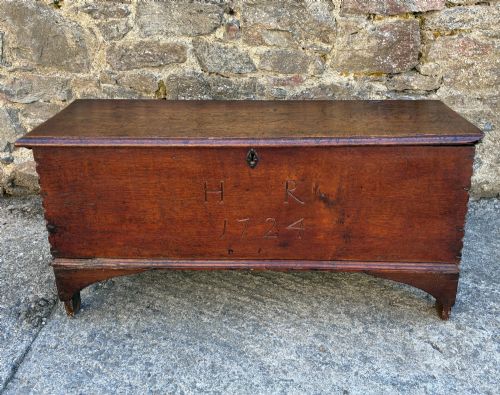
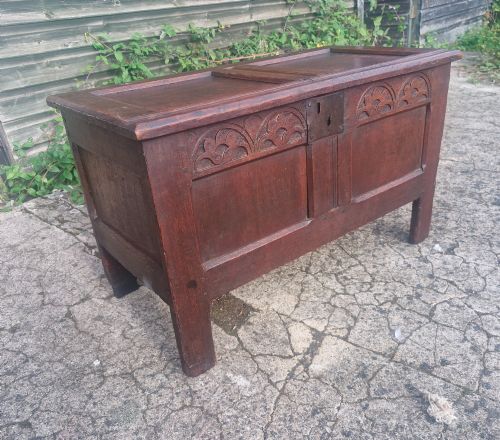
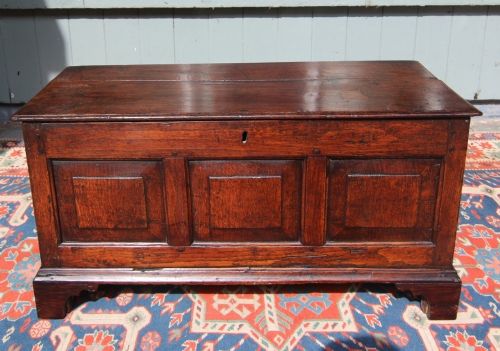
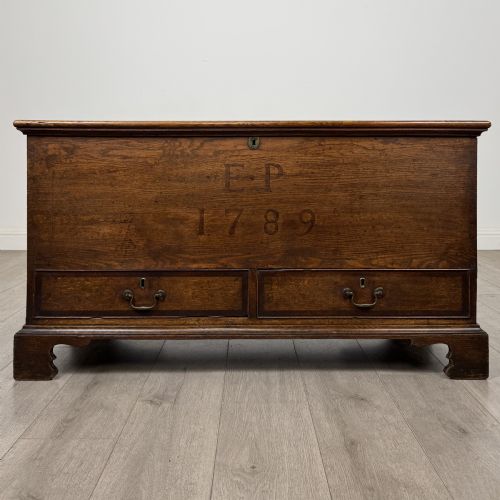
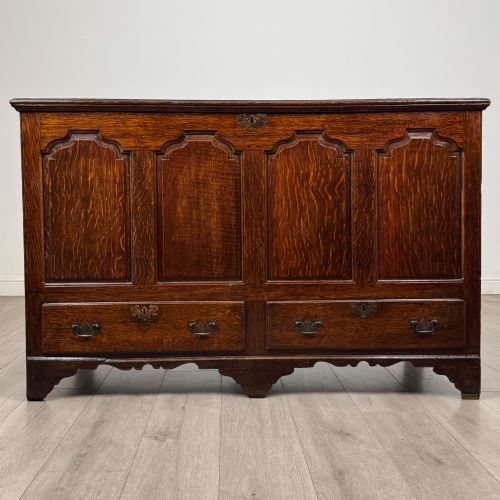
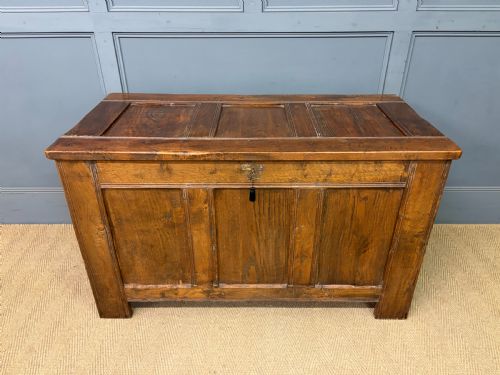
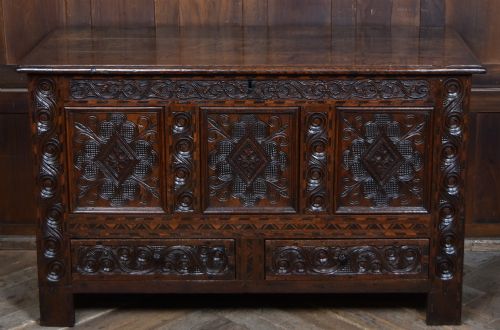
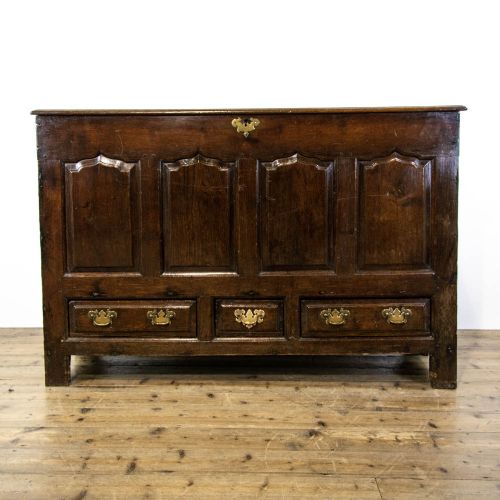
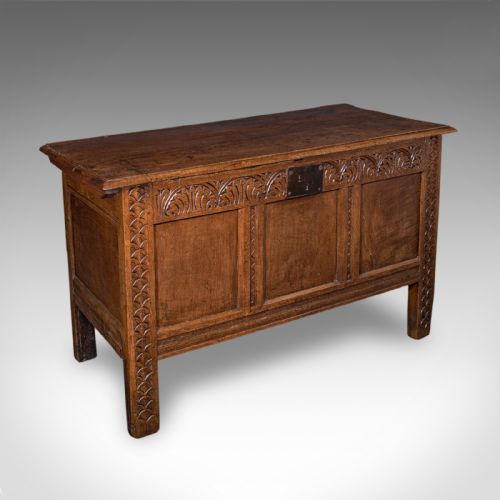
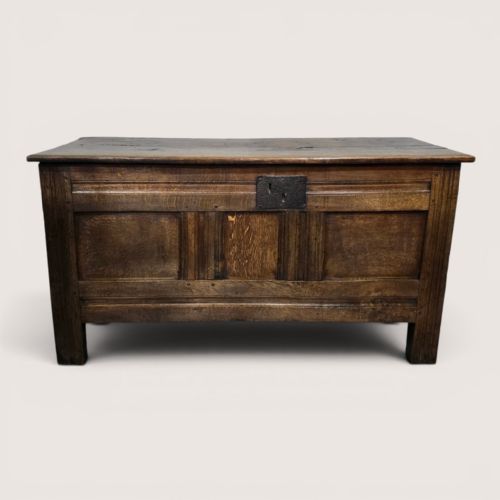
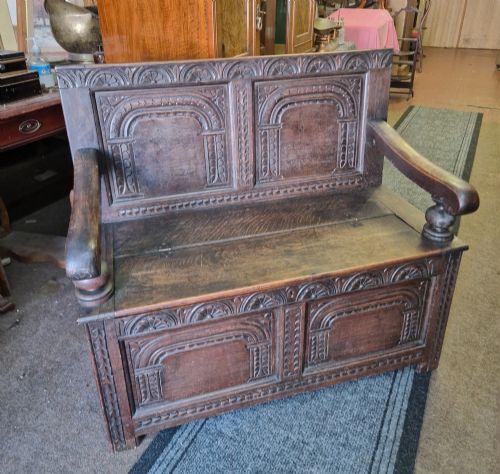
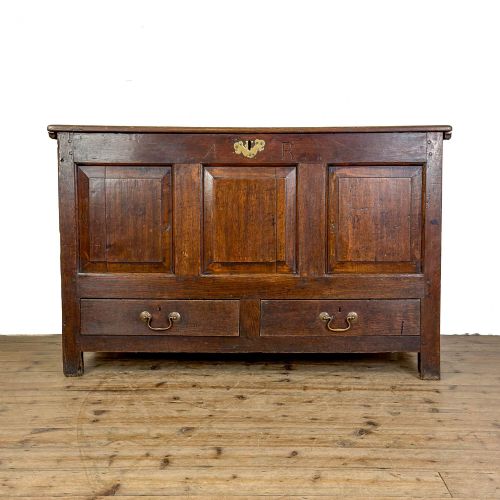
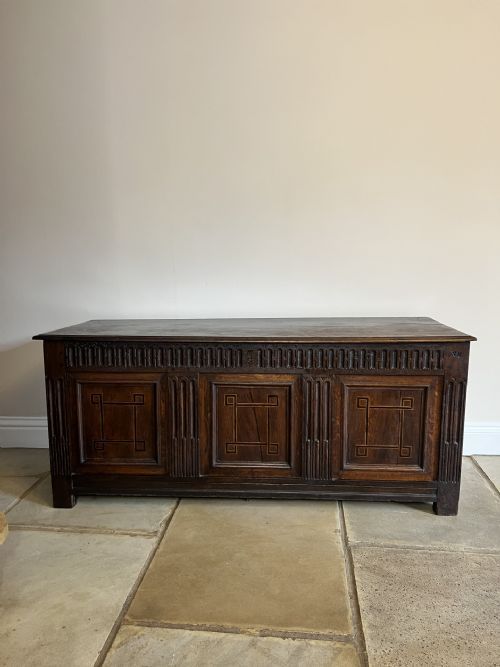
A georgian carved blanket box generally takes the form of a coffer, mule chest, or panelled storage trunk originating in the eighteenth century. Buyers frequently encounter oak examples featuring carved panels, hinged lids, and internal candle boxes.
Regional variations include Welsh vernacular pieces and small miniature coffers known as coffor bach. Surviving items span from early Georgian periods through to the Regency era, occasionally incorporating mahogany or burr elm alongside primary oak structures.
Materials and construction
Joiners built these chests primarily from solid oak using frame-and-panel construction to accommodate seasonal timber movement. Iron hinges, brass fittings, and lead linings appear on specific utilitarian or cellarette forms.
Surface decoration relies on direct carving into the timber, sometimes enhanced by wood inlay or painted finishes. Internal compartments often include fitted candle boxes secured within the main storage void.
Listings feature eighteenth-century and Regency pieces constructed primarily from oak, mahogany, and pine, alongside iron and lead components.
Execution and proportion
The sophistication of the carved detail and the crispness of the panel mouldings distinguish finer chests from simpler utility pieces. Well-proportioned dimensions and balanced timber selection indicate a higher grade of workshop production.
The integrity of the original hinges, feet, and internal partitions contributes significantly to the standing of an individual box. Cohesion between secondary woods and primary panelling maintains the visual harmony of the piece.
The Georgian Carved Blanket Box Glossary
- Coffer
- A heavy wooden chest traditionally used for storing valuables, linen, or documents. These storage items form the backbone of early vernacular furniture.
- Mule chest
- A storage chest featuring one or more drawers beneath the main internal compartment. This development bridges the traditional coffer and the modern chest of drawers.
- Coffor bach
- A small Welsh miniature coffer or chest created as a token or dowry piece. These diminutive boxes mirror the construction of larger domestic furniture.
- Cellarette
- A lockable container designed for holding bottles or decanters, frequently lined with lead. Regency examples often appear in mahogany with sarcophagus proportions.
- Piecrust
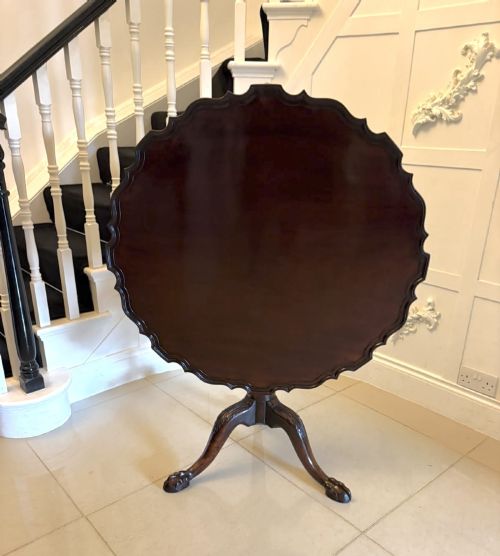
- A carved raised border shaped with scallops, typically found on circular tilt-top tables. This decorative edge requires skilled carpentry to shape from solid timber.
Georgian Carved Blanket Box: Frequently Asked Questions
What is a mule chest?
A mule chest combines a traditional hinged storage box with one or more fitted drawers beneath the main compartment. This form emerged when makers sought to add accessible lower storage without abandoning the top-loading trunk.
Such pieces date predominantly to the eighteenth century and serve effectively as blanket storage or coffee tables in contemporary settings.
How do I use a coffer today?
These robust chests function well at the foot of a bed for spare linen, blankets, or pillows. Their flat tops also allow them to double as window seats or hallway benches when cushioned appropriately.
Internal candle boxes keep smaller items organised, while the solid construction supports everyday domestic use.
What is a coffor bach?
A coffor bach is a miniature Welsh coffer built with the same panelled construction as standard domestic storage chests. These small boxes were often presented as gifts or used to display craftsmanship.
They sit comfortably on side tables or desks while providing compact concealed storage.
How do I distinguish periods?
Early pieces from the seventeenth and early eighteenth centuries rely heavily on robust oak framing and deep geometric or floral carving. Later Georgian and Regency examples introduce mahogany, brass fittings, and refined proportions.
Examining the internal woodwork, hinge types, and secondary timbers helps clarify the manufacturing era.