



Georgian Brass Jardiniere
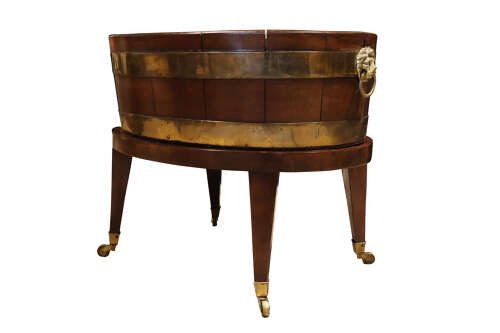
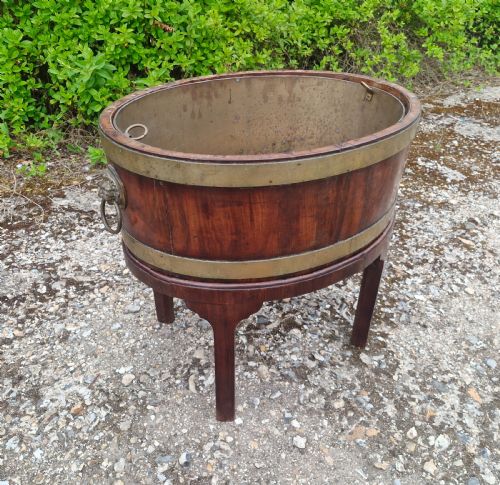
A Georgian brass jardiniere brings sculptural planting indoors, combining heavy timber construction with gleaming metal bands for a distinct period presence.
Georgian Brass Jardiniere
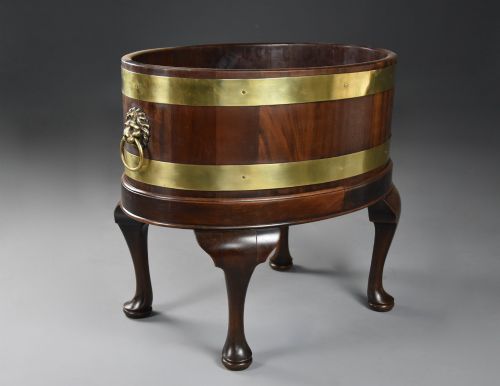
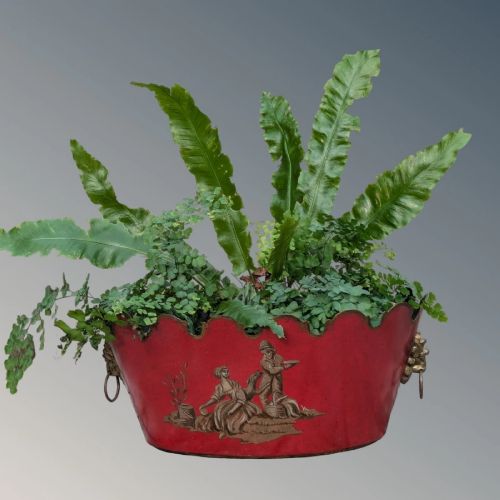
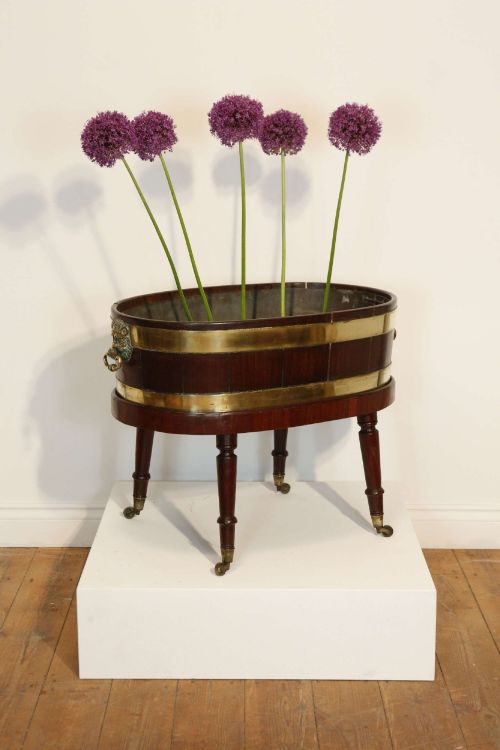
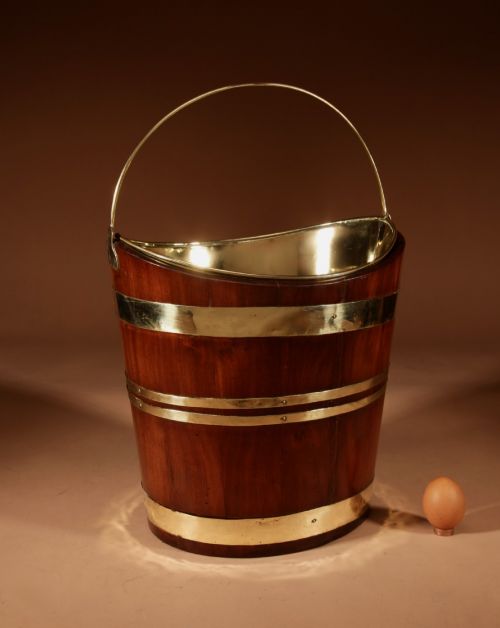
A georgian brass jardiniere takes the form of coopered vessels, boat-shaped peat buckets, and wine coolers adapted for botanical displays. These pieces bridge utilitarian origins and decorative drawing room use.
The version most commonly met on this page is the mahogany coopered planter or wine cooler, distinguished by solid brass banding and occasionally raised on a dedicated stand or feet.
Origins span English workshops of the eighteenth and nineteenth centuries alongside Dutch interpretations featuring rich marquetry inlay in satinwood and rosewood.
Materials and construction
Coopers built the bodies from staves of dense timber such as mahogany, walnut, or box tree, holding the vessel together with tensioned metal bands.
Sheet brass provides the defining structural and decorative accents, forming heavy binding hoops, side handles, and protective liners for holding soil and moisture.
Georgian Brass Jardiniere Retail Price Guide 2026
Typical asking prices for georgian brass jardiniere among the pieces listed under this phrase on Sellingantiques today, from the lower quarter to the upper quarter. They describe what is for sale here now, not the wider market.
Listings span pieces from the Georgian era through to the twentieth century, incorporating mahogany, walnut, satinwood, and bronze.
The spectrum of quality
Quality rests upon timber selection and the precision of the cooperage, where tightly fitted staves and substantial gauge brass dictate structural integrity over centuries.
Details such as inlaid marquetry work in satinwood and rosewood or the presence of original metal liners separate standard utilitarian vessels from highly decorative parlour pieces.
The Georgian Brass Jardiniere Glossary
- Coopered
- Constructed from vertical wooden staves fitted together and bound by metal hoops, much like a traditional barrel. This method provides immense strength for holding damp contents.
- Peat bucket
- A deep, bucket-shaped container originally designed to hold fuel for a hearth, frequently adapted in modern settings as a jardiniere. They often feature swing handles.
- Wine cooler
- A large vessel originally lined with lead or metal to chill bottles in ice, commonly repurposed as a planter due to its waterproof interior.
- Marquetry
- Decorative patterns formed by fitting contrasting veneers into a wooden surface, frequently seen on Dutch iterations using satinwood and rosewood.
- Cellarette
- A lockable container used for storing wine bottles near the dining table, sharing identical coopered forms with period planters.
Georgian Brass Jardiniere: Frequently Asked Questions
What is a georgian brass jardiniere used for?
These pieces serve primarily as decorative plant holders, accommodating potted greenery and floral arrangements within domestic interiors.
Historically, many examples began life as wine coolers or fuel buckets before finding a second life as planters.
How do I care for the wood and brass?
Protect the timber by using inner pots that prevent water from coming into direct contact with the internal wood or original metal liner.
Dust the exterior regularly and polish the brass binding sparingly to maintain its warm metallic lustre.
Were these always meant for plants?
Many vessels designed for cooling wine, storing tea, or holding peat fuel possess the watertight properties required for modern indoor gardening.
Maker adaptations and subsequent repurposing have occurred throughout the nineteenth and twentieth centuries.
How can I tell a period piece from a later revival?
Examine the timber shrinkage, hand-cut dovetails, and the gauge of the brass fixings to assess the true age of the construction.
Revival pieces from later periods often display different patination and machine-finished components compared to eighteenth or nineteenth-century originals.