

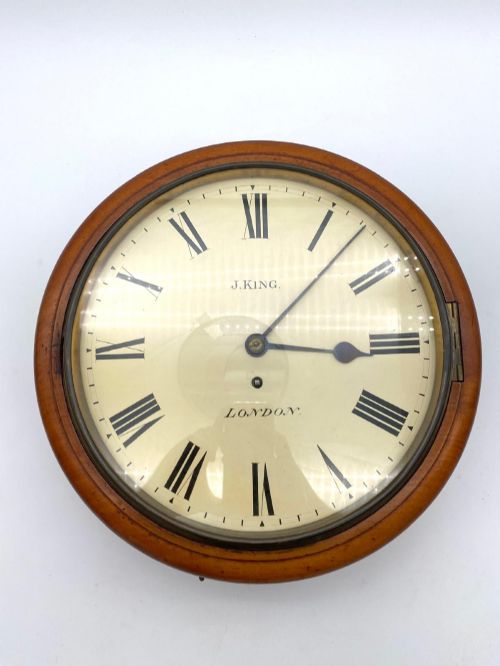
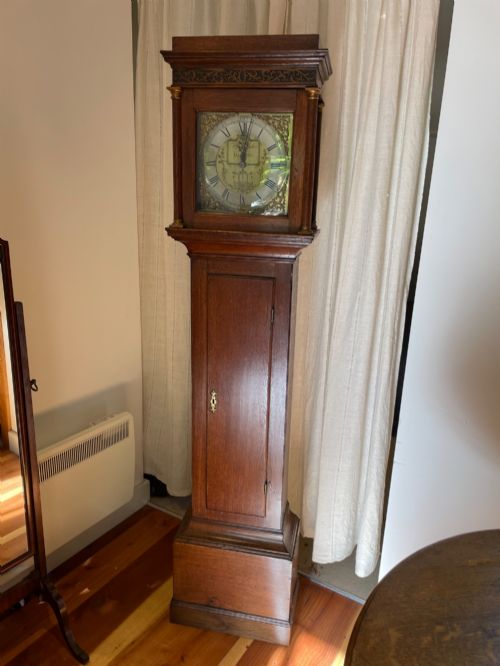
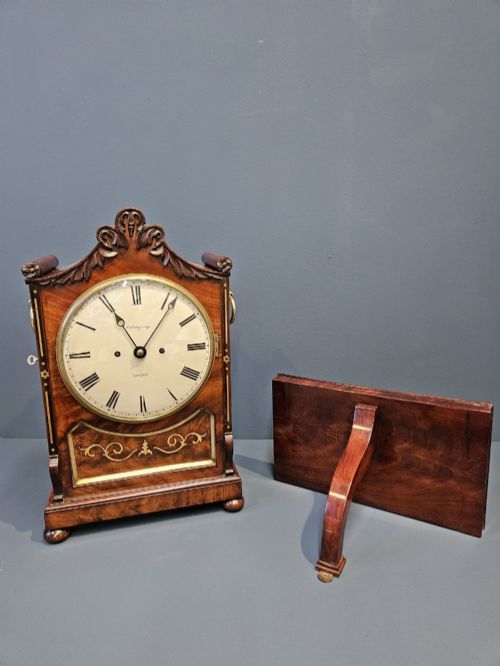
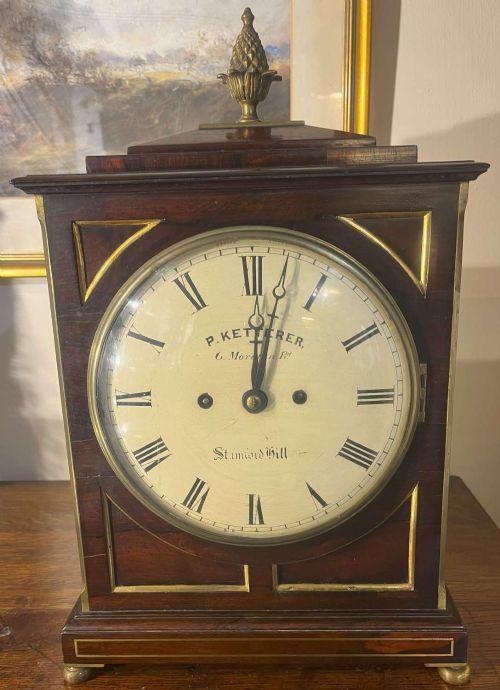
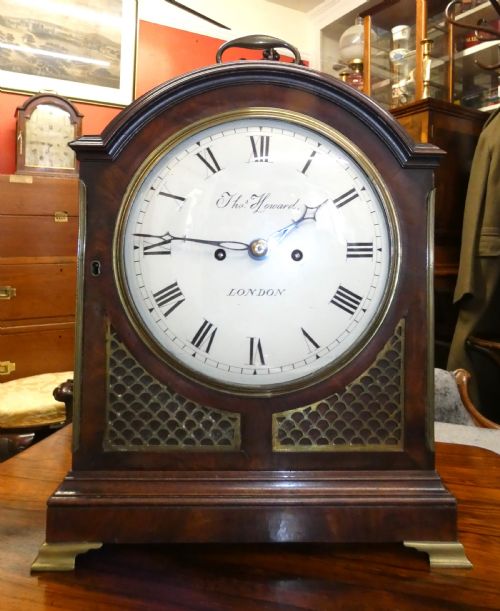
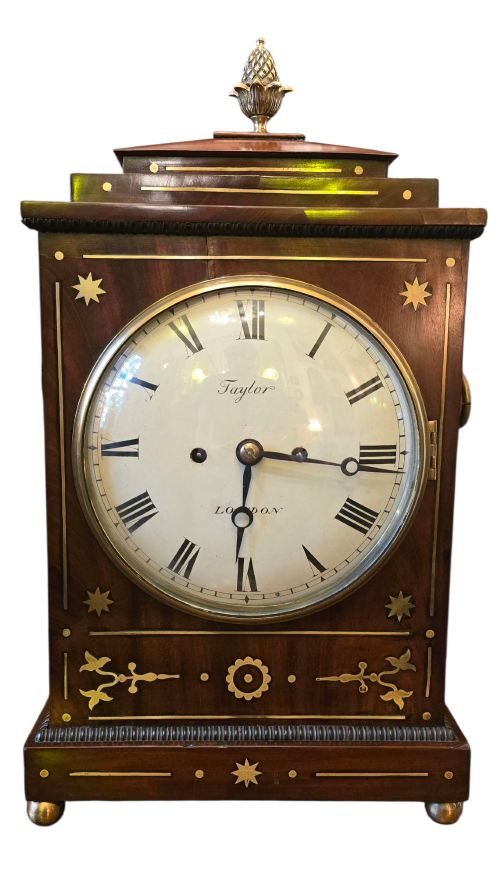
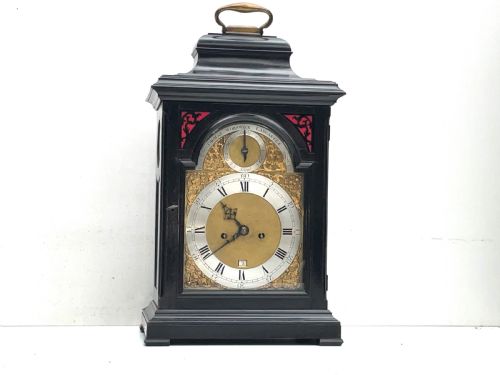
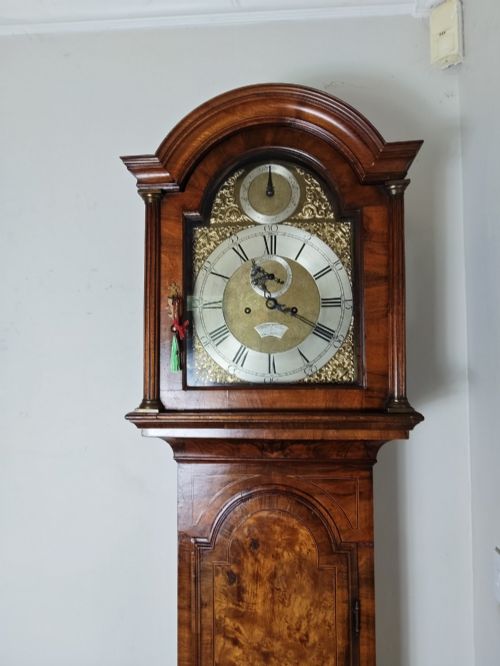
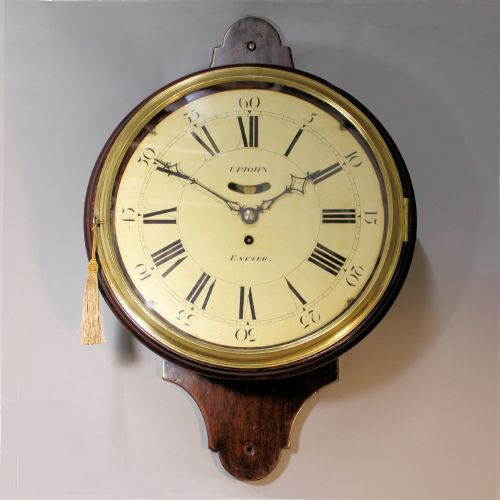
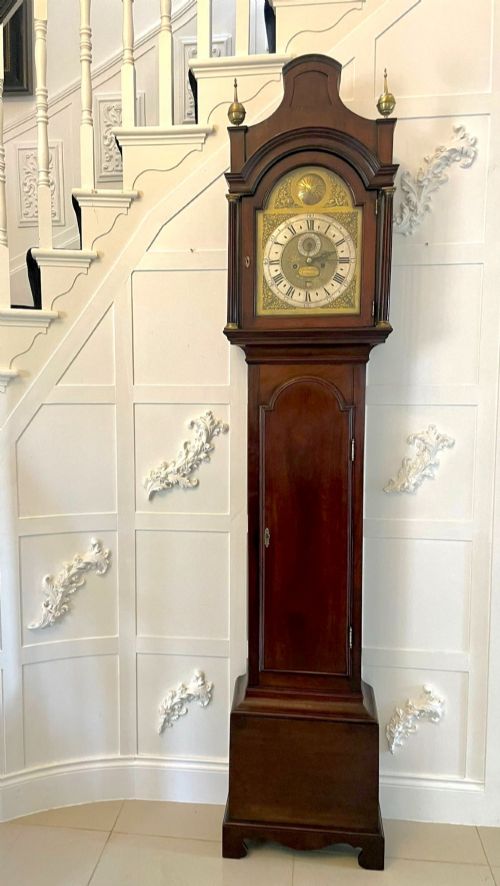
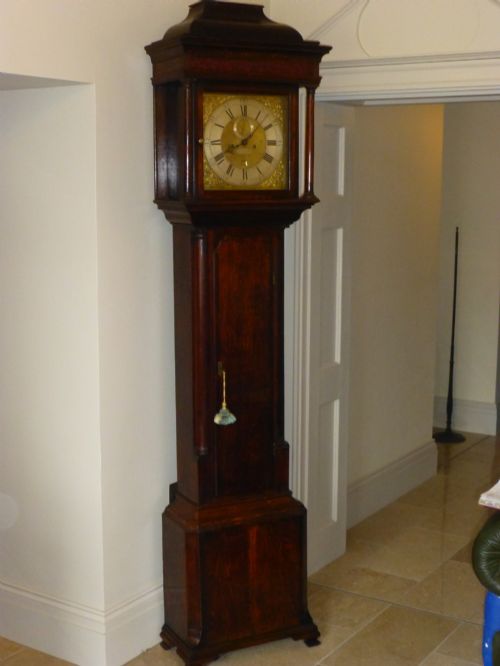
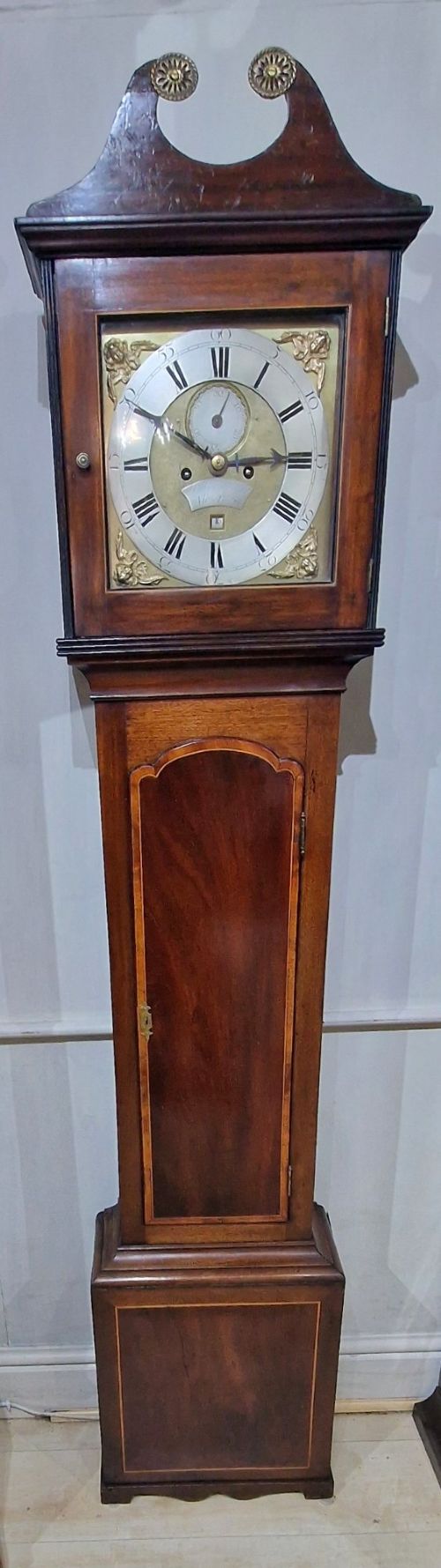
Georgian Brass Clock
A georgian brass clock marks time with the steady mechanical heartbeat of the eighteenth and early nineteenth centuries, bringing polished metal dials and rich timber cases into any room.
Georgian Brass Clock
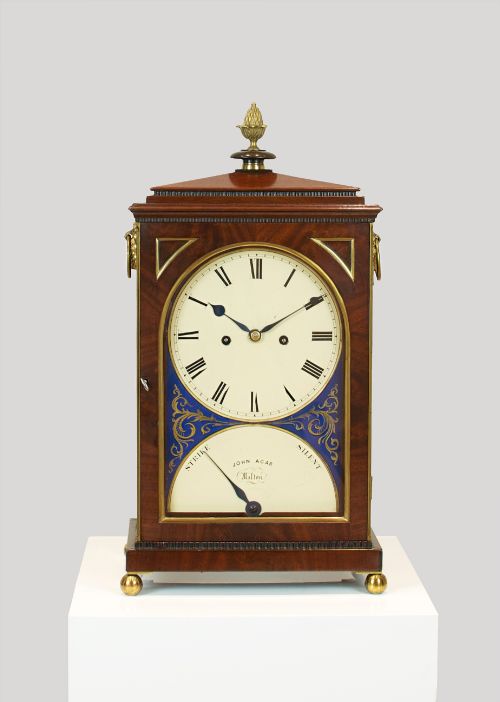
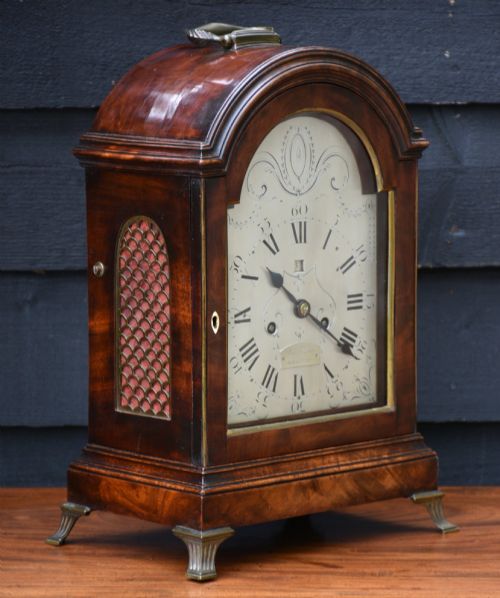
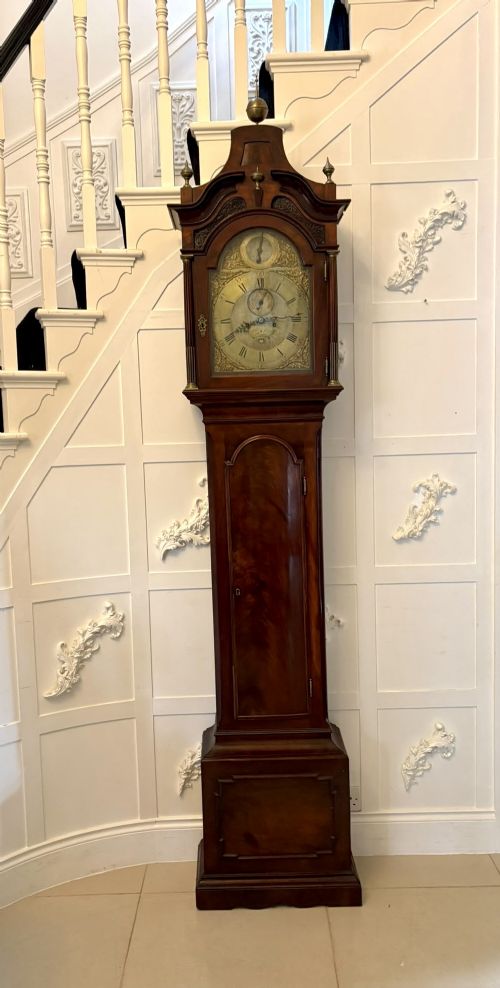
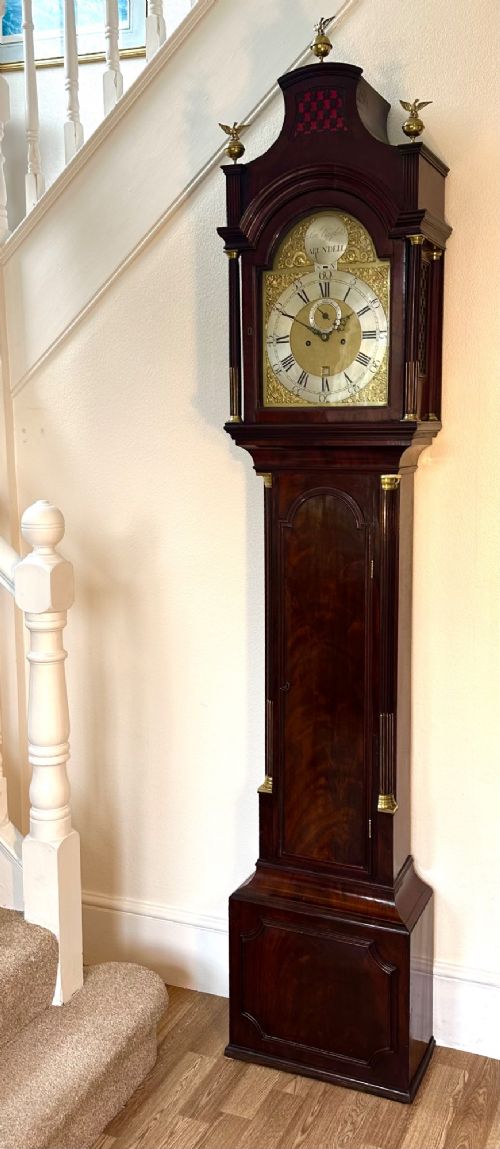
A georgian brass clock encompasses several distinct forms, primarily tall longcase clocks alongside more compact bracket, mantel, and wall timepieces. The pieces span periods from the early eighteenth century through the Regency era, reflecting the mechanical innovations and cabinetmaking standards of those times.
Tall longcase clocks dominate the selection, housed in timbers such as oak, walnut, and mahogany, often featuring brass faces with engraved spandrels and silvered chapter rings. Bracket and wall clocks appear frequently too, designed to sit upon furniture or hang securely from domestic walls.
How they were made
Makers constructed the movements from brass and steel, employing verge escapements and fusee drives to regulate time accurately before weights and springs were refined further. Cases utilised solid timbers like mahogany, oak, and burr walnut, joined with traditional cabinetmaking methods and polished to preserve the grain.
Brass dials received intricate hand engraving, applied brass corner spandrels, and sometimes moon phases or strike-silent mechanisms. Cabinets incorporated glass viewing panels, brass carrying handles on bracket models, and inlaid paterae for decorative detail.
Georgian Brass Clock Retail Price Guide 2026
Typical asking prices for georgian brass clock among the pieces listed under this phrase on Sellingantiques today, from the lower quarter to the upper quarter. They describe what is for sale here now, not the wider market.
Some provincial dials display moon phases so owners could plan their evening journeys home by moonlight.
What varies in quality
The refinement of the brass dial engraving and the complexity of the movement separate standard timepieces from exceptional examples. Signed dials by known provincial or London makers carry greater weight due to the documented skill of their workshops.
Cabinet timber selection and secondary wood use dictate the integrity of the housing. Finely figured burr walnut or rich mahogany veneers applied to secondary pine or oak show a higher level of workshop investment than plain, utilitarian pine carcasses.
P Ketterer·Agar of Malton·Taylor of London·John Taylor London·Upjohn of Exeter·Thomas Howard·Richard Jones of Hereford·Charles Shuckburgh·Gordon of Aberdeen·Thomson of London·Lee of Great Marlow·John Ellicott·Jn Smith·James Field·Richard Corless·Smith of Chester·Robb Montrose·James Hendrie·James McCabe·William Gard
The Georgian Brass Clock Glossary
- Fusee
- A conical pulley used with a cord or chain to maintain an even pull on the movement as the driving spring unwinds.
- Verge escapement
- An early type of escapement mechanism that controls the release of the gear train, recognizable by its oscillating balance or pendulum.
- Spandrel
- The decorative corner piece set in the angles between the dial circle and the square outer frame of a clock face.
- Chapter ring
- The separate metal ring fixed to the dial face that displays the hours and minutes.
- Bracket clock
- A portable spring-driven clock designed originally to sit upon a matching wall bracket or table.
Georgian Brass Clock: Frequently Asked Questions
What is a longcase clock?
A longcase clock, frequently termed a grandfather clock, is a tall pendulum-driven timepiece enclosed in a wooden case that rests directly on the floor. These towers protect the delicate brass movement and hanging weights.
Such clocks served as the primary timekeeper in domestic and public spaces throughout the Georgian period, combining mechanical reliability with grand cabinet furniture.
How do fusee movements work?
A fusee movement uses a conical pulley connected to the mainspring barrel by a fine chain or gut line. As the spring loses tension, the chain moves to a wider part of the cone to maintain steady power.
This clever mechanical device ensures the clock maintains consistent force across the gear train, leading to more accurate timekeeping between winds.
Where should bracket clocks sit?
Bracket clocks are designed to stand securely on flat horizontal surfaces such as sideboards, mantelpieces, or dedicated wall brackets. Their sturdy brass carrying handles allowed owners to move them between rooms safely.
When positioning one in a modern home, choose a stable surface away from direct drafts and heavy vibrations to keep the pendulum swinging truly.
How do I identify Georgian dials?
Georgian brass clock dials often feature cast brass corner spandrels, a matted or engraved centre, and a separate silvered chapter ring for the hours. Early examples tend toward square formats before arched brass tops became popular.
The signature of the maker is typically engraved directly onto the brass surface or the silvered dial plate between the number markings.