





Georgian Blue Chest Drawers
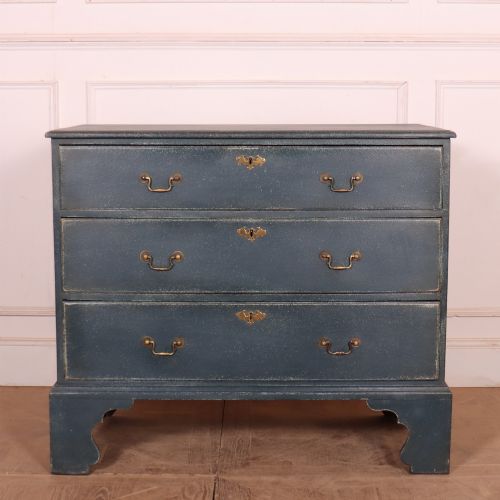
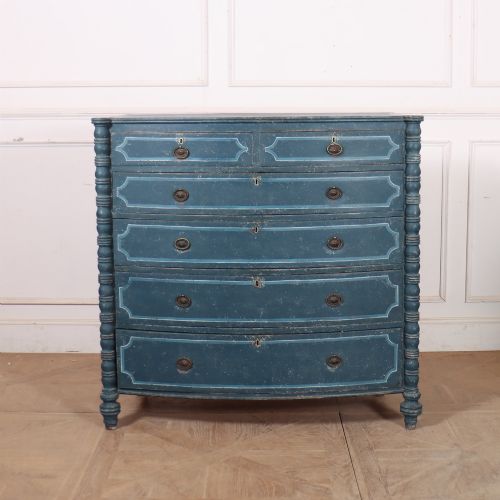
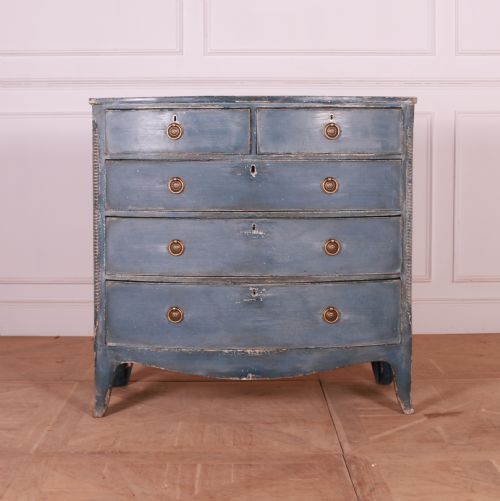
These georgian blue chest drawers bring together period timber forms and evocative painted surfaces that transform a room.
Georgian Blue Chest Drawers
A buyer seeking georgian blue chest drawers encounters storage furniture originating largely from the eighteenth and nineteenth centuries, finished with painted surfaces applied either in period or subsequently. The selection spans straightforward country pieces with multiple drawers to refined bowfront and sideboard-adjacent configurations.
Many examples in this category showcase regional English construction alongside Scottish Regency and Italian variations. Surfaces display distinct finishes ranging from distressed mottled blue to icy Scandi blue and marine speckle paint over timber carcasses.
Materials and construction
Makers utilised timber substrates including pine, mahogany, and general wood or painted timber for the main carcasses and drawer structures. Brass hardware frequently appears on drawer fronts as handles and escutcheons, anchoring the painted schemes.
The decorative schemes rely on layered paint techniques applied to timber, creating mottled, distressed, or speckle finishes. Surface treatments range from original decorative applications to later layered painted coats over older pine and hardwood bodies.
Georgian Blue Chest Drawers Retail Price Guide 2026
Typical asking prices for georgian blue chest drawers among the pieces listed under this phrase on Sellingantiques today, from the lower quarter to the upper quarter. They describe what is for sale here now, not the wider market.
A Scottish Regency library secretaire hides its writing drawer so cleverly that even the books might pretend not to notice it.
Evaluating quality and proportion
Quality rests in the structural integrity of the timber carcass and the balance of the proportions, whether dealing with a compact bedside cabinet or a larger chest on stand. Superior items maintain solid joinery and drawers that run smoothly within their frames.
The character of the painted surface significantly defines the visual appeal. Skill in the application of distressed, mottled, or speckled blue finishes determines whether the surface appears harmonious with the underlying period form.
WILLIAM TROTTER Edinburgh
The Georgian Blue Chest Drawers Glossary
- Bowfront
- A curved cabinet front where the central section projects outward in a smooth arc. This shape softens the profile of a standard chest of drawers.
- Linen Press
- A tall storage piece featuring upper cabinet doors enclosing sliding trays, placed above a base of lower drawers. They were traditionally built to store household linens.
- Chest on Stand
- A case piece elevated upon a distinct supporting frame with legs. This configuration lifts the primary drawers higher off the floor.
- Distressed Finish
- An intentional surface treatment that simulates age and wear through thinning, chipping, or softening of the paint. It creates a weathered appearance on timber furniture.
Georgian Blue Chest Drawers: Frequently Asked Questions
Are these blue finishes original?
Many pieces feature later painted surfaces applied to older timber bodies, though some retain period decorative schemes. Distressed mottled and icy blue finishes frequently represent later decorative interventions.
Examining the paint layers around hardware and joints helps reveal whether a blue surface is contemporary with the construction of the timber carcass.
How do I care for painted wood?
Painted timber furniture requires stable indoor humidity and protection from direct sunlight to prevent the finish from fading or flaking. Dusting with a dry cloth keeps the surface clean without risking moisture damage.
Avoid commercial polishes containing harsh solvents, as these can degrade historic or delicate painted coatings over time.
What woods were used underneath?
Makers constructed the underlying carcasses from accessible timbers such as pine, alongside finer hardwoods like mahogany. Secondary woods often included local softwoods for drawer linings and backboards.
The choice of timber typically reflects the regional origin, with country workshops favouring pine and urban cabinetmakers utilising denser hardwoods.
How do I date these chests?
Dating relies on construction methods, drawer dovetailing techniques, hardware styles, and overall proportions rather than the painted surface alone. Eighteenth-century pieces often display hand-cut joinery and specific drawer configurations.
Comparing structural details against documented examples helps distinguish between early Georgian, Regency, and later nineteenth-century production.