



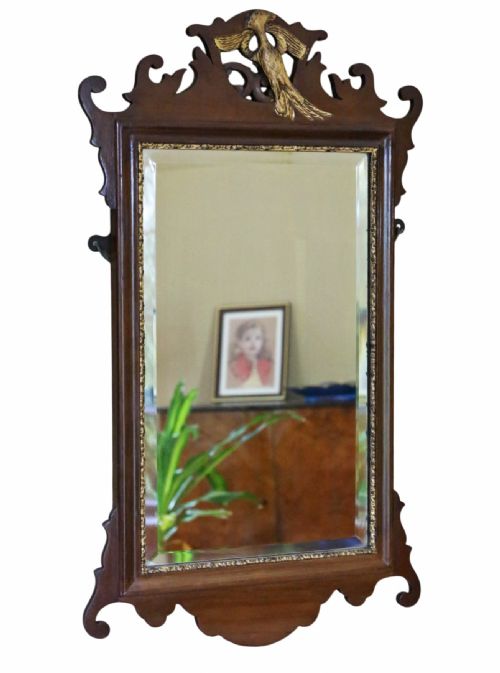


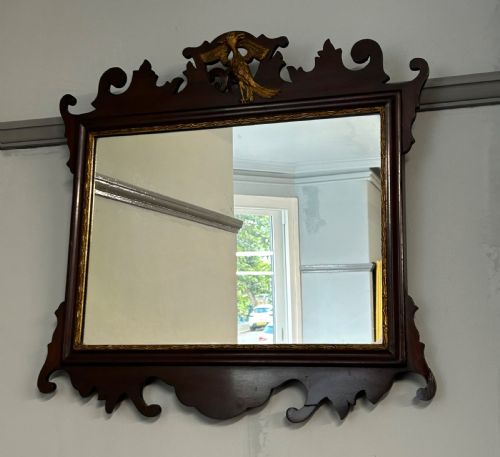


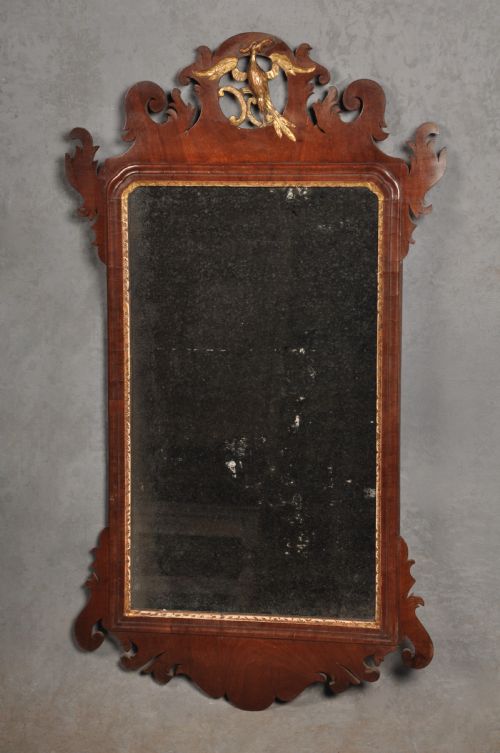

Georgian Bird Mirror
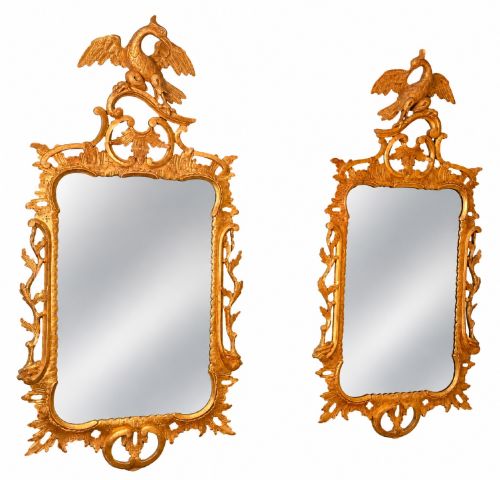
A georgian bird mirror brings remarkable carved phoenix crests and rich mahogany or giltwood into a room.
Georgian Bird Mirror
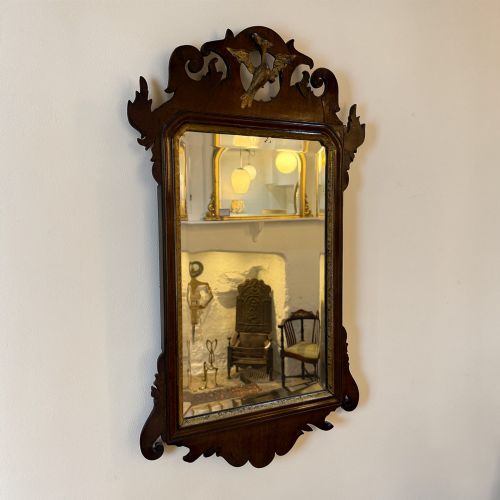
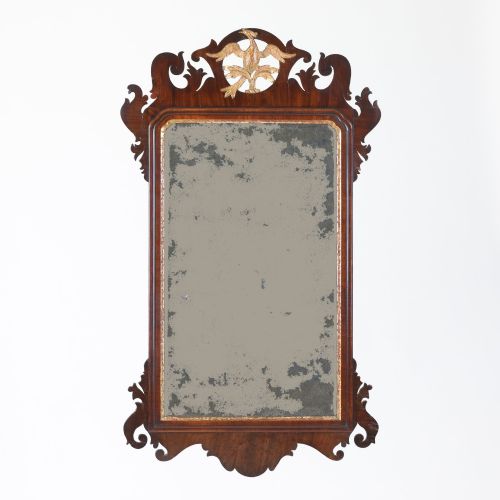
A georgian bird mirror is defined by its ornate fret-cut frame, often fashioned from mahogany or finished in gold leaf, topped with a carved mythical bird. These wall mirrors draw the eye with intricate fretwork and scrolling outlines derived from eighteenth-century design books.
The versions met on this page span genuine eighteenth-century pieces from the George III period alongside later revivals from the Victorian era and the nineteenth century. Buyers encounter both compact wall hanging pieces and large overmantel mirrors incorporating birds eye maple, gesso, and reverse painted glass panels.
Originating in the sophisticated parlours of the Georgian era, these pieces often feature the distinctive ho ho bird, a phoenix motif borrowed from Chinese art. Later cabinetmakers in the nineteenth century eagerly revived these fret-cut silhouettes, producing quality mahogany and giltwood interpretations.
Materials and construction
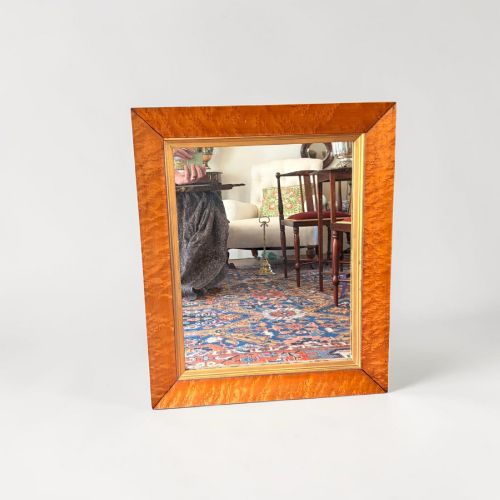
Makers fashioned these frames using dense timber like mahogany and birds eye maple, frequently applying thin layers of gold leaf over gesso to highlight carved crests and borders. The wood was carefully sawn to create delicate fretwork patterns around the central glass plate.
Mirrors from the eighteenth and nineteenth centuries utilise traditional joinery and hand-carved details, often combining gilt wood with painted elements or reverse glass prints. The resulting frames balance structural timber with ornamental flourishes that demand steady handiwork.
Georgian Bird Mirror Retail Price Guide 2026
Typical asking prices for georgian bird mirror among the pieces listed under this phrase on Sellingantiques today, from the lower quarter to the upper quarter. They describe what is for sale here now, not the wider market.
Listings span the 18th, 19th, and early 20th centuries, featuring mahogany, giltwood, gesso, and birds eye maple.
Distinctions in quality
Quality rests upon the crispness of the hand-carved fretwork and the depth of the scrolling details around the phoenix crest. Finer examples display precise jigsaw piercing and well-defined bird carvings rather than soft, flat edges.
The choice of primary timber significantly affects the character of the piece, with richly figured mahogany or birds eye maple sitting at the higher end. Gilding application and the preservation of original glass plates further separate standard interpretations from superior works.
The Georgian Bird Mirror Glossary
- Ho-ho bird
- A stylized phoenix originating in Chinese export art, commonly carved into the scrolling crest of eighteenth-century and revival mirrors. It adds an exotic flourish to the top of the timber frame.
- Fretwork
- Openwork patterns cut into thin boards using a fine saw, creating intricate geometric or scrolling designs on mirror frames. This technique defines the silhouette of Chippendale-style wall mirrors.
- Gesso
- A plaster-based mixture applied to wood frames to provide a smooth surface for gilding with gold leaf. Skilled artisans built up this layer before carving fine decorative details.
- Overmantel mirror
- A wide horizontal mirror designed to hang above a fireplace mantel, often featuring multi-section glass plates and elaborate crests. These substantial pieces anchor grand domestic interiors.
- Reverse glass painting
- An artwork technique where paint is applied directly to the back of a glass pane to be viewed from the front. Eighteenth-century mirrors occasionally incorporate these panels above the main looking glass.
Georgian Bird Mirror: Frequently Asked Questions
What is a ho ho bird?
A ho ho bird is a decorative phoenix motif borrowed from Chinese porcelain and textiles, adopted by British cabinetmakers to crown elaborate mirror frames.
These mythical birds sit perched atop the scrolling fretwork, giving the mirrors their distinctive character and lively silhouette.
How do I date a mirror?
Dating relies on examining the timber species, secondary woods, construction techniques, and the style of the fret-cut frame.
Eighteenth-century examples show different hand-tool marks and wood shrinkage compared to nineteenth-century Chippendale revival pieces.
Where should I hang it?
These mirrors suit principal reception rooms, hallways, or above a fireplace mantel where the carved crest can be fully appreciated.
Ensure the wall fixings safely support the weight of the timber and glass frame without straining the structure.