

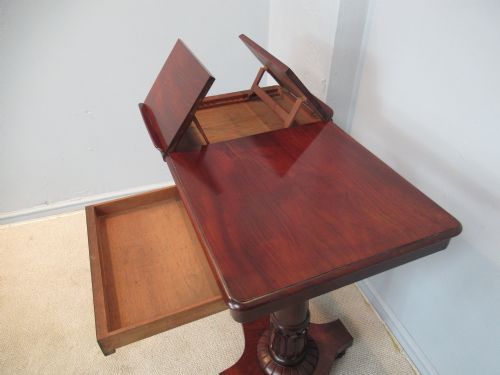


Georgian Adjustable Desk
A georgian adjustable desk is an ingenious piece of utilitarian furniture designed for reading, writing, and drafting, offering mechanical versatility that collectors still prize today.
Georgian Adjustable Desk
When you search for a georgian adjustable desk, you encounter a specialised form of antique furniture engineered to alter its height or angle for the user. These pieces span periods from the eighteenth century through the nineteenth century, encompassing forms such as architects' tables, reading stands, and music desks.
Mahogany dominates the material record, frequently paired with brass ratchets, leather writing surfaces, and occasional rosewood or coromandel accents. The selection ranges from double-sided reading tables to cantilevered calligrapher's tables and extending book slides.
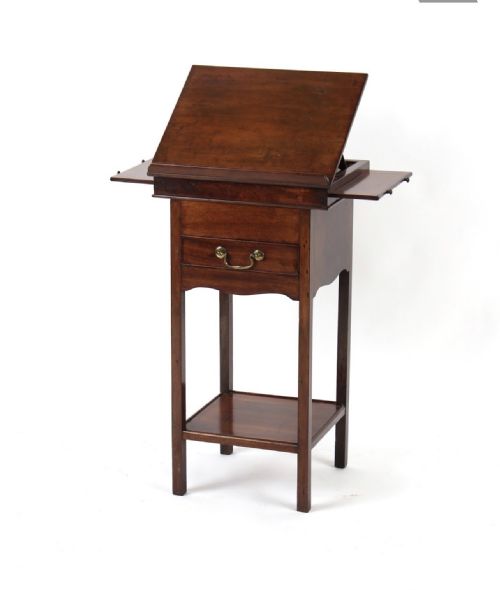
The most common survival from this span is the mahogany reading table or architects' desk, often featuring ratcheted book supports or rising tops supported by clever internal mechanisms. These items reflect an era when workspace ergonomics relied entirely on mechanical ingenuity rather than pneumatic lifts.
Assessing quality and execution
The refinement of the mechanical movement dictates the standing of a piece, separating simple folding actions from complex, smoothly operating rack-and-pinion systems or concealed ratchets. Superior examples demonstrate fluid adjustment without binding or excessive play in the joints.
Timber selection and secondary detailing reveal the workshop's ambition, with figured mahogany and precise brass fittings distinguishing bespoke library furniture from more utilitarian workshop production.
Georgian Adjustable Desk Retail Price Guide 2026
Typical asking prices for georgian adjustable desk among the pieces listed under this phrase on Sellingantiques today, from the lower quarter to the upper quarter. They describe what is for sale here now, not the wider market.
Listings feature mahogany, rosewood, and coromandel timbers combined with brass hardware across eighteenth and nineteenth-century forms.
Gillows
The Georgian Adjustable Desk Glossary
- Ratchet
- A notched metal bar that engages with a pawl to hold an adjustable desk top or reading slope at a chosen angle. It allows the user to alter the incline incrementally.
- Telescopic
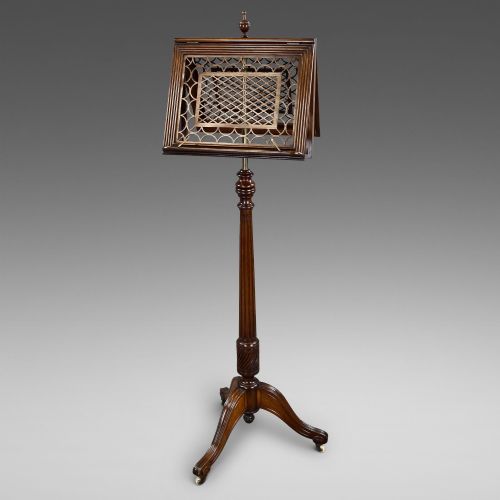
- Describing a vertical column or pillar made of concentric sliding tubes that permit height adjustment. This mechanism appears frequently in reading stands and candlesticks.
- Duet stand
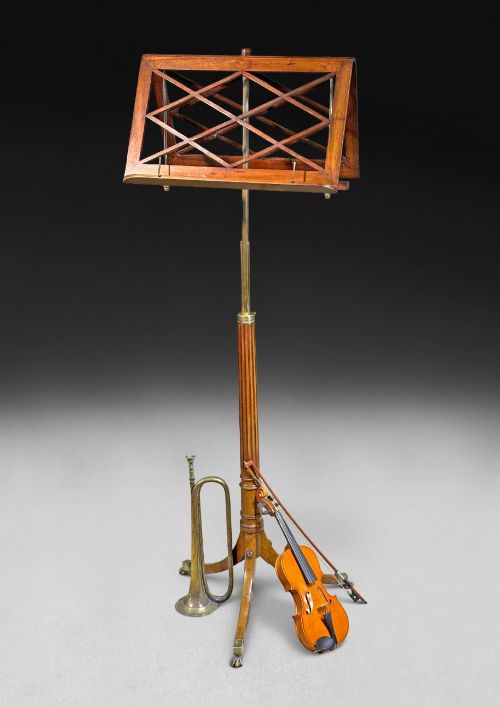
- A music stand or reading table wide enough to accommodate two scores or books simultaneously. They often feature dual folding ledges.
- Book slide
- An expanding tabletop rack designed to hold a varying number of volumes upright between two bookends. The extending mechanism uses sliding wooden or brass sections.
- Architects table
- A specialised form featuring a rising centre section supported by a ratchet, designed for drafting and drawing. These tables often include pull-out candle slides or drawers.
Georgian Adjustable Desk: Frequently Asked Questions
What is a georgian adjustable desk used for?
These pieces served practical purposes in libraries, studies, and studios, providing a stable surface for reading heavy folios, writing correspondence, or drafting architectural drawings. The adjustable mechanism allowed the user to work whilst standing or sitting at a preferred angle.
Over time, owners adapted them for various domestic tasks, from holding music sheets to displaying open books as decorative items in a study.
How do I adjust the reading slope?
Most slopes operate via a metal ratchet fixed to the underside, which engages with a catch to hold the board at different heights. You lift the desk top slightly to release the pawl, move it to the desired notch, and lower it back into place.
Care should be taken with older brass mechanisms to ensure the bar aligns correctly with the teeth before letting go of the weight.
Are these desks suitable for daily use?
Yes, many collectors use these tables for reading laptops, books, or writing, provided the mechanisms are stable and secure. Their sturdy mahogany construction and functional design make them practical additions to a modern home office.
Regular use requires gentle handling of the original brass ratchets and leather surfaces to preserve their condition over time.
How do I identify the period of the desk?
Dating relies on timber characteristics, cabinetmaking techniques, and the style of the brass hardware, such as Regency or George III aesthetic details. Secondary woods and the type of joint construction inside drawers also offer clues to the decade of manufacture.
Comparing the mechanical complexity and decorative motifs with documented examples helps narrow down whether a piece dates to the eighteenth or nineteenth century.