

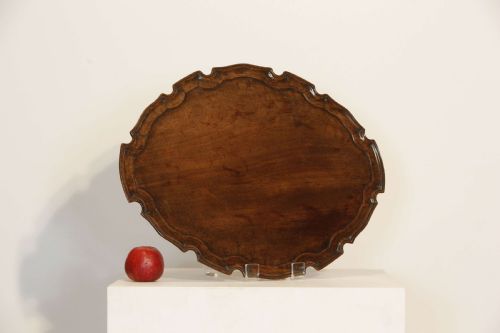
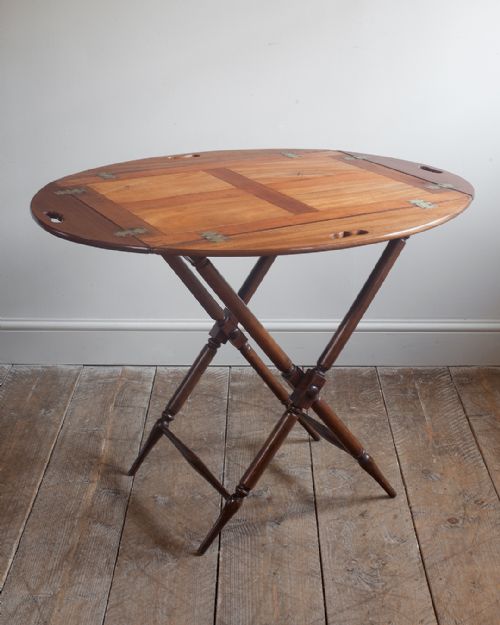


George III Serving Tray
These George III serving tray pieces are practical timber and silver serving vessels that anchor a room with period proportion.
George III Serving Tray
When you search for a george iii serving tray, you enter a field of Georgian timber and silver pieces that served elite dining rooms. The listings on this page centre upon oval mahogany butlers trays, galleried serving trays, and sterling silver salvers.
You are most likely to meet mahogany variants with inlaid details or raised edges, alongside silver salvers bearing hallmarks from the late eighteenth and early nineteenth centuries. These objects range from oval trays to silver tables and tiered dumb waiters that share the stylistic vocabulary of the period.
How they were made
Maker's hands shaped these pieces from solid mahogany and satinwood, often employing inlay to create subtle geometric borders across the timber surface. Trays utilise sturdy wooden bases with shaped galleries, while silver salvers and platters rely on heavy sterling silver cast and chased by hand.
Joinery techniques of the Georgian era kept the timber stable through decades of heavy use in dining and entertaining spaces. Silversmiths hammered and engraved the metal surfaces to produce reflective planes and crisp borders.
George III Serving Tray Retail Price Guide 2026
Typical asking prices for george iii serving tray among the pieces listed under this phrase on Sellingantiques today, from the lower quarter to the upper quarter. They describe what is for sale here now, not the wider market.
The listings on this site show mahogany as the dominant material, appearing alongside sterling silver, brass, and satinwood.
What varies in quality
The distinction between ordinary and exceptional pieces rests upon the crispness of the timber carving and the subtlety of the satinwood inlay. A superior mahogany tray displays deep natural grain and precise joinery along the galleried edges rather than mechanical uniformity.
In silver items, quality reveals itself in the weight of the metal and the clarity of the maker's mark stamped into the base. The hand of the maker dictates whether a piece remains a utilitarian vessel or achieves sculptural distinction.
Robert Breading·Paul Storr
The George III Serving Tray Glossary
- Butlers tray
- A portable wooden tray with hinged or fixed sides designed for carrying service items. It frequently rests upon a folding stand.
- Galleries
- A raised edge or pierced railing surrounding the perimeter of a tray to prevent items from sliding off. This feature is often shaped from timber or cast in silver.
- Sterling silver
- An alloy of silver containing 92.5 percent pure silver and 7.5 percent other metals, typically copper, used for durable domestic plate. It carries official assay office hallmarks.
- Dumb waiter
- A tiered freestanding serving stand with revolving circular shelves supported on a central column. It allowed diners to help themselves without servants present.
- Salver
- A flat metal tray used for serving food or drinks, usually raised on small feet. These silver pieces often display engraved armorial bearings.
George III Serving Tray: Frequently Asked Questions
What is a butlers tray?
A butlers tray is a deep wooden tray with carrying handles, originally made to be lifted off its stand and carried by staff.
These pieces utilise mahogany and satinwood, frequently featuring raised galleried edges to secure glassware and decanters during transit.
How do I spot silver quality?
Silver quality shows in the heft of the metal and the precision of the engraved decoration across the surface.
Examination of the hallmarks reveals the maker, the city of assay, and the year of production, anchoring the piece in the late eighteenth or early nineteenth century.
Where were dumb waiters used?
Dumb waiters stood beside the dining table to hold extra dishes, wine bottles, and tableware during long meals.
These tiered mahogany structures allowed guests to serve themselves without servants lingering in the room.
What timber was used?
Mahogany served as the primary timber for these trays, tables, and dumb waiters due to its strength and rich grain.
Craftsmen often combined it with lighter satinwood for contrast in inlay work and decorative banding.