



George III Executive Desk
A george iii executive desk is a substantial workspace built for serious administration, offering drawers and writing surfaces designed to anchor a traditional study.
George III Executive Desk
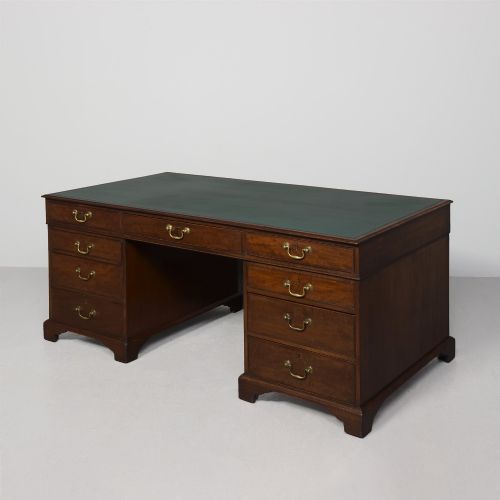
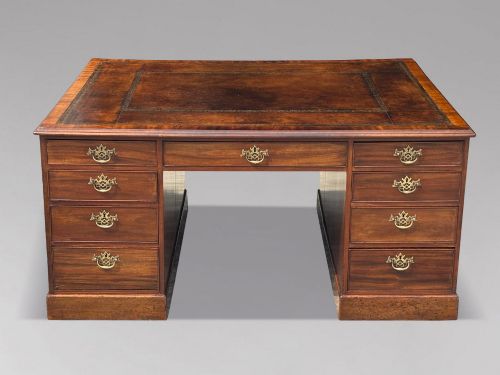
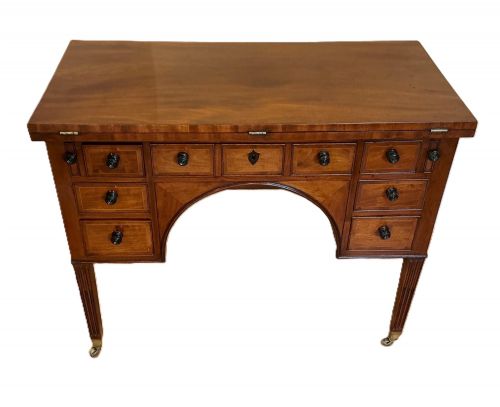
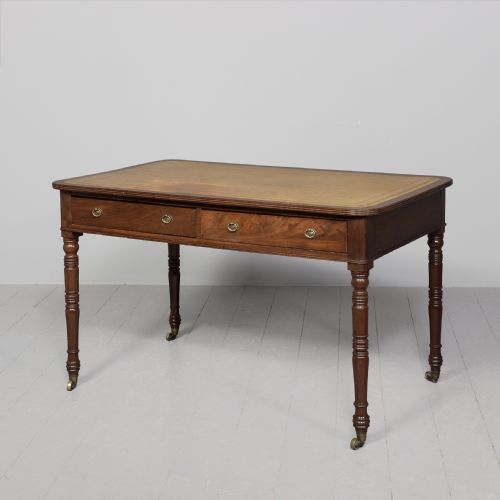
When you search for a george iii executive desk, you encounter large double-sided writing tables, kneehole desks, and multi-drawer partners desks originating from the Georgian period. The examples on this page are predominantly constructed from mahogany and walnut, spanning the eighteenth century, the year 1800, and the nineteenth century.
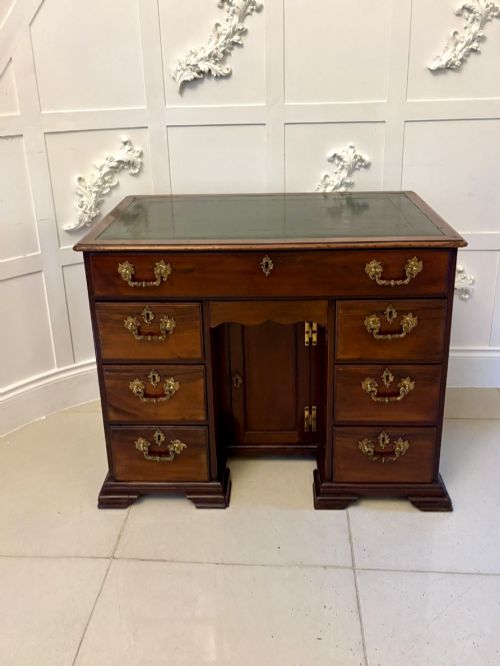
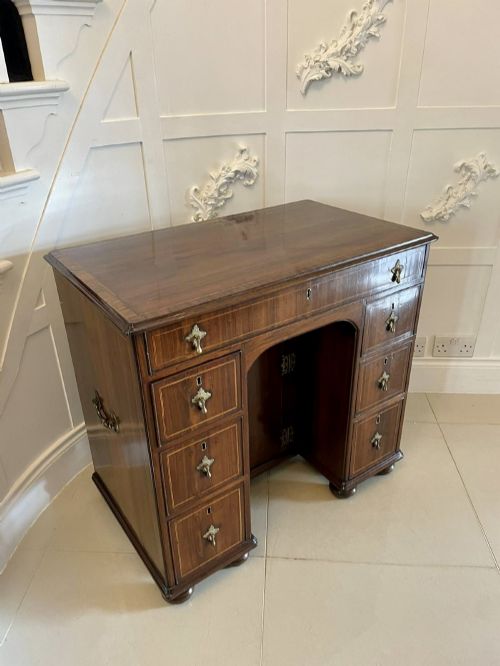
You are most likely to meet kneehole desks and partners desks equipped with numerous drawers, alongside library tables designed to stand free within a room. These forms reflect the functional requirements of writing and document storage from the period.
The styles range from plain Georgian forms to George III Chippendale designs, showing variations in pedestal arrangements and writing surfaces. Each piece provides a surface for daily administration and storage compartments for papers.
How they were made
Makers utilised solid timbers such as mahogany and walnut for the primary structures, incorporating secondary woods like oak within the drawer frames. Boxwood stringing frequently provides linear detail along the edges and drawer fronts.
Working surfaces typically incorporate inset leather panels to provide a smooth writing area. Brass fittings, including handles and locks such as George Rex examples, secure the drawers and operate the hardware.
Some desks hide secret compartments inside pedestal drawers for confidential correspondence.
What varies in quality
The grade of timber selection distinguishes standard construction from finer items, particularly the density and grain pattern of the mahogany or walnut. Original handles and authentic period locks contribute significantly to the integrity of the piece.
Proportion and execution of stylistic details, such as Chippendale carving or boxwood inlay, mark the distinction between everyday administrative furniture and superior library furnishings.
Gillows of Lancaster
The George III Executive Desk Glossary
- Partners desk
- A large double-sided desk built with drawers and cupboards on both opposing faces to allow two people to work opposite one another. This form was standard for administrative use in libraries and offices.
- Kneehole desk
- A compact pedestal desk featuring a central recessed space for the legs beneath a single main drawer and banks of smaller drawers either side. It provides storage while maintaining a modest footprint against a wall or within a room.
- Library table
- A freestanding table designed for central room placement rather than sitting against a wall, often fitted with frieze drawers. These tables served for reading and holding reference volumes.
- Partners writing table
- A large writing surface supported by pedestals or legs, equipped with workspace on both sides. It accommodates seated administrative work from either direction.
- Boxwood stringing
- Thin inlay lines of pale boxwood set flush into darker timber surfaces to create contrasting geometric borders. This decorative technique defines panel edges on drawers and tabletops.
George III Executive Desk: Frequently Asked Questions
What is a partners desk?
A partners desk is a large double-sided workspace featuring drawers and cupboards on both opposing faces. It was designed to allow two individuals to sit and work opposite each other in a shared office or library.
These pieces provide substantial storage capacity and deep pedestals, making them suitable for active administrative use. Their freestanding design allows them to sit centrally within a room rather than against a wall.
How do I use a kneehole desk?
A kneehole desk functions as a compact writing and storage station, typically placed against a wall or within a study. The central recess accommodates a chair while the surrounding drawers hold correspondence and papers.
These desks work well in smaller rooms where a full partners desk would overwhelm the floor space. Their multiple drawers offer practical organisation for daily stationery.
What wood was used?
Makers constructed these desks predominantly using mahogany and walnut as primary timbers, supported by secondary woods like oak inside the drawers. Boxwood often appears as fine stringing inlay on drawer fronts and borders.
Working surfaces frequently incorporate inset leather panels framed by the timber. Brass hardware, including drop handles and operational locks, completes the material composition.
Are these desks double-sided?
Many examples on this page, particularly partners desks and library tables, are double-sided with drawers accessible from both faces. This configuration allowed two people to utilise the same piece of furniture simultaneously.
Single-sided kneehole desks feature drawers on the front only and typically back up against a wall. Checking the presence of drawers or faux drawers on the reverse reveals whether a desk is double-sided.