
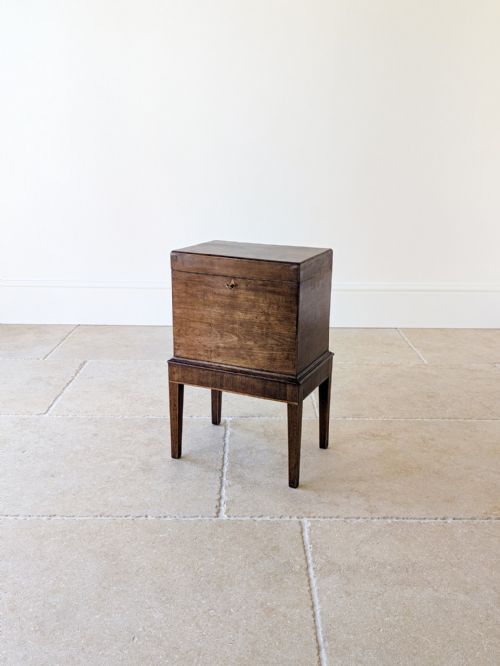
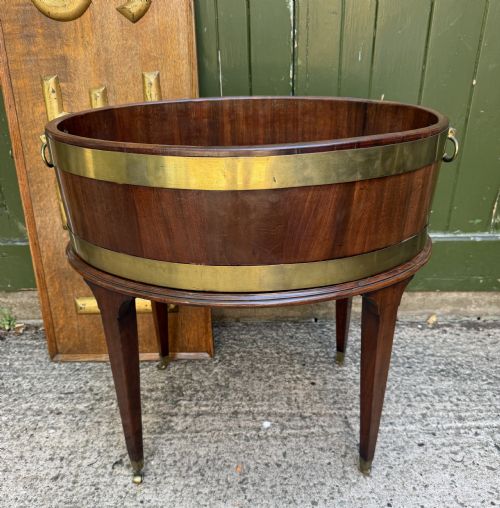

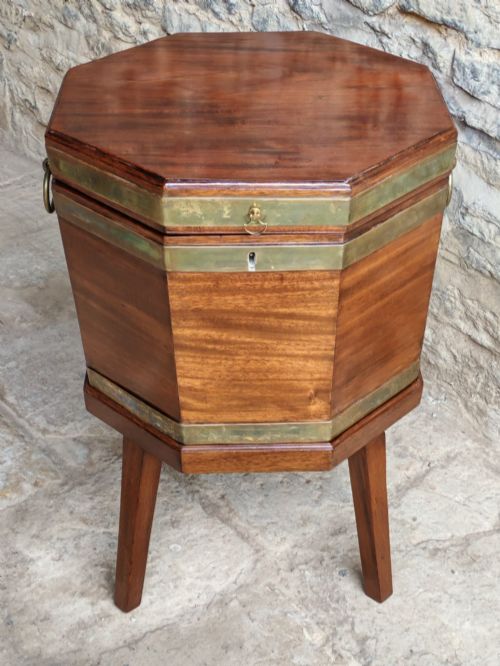
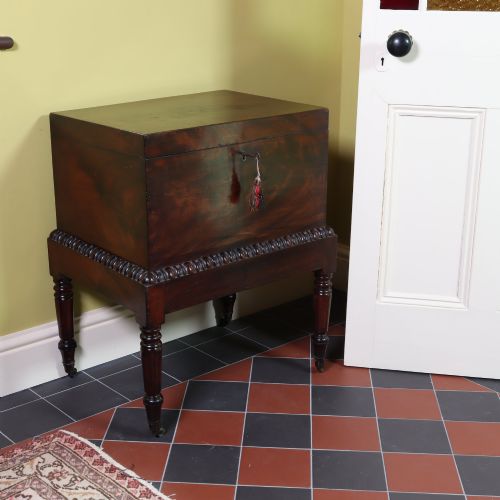
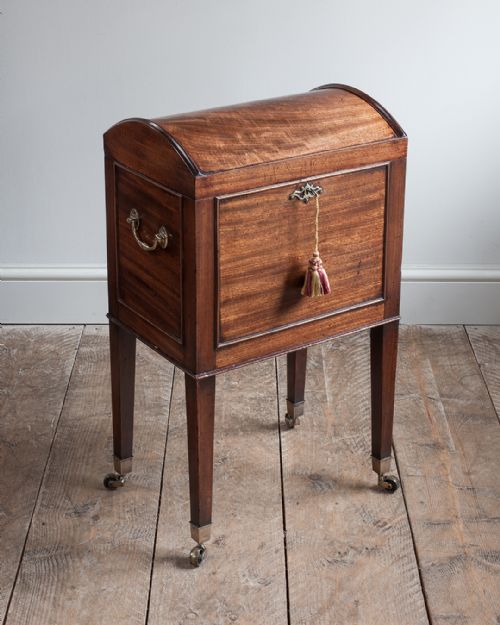


George III Cellarette Stand
A george iii cellarette stand is a sophisticated drinks receptacle designed to keep bottles cool.
George III Cellarette Stand
Most examples date from the Georgian era and feature rich timber construction intended for formal dining rooms. These functional vessels served to chill bottles in ice before serving, combining practicality with refined domestic elegance.
Materials and construction methods
Cabinet makers utilised solid mahogany and flame mahogany veneers, often accentuating the exterior with brass bands and metal linings. Boxwood and satinwood inlay appear on select examples to create subtle decorative contrast.
Joinery techniques focused on durability, employing tight staves or panel construction to hold liquid and ice without leaking. Metal liners of zinc or other metals protected the timber interior from moisture.
Some formal dining rooms required a locked wine chest because servants enjoyed sampling the cellar stock just as much as the guests.
Evaluating craftsmanship and quality
Quality rests in the figure of the mahogany timber and the crispness of any inlaid details. Pieces with well-preserved patination and original brass binding command greater attention from discerning collectors.
The integrity of the underlying stand and the survival of internal metal linings distinguish superior examples. Proportions and the subtlety of octagonal or oval shaping further separate standard items from finer workshop output.
The George III Cellarette Stand Glossary
- Cellarette
- A lockable container used for storing and cooling wine bottles. These vessels typically sat beneath the sideboard or upon a frame.
- Jardiniere
- An ornamental pot or stand for holding plants or flowers. Certain open wine coolers found a second life in this capacity.
- Flame mahogany
- Timber veneer cut from the fork of the mahogany tree, displaying a distinctive flamy ripple pattern. This costly grain denoted high status.
- Brass-bound
- Construction reinforced with heavy brass bands secured by screws or rivets around the body. This detail added structural strength and visual contrast.
George III Cellarette Stand: Frequently Asked Questions
What is a george iii cellarette stand used for?
These pieces served to hold wine bottles and ice during formal eighteenth-century dining. They kept beverages at the correct temperature close to the dining table.
Servants would load the interior metal lining with ice and bottles before the meal commenced. Afterwards, the lockable lid secured the remaining stock.
How do I clean a mahogany wine cooler?
Maintain the polished timber surface using a soft cloth and quality beeswax rather than modern chemical sprays. Avoid exposing the antique wood to direct sunlight or damp conditions.
Protect the interior metal lining from standing water to prevent corrosion. Gentle dusting preserves the historic patination accumulated over centuries.
Are these stands always fixed to the cooler?
Many surviving examples separate the vessel from its supporting frame or stand. Free-standing bottle stands and low-sitting coolers also appear within this category.
Original matching stands enhance the integrity of the piece. Buyers should examine whether the base and body share matching wear patterns and timber characteristics.