


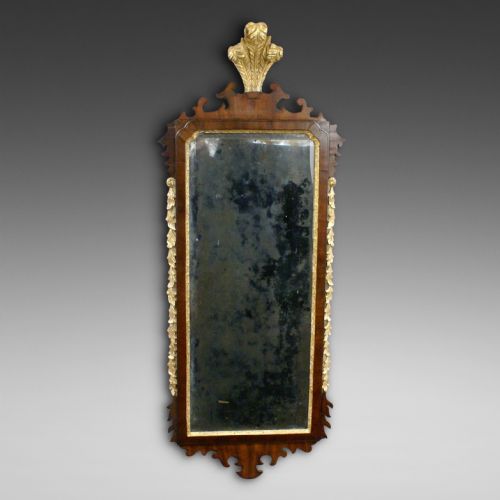

George II Fretwork Mirror
A george ii fretwork mirror brings mid-eighteenth-century proportion and intricate pierced woodwork directly to a wall.
George II Fretwork Mirror
A george ii fretwork mirror is a wall or toilet glass defined by symmetrical pierced wooden scrollwork framing the plate. These pieces originate primarily from the eighteenth century, alongside later revival interpretations executed during the Victorian era and around eighteen eighty.
The dominant timbers visible across these examples are walnut and mahogany, frequently enhanced with parcel gilt details. Wall mirrors and smaller toilet mirrors make up the principal forms encountered on this page, spanning both original period output and later nineteenth-century revivals.
Materials and construction methods
Cabinetmakers constructed these frames using dense hardwoods like mahogany and walnut, which provided the structural stability required for intricate fret-sawn borders. Fretwork panels were typically cut by hand using a fine-bladed scroll saw from thin timber sheets before being applied to a main backing frame.
Giltwood and parcel gilt highlights were applied using gold leaf over a prepared gesso ground, brightening the crests, ears and inner mouldings. Original mirror glass was silvered by hand, often resulting in subtle imperfections and a softer reflection compared to modern float glass.
George II Fretwork Mirror Retail Price Guide 2026
Typical asking prices for george ii fretwork mirror among the pieces listed under this phrase on Sellingantiques today, from the lower quarter to the upper quarter. They describe what is for sale here now, not the wider market.
Distinctions in quality and execution
Superior examples demonstrate crisp, deeply carved scrollwork and precise fret-piercing where the timber grain runs advantageously to prevent snapping. The proportion between the mirror plate and the surrounding pierced border governs the visual balance of the whole object.
The integration of applied gilding and the retention of original brass side sconces or brass hanging hooks differentiate higher-grade period output from simpler interpretations. Older walnut and mahogany surfaces exhibit a deep, warm patina developed through decades of careful maintenance.
The George II Fretwork Mirror Glossary
- Fretwork
- Pierced decorative woodwork cut into patterns using a fine saw. This technique creates the signature scrolling borders seen on eighteenth-century wall mirrors.
- Parcel Gilt
- Partially gilded woodwork where gold leaf highlights specific carved details, such as bird crests or inner bezels, against a dark wood background.
- Pier Glass
- A tall mirror designed specifically to hang on the wall space, or pier, between two windows. These pieces often feature elaborate fret-sawn crests.
- Giltwood
- Timber carved and covered with a thin layer of gold leaf applied over a gesso base. It reflects candle light effectively in period interiors.
- Toilet Mirror
- A smaller dressing glass supported on a swinging frame above a small box base with drawers. They sat atop dressing tables in Georgian bedchambers.
George II Fretwork Mirror: Frequently Asked Questions
How do I hang a heavy antique mirror safely?
Traditional mirror frames require secure wall fixings distributed across the main structural timber frame rather than relying on old brass rings alone. It is wise to consult a professional art handler to assess the weight and wall composition.
Ensure the hanging wire or integrated brackets match the load capacity to prevent strain on the historical joints.
Where should I place this mirror in a modern room?
A geometric walnut or mahogany frame suits traditional drawing rooms, hallways, and above mantelpieces where reflected light brightens darker corners. Their vertical proportions work well between windows or above console tables.
Keep them away from direct sunlight and damp walls to protect the delicate wood veneers and historic gilding.
How do I tell an original eighteenth-century piece from a later revival?
Eighteenth-century examples show hand-cut fretwork with slight irregularities and timber construction appropriate to the period, such as old secondary softwoods. Nineteenth-century revival pieces often feature machine-sawn precision and different backing fixings.
Examining the backboards, fixings, and the ageing of the mirror glass helps clarify the manufacturing era.
How should I clean the glass and wooden frame?
Dust the pierced fretwork gently with a soft, dry brush to prevent dirt buildup in the intricate carved recesses. Avoid commercial chemical sprays that can damage old wood finishes and sensitive gold leaf.
Use a barely damp cloth only on the mirror plate itself, ensuring moisture does not seep behind the bevelled edges.