



Geometric Wood Box
These geometric wood box examples bring together centuries of intricate chip carving, marquetry, and inlay across utilitarian containers.
Geometric Wood Box
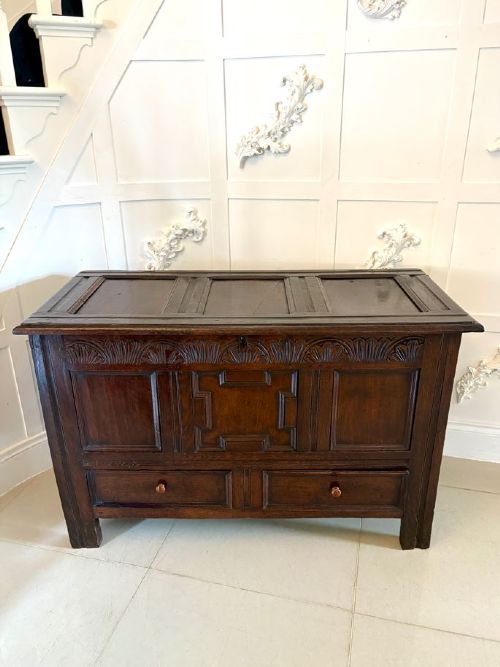
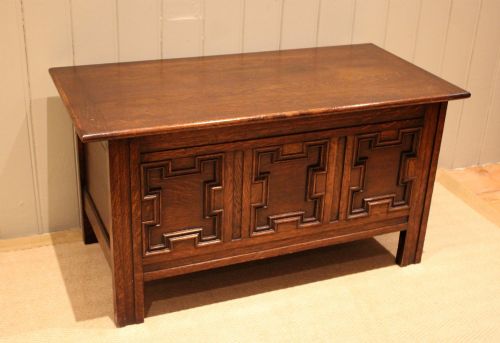
A geometric wood box encompasses storage forms ranging from miniature snuff boxes and stationery desks to large oak coffers and mule chests. The selection draws heavily on 17th-century pieces featuring geometric moulding alongside 19th-century Tunbridge ware and folk art vessels.
Buyers encountering this group will frequently find robust oak structures alongside delicate fruitwood, walnut, and kingwood items embellished with bone or boxwood. These pieces served practical domestic purposes, functioning as deed holders, writing slopes, and personal tobacco containers.
Origins stretch across English vernacular traditions, Welsh folk art, and specialised international decorative styles like Persian Khatamkari and Amsterdam School marquetry. Each object relies on disciplined surface pattern and structural woodworking to achieve its visual impact.
How they were made
Construction relies on solid timbers like oak, walnut, and fruitwood shaped through traditional joinery, pegged framing, and panelled box construction. Surfaces frequently display chip carving directly into the timber or employ meticulous decorative veneers.
Inlaid ornamentation incorporates contrasting materials such as boxwood, bone, brass, and white metal to define strict geometric motifs. Specialised techniques like Tunbridge ware assemble thousands of tiny wood blocks to form complex pictorial and geometric mosaics.
Finishing treatments utilise natural waxes and oils that highlight the grain of rosewood, ebony, and kingwood while protecting the intricate marquetry and inlaid patterns from daily handling.
Geometric Wood Box Retail Price Guide 2026
Typical asking prices for geometric wood box among the pieces listed under this phrase on Sellingantiques today, from the lower quarter to the upper quarter. They describe what is for sale here now, not the wider market.
Some nineteenth-century travellers carried multi-use boxes that secretly converted from writing desks into chessboard surfaces with the turn of a lid.
What varies in quality
The standard of a geometric wood box rests on the precision of its joinery, the crispness of the carving, and the exactness of its inlay work. Finer examples maintain structural integrity with tight mitres and uniformly flush veneers across every surface.
Material selection divides the range, separating utilitarian oak storage chests from highly finished desktop boxes utilising exotic woods like Madagascar ebony and kingwood. Original hardware, functional locking mechanisms, and intact interior fittings elevate the standing of any piece.
The complexity and ambition of the surface pattern distinguish standard items from exceptional ones, particularly where micro-mosaic Tunbridge ware or intricate Khatamkari geometric arrangements demand extreme artisanal control.
Edmund Nye
The Geometric Wood Box Glossary
- Chip carving
- A primitive woodworking technique where gouges and knives remove small chips from a wooden surface to create geometric patterns. This method appears frequently on early folk art and seventeenth-century boxes.
- Marquetry
- The art of applying small pieces of veneer to a structure to form decorative patterns and geometric designs. Makers utilise contrasting coloured woods to achieve complex visual depth.
- Tunbridge ware
- A specialised form of woodwork originating in Kent, characterised by tiny wooden mosaic tiles arranged to form precise geometric and pictorial scenes. These micro-mosaics cover nineteenth-century writing slopes and stationery boxes.
- Mule chest
- A traditional storage chest featuring one or more drawers beneath the main internal compartment. Seventeenth-century examples often display geometric mouldings on the front panels.
- Khatamkari
- An ancient Persian technique of marquetry where delicate stars and geometric shapes are constructed from bone, metal, and various woods before being glued onto a substrate.
Geometric Wood Box: Frequently Asked Questions
What is a geometric wood box?
A geometric wood box is a container featuring surface decoration based on repeated lines, shapes, or inlaid patterns. These objects range from small personal snuff containers to large oak storage chests.
Craftsmen across different centuries utilised chip carving, marquetry, and multi-wood inlay to create these disciplined visual patterns.
How were these boxes used?
These boxes served various domestic and travel functions depending on their scale. Smaller vessels held snuff, correspondence, or matches, while larger coffers stored household textiles and valuable documents.
Many incorporated specialised internal compartments for writing slopes, games boards, or personal valuables.
How do I date a wooden box?
Dating relies on observing construction methods, timber choices, and decorative styles. Seventeenth-century pieces typically feature heavy oak with pegged joints and geometric moulding.
Nineteenth-century examples frequently showcase refined veneers, exotic woods like kingwood, and specialised mosaic techniques such as Tunbridge ware.
What woods were commonly used?
Makers selected local and exotic timbers based on the desired function and decorative style. Oak and fruitwood dominate earlier vernacular pieces, offering durability for heavy chests.
Later decorative boxes incorporate walnut, rosewood, ebony, and boxwood to create high-contrast geometric marquetry and inlay.