

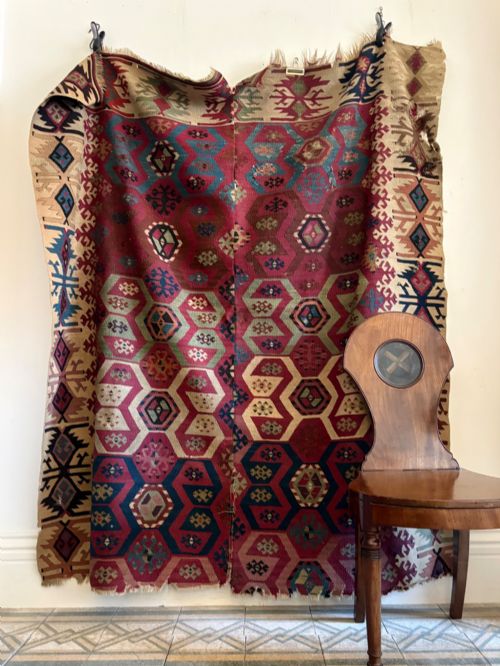
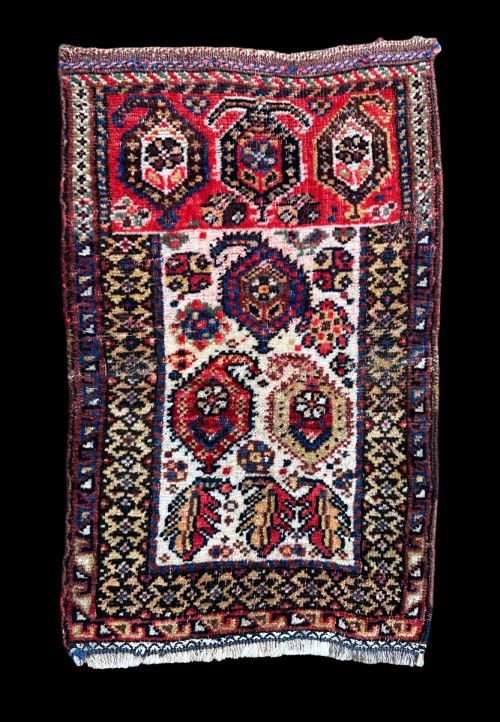
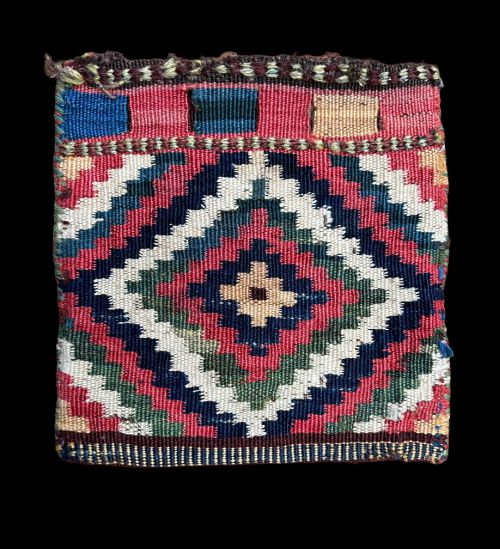
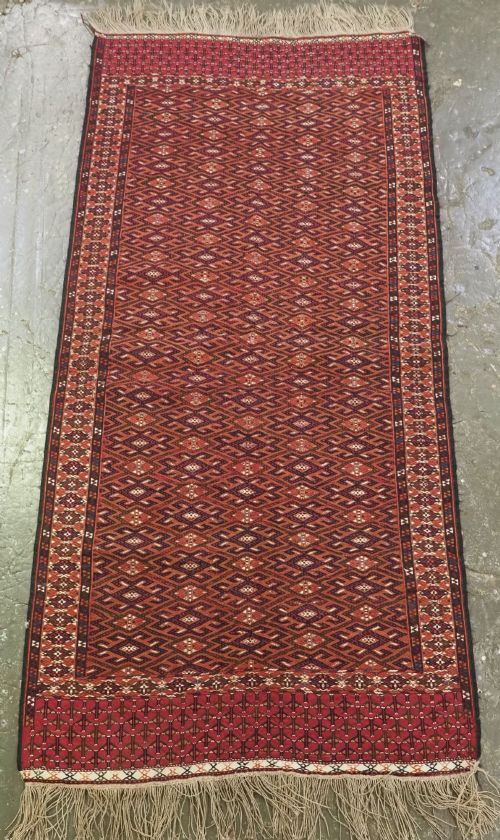
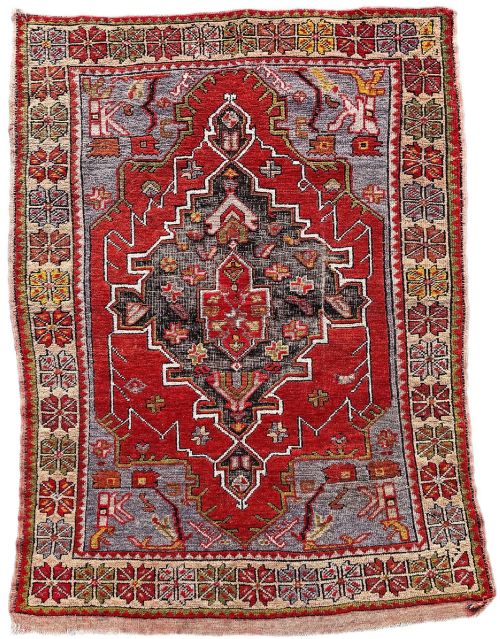
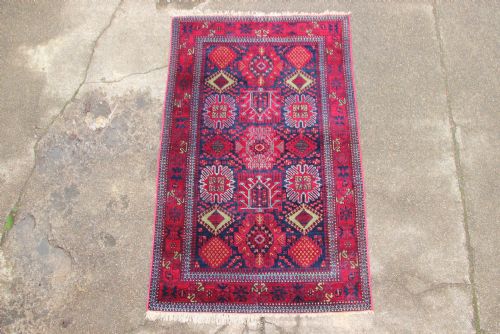
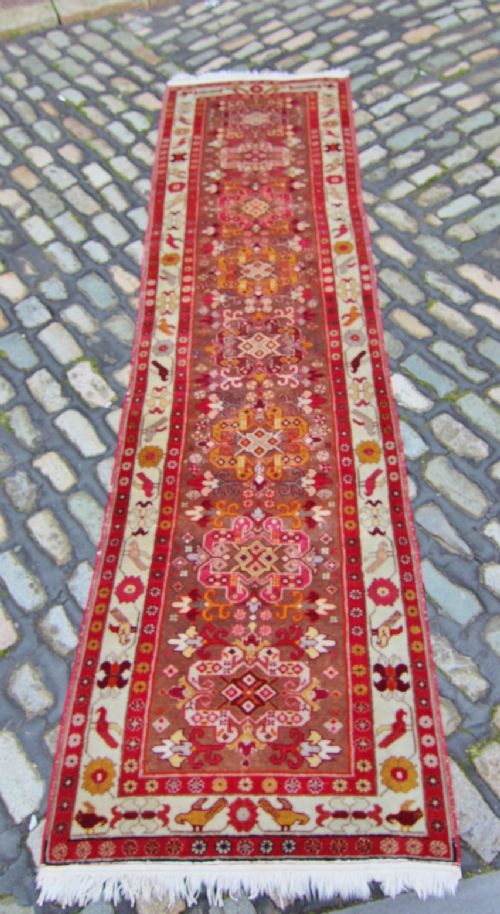
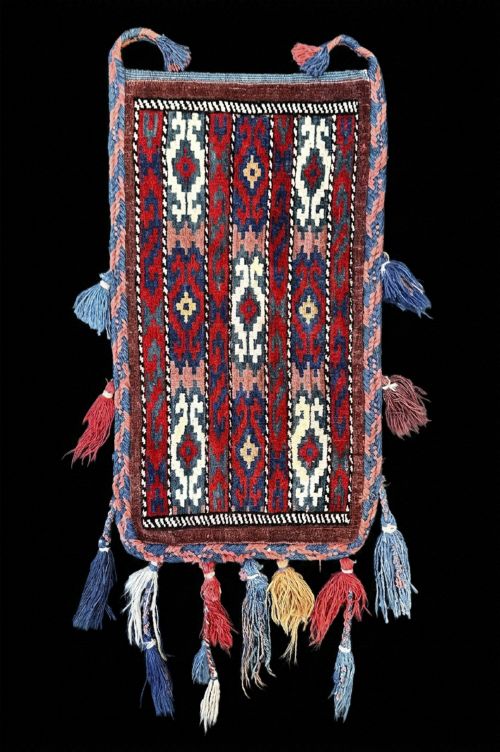
Geometric Tribal Weaving
Geometric tribal weaving brings together wool, cotton, and natural dyes to form rugs and flatweaves defined by striking regional patterns.
Geometric Tribal Weaving
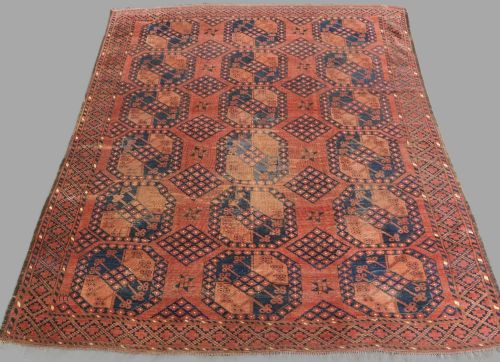
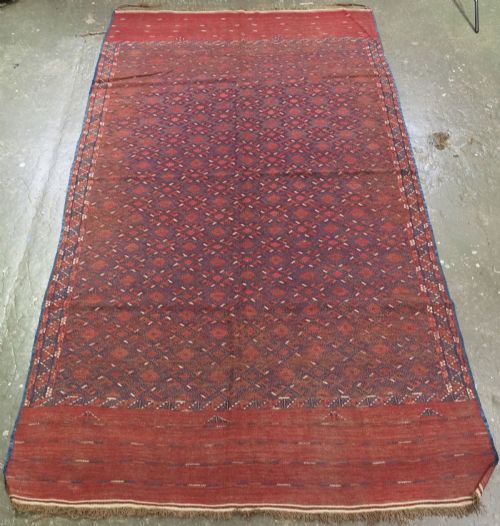
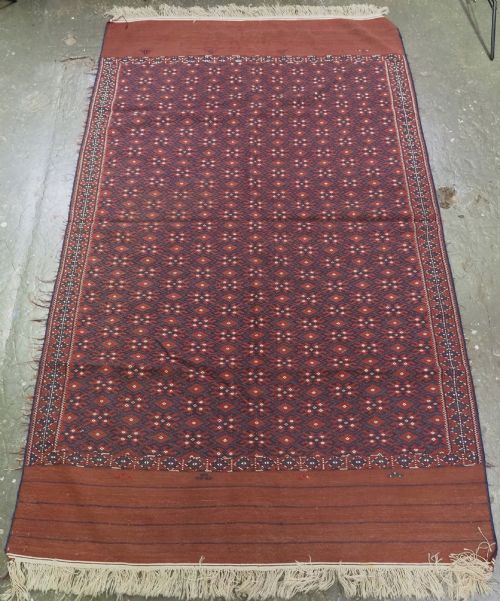
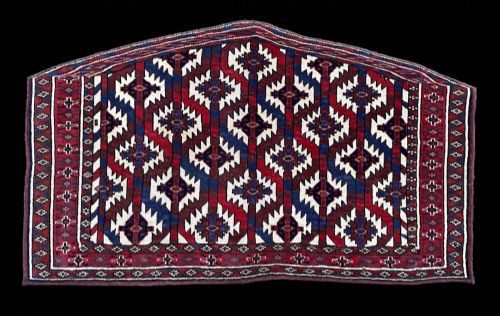
Geometric tribal weaving encompasses rugs, carpets, runners, flatweaves, and bags created by nomadic and village communities across Persia, the Caucasus, Anatolia, and Central Asia.
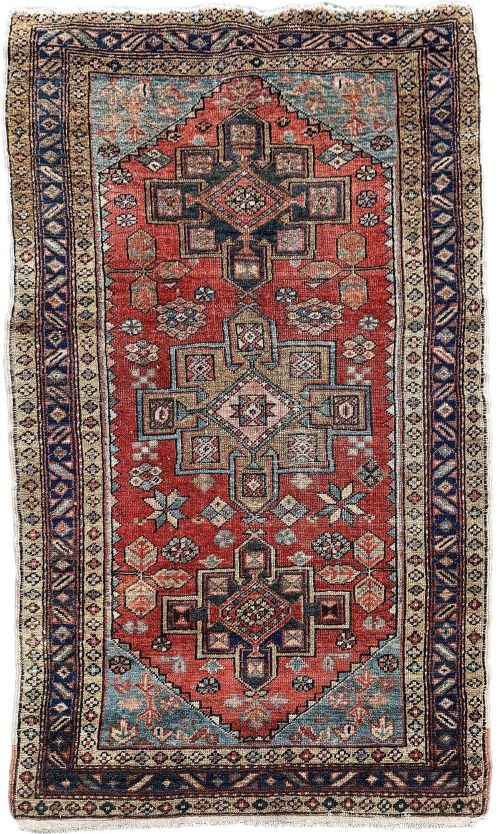
The version a buyer is most likely to meet on this page is a wool rug or runner from the nineteenth or early twentieth century, bearing characteristic motifs attributed to groups such as the Kazak, Baluch, Khamseh, and Qashqai.
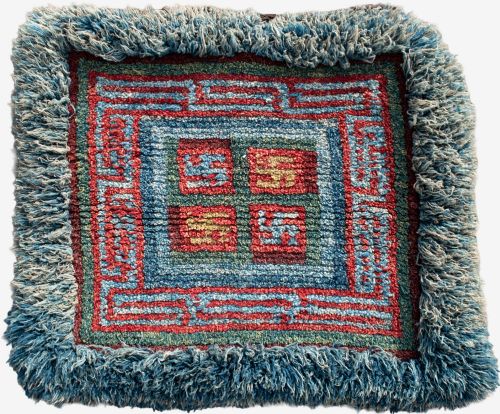
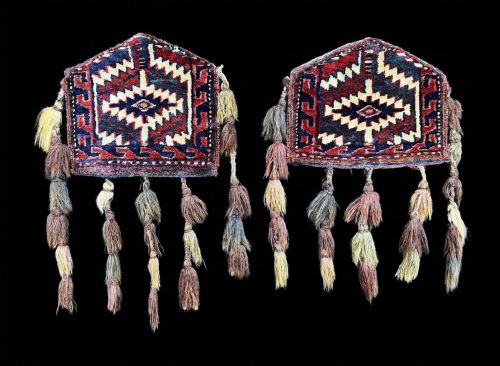
These textiles range from large carpets and long rugs down to small saddlebags and vanity bags, reflecting the diverse utilitarian output of nomadic weavers.
Materials and construction
The foundation of these pieces typically relies on spun wool and cotton, utilised in hand-knotted pile construction or flatwoven kilim techniques.
Weavers employed natural dyes to achieve rich colour palettes, producing distinctive grounds and medallions that endure across decades of use.
Geometric Tribal Weaving Retail Price Guide 2026
Typical asking prices for geometric tribal weaving among the pieces listed under this phrase on Sellingantiques today, from the lower quarter to the upper quarter. They describe what is for sale here now, not the wider market.
Listings span periods from the nineteenth century through to the 1930s, featuring wool, cotton, and natural dyes.
Distinctions in quality
Quality rests upon the precision of the knotting or flatweaving, the saturation and complexity of the natural dyes, and the integrity of the wool foundation.
Pieces that retain strong structural balance and clear, vibrant rectilinear drawing stand apart from examples where the wool has thinned or repairs compromise the design.
The Geometric Tribal Weaving Glossary
- Kilim
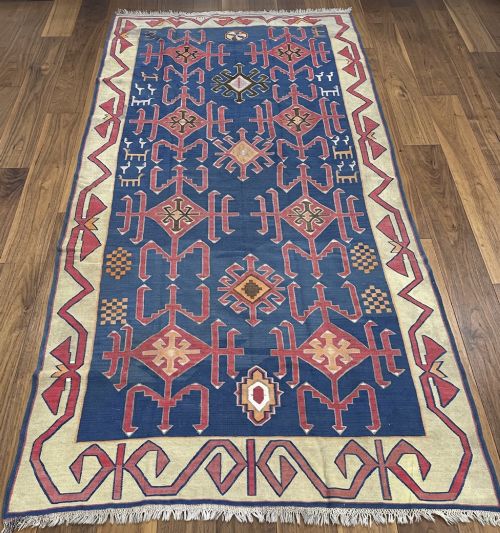
- A flatwoven rug or carpet produced without a pile, relying on interlocking wefts to create sharp geometric patterns.
- Kazak
- A style of rug originating from the Caucasus region, known for bold primary colours and strong rectilinear medallion designs.
- Soumak
- A brocade-like flatweaving technique where wrap-around weft threads create a textured, durable surface.
- Prayer rug
- A small rug featuring a mihrab or niche design, historically used for daily devotion.
- Jollar
- A Turkmen tent-bag or storage trapping, often displaying intricate gul motifs.
Geometric Tribal Weaving: Frequently Asked Questions
Where were these rugs made?
These textiles originate from nomadic and village workshops across Persia, the Caucasus, Anatolia, and Central Asia.
Specific regions include Karabakh, Shirvan, Daghestan, and the Fars province, each imparting distinct regional characteristics to the weaving.
How do I care for a tribal rug?
Protect the piece by placing it on a suitable underlay to prevent sliding and uneven wear.
Vacuum gently without a rotating brush bar and consult a specialist in antique textiles for professional cleaning.
What is the difference between pile and flatweave?
Pile rugs are knotted hand-by-hand with vertical warps and horizontal tufts of wool that create a soft, tactile surface.
Flatweaves like kilims and soumaks have no pile, created instead by interweaving warp and weft threads to form a thinner, flexible textile.
How can I tell the age of a piece?
Age is evaluated through the character of the natural dyes, the spin and quality of the wool, and traditional regional motifs.
Earlier pieces often display softer, mellowed colour palettes and organic irregularities inherent to hand-spun materials.