




Geometric Silver Jewellery
Geometric silver jewellery brings together clean lines, sharp angles, and bright metal from the Victorian era to the mid-century modern period.
Geometric Silver Jewellery
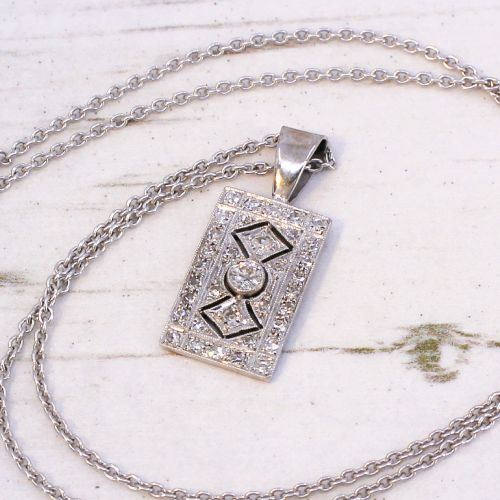
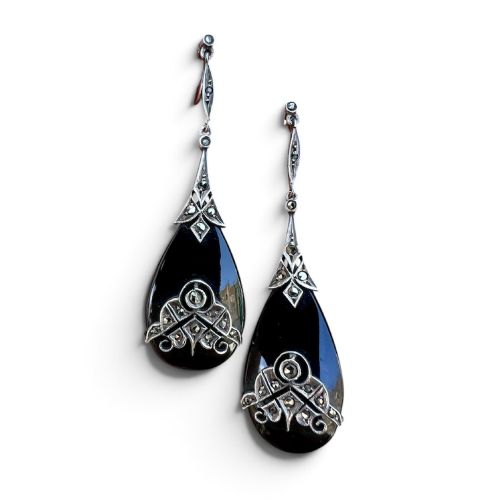
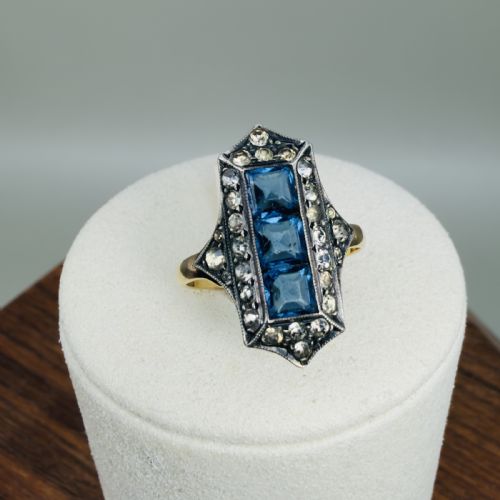
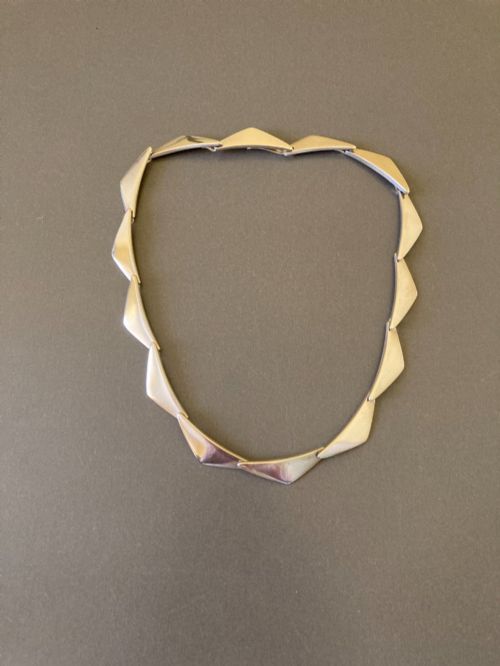
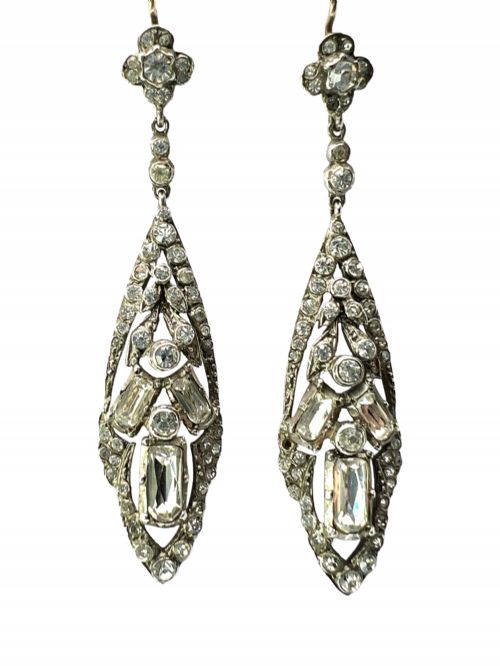
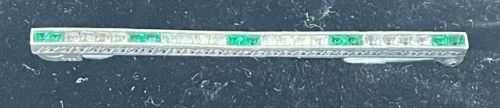
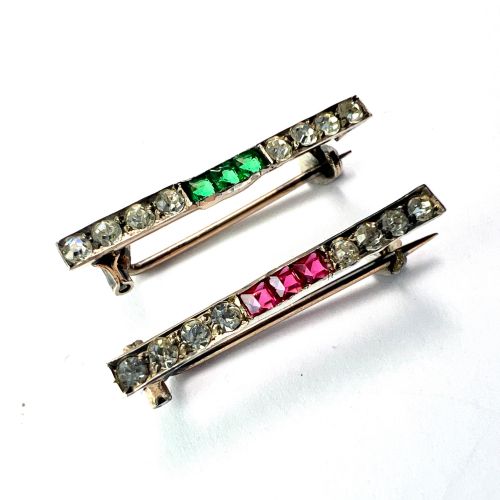
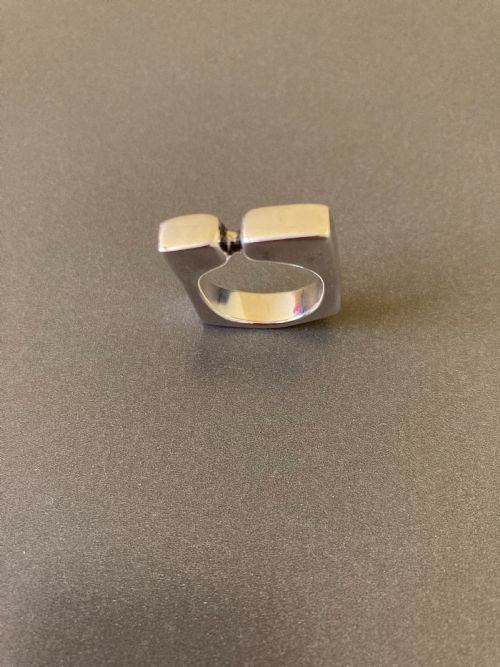
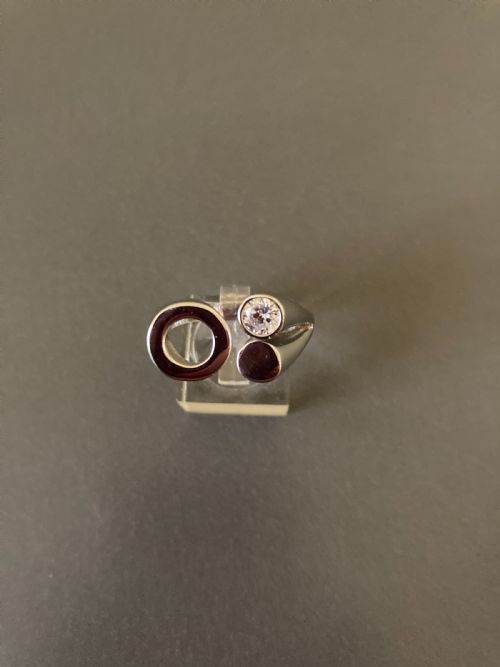
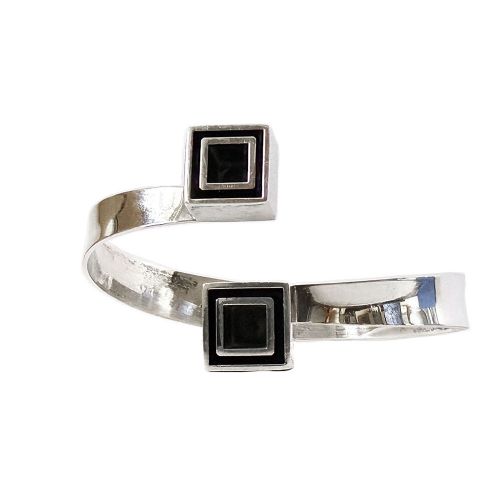
Geometric silver jewellery comprises wearable ornaments defined by straight edges, symmetrical layouts, and angular motifs. The items appearing most often on this page take the form of Art Deco rings, pendants, earrings, and bracelets created around 1920 and 1930.
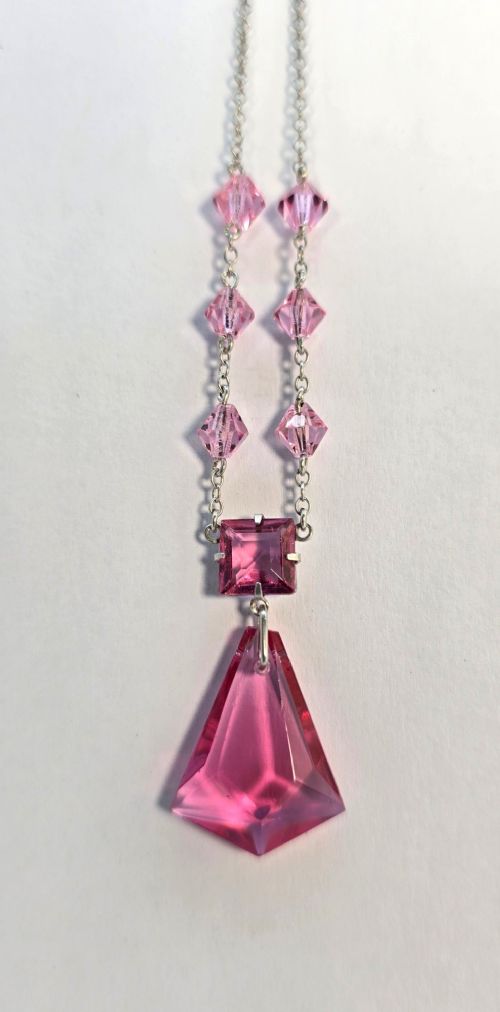
The selection ranges from Victorian rock crystal drops and 1890 pieces up to mid-century Scandinavian modernist silver. Buyers frequently encounter bracelets and necklaces built from rigid panel links or chrome and enamel combinations.
Beyond the standard silver base, many examples incorporate platinum, gold, paste stones, diamonds, and coloured glass. Cufflinks, brooches, and bangles dominate the mid-century and 1930s inventory.
How they were made
Makers shaped sterling silver, continental silver, and silver plate into linear structures, often combining the white metal with platinum to hold old cut diamonds. Chromium and chrome frames appeared alongside enamel and bakelite during the industrial Art Deco phase.
Lapidaries cut crystals, onyx, chalcedony, chrysoprase, and amazonite into precise geometric shapes to fit flush within metal borders. Stones such as sapphires, rubies, and zircon were mounted in cluster settings alongside marcasite accents.
Listings feature items spanning the Victorian era through the 1920, 1930, 1940, 1950, and 1960 periods.
What varies in quality
The precision of the metalwork and the integration of geometric panels dictate the standard of execution. Pieces featuring hand-cut crystals and matched gemstones demonstrate greater design cohesion than simpler plated variations.
Maker attribution elevates certain items, particularly signed Scandinavian silver or documented German and Austrian panel link bracelets. The quality of the enamel work and the clarity of embedded diamonds distinguish high-tier examples from standard production pieces.
Georg Jensen·Jakob Bengel·Randers Silver·Alton
The Geometric Silver Jewellery Glossary
- Marcasite
- Small faceted pyrite stones set into silver jewellery to provide a dark, metallic sparkle.
- Paste
- Cut glass or lead glass used as an imitation gemstone in antique and vintage settings.
- Panel link
- A construction method where rigid geometric sections of metal join together to form a flexible bracelet or necklace.
- Old cut
- A vintage diamond cutting style characterised by a small table, high crown, and deep pavilion, common in 1920 and 1930 pieces.
- Chromium
- A hard, corrosion-resistant metal plating utilised on modernist and Art Deco items.
Geometric Silver Jewellery: Frequently Asked Questions
How do I date geometric silver jewellery?
Dating relies on stylistic markers combined with material evidence such as platinum settings, chrome, or bakelite. Items from the 1920 and 1930 periods typically display strict Art Deco symmetry, whereas 1960 pieces show mid-century Scandinavian minimalism.
Victorian and 1890 pieces introduce older stone cuts and heavier gold-and-silver construction methods. Examining the specific type of clasp and the metal hallmarks helps confirm the era.
What is the difference between Art Deco and Mid-Century Modern geometric jewellery?
Art Deco pieces from the 1920 and 1930 periods favour dense contrasts using diamonds, onyx, enamel, and marcasite within structured frames. The symmetry is sharp, ornate, and heavily influenced by industrial and architectural forms.
Mid-century modern pieces from the 1950 and 1960 decades strip away extraneous stones in favour of pure sculptural silver shapes. Scandinavian designs from this later era lean towards organic minimalism while retaining clean geometric planes.
Are these pieces made of solid silver?
The inventory includes items fashioned from sterling silver, continental silver, and silver plate. Many high-end 1920 and 1930 pieces combine silver with platinum for secure stone settings.
Other examples incorporate chrome, metal, or base alloys alongside the silver elements, particularly in modernist bracelets and gents cufflinks.
How should I care for antique silver jewellery?
Gentle cleaning with a soft microfibre cloth preserves the silver surface and protects delicate enamel or paste stone settings. Harsh chemical dips should be avoided, especially on pieces containing soft stones like chalcedony or amazonite.
Store each item separately in a lined box to prevent scratching between rigid metal links and gemstone facets.