




Geometric Sapphire Diamond Ring
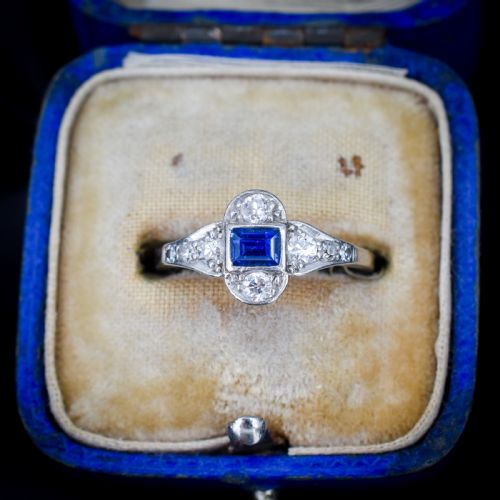
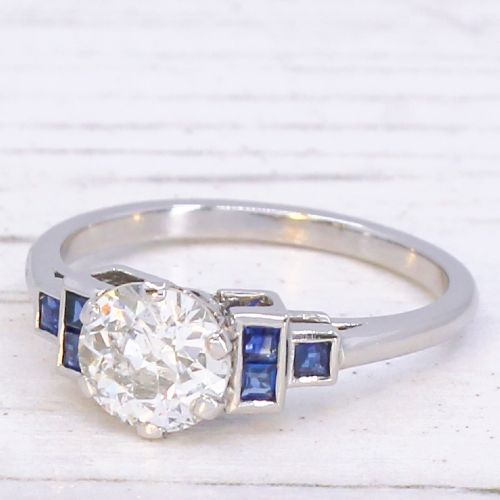
A geometric sapphire diamond ring brings together angular lines and rich blue stones, capturing the distinct architectural spirit of the early twentieth century.
Geometric Sapphire Diamond Ring
A geometric sapphire diamond ring concentrates on clean symmetry, sharp angles and defined patterns rather than soft curves. When you search for this phrase, you encounter pieces that lean heavily into the linear aesthetics popular across the 1920s and 1930s.
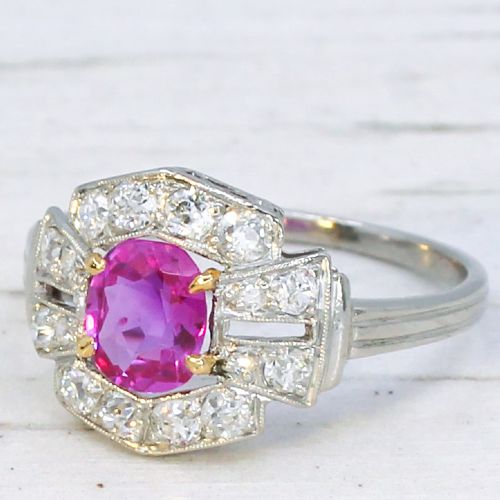
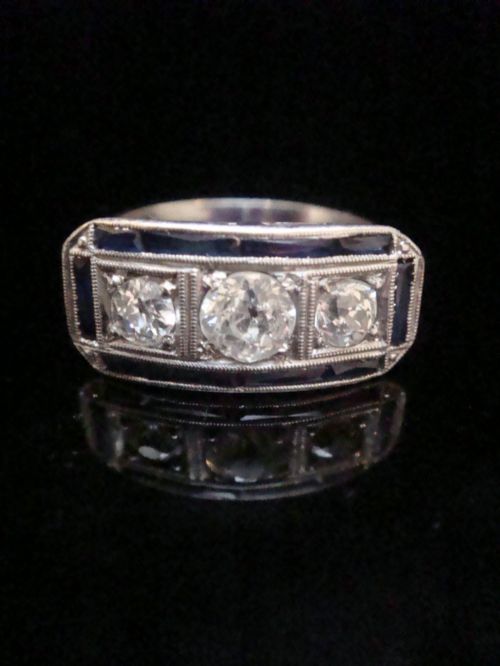
The selection centres primarily on the Art Deco style, supplemented by later revivals and occasional Edwardian precursors. Forms range from elongated plaques and target clusters to panel rings and three-stone arrangements.
Platinum and 18ct white gold dominate the metalwork, though combinations with yellow gold and rose gold appear frequently. Origin points span British workshops and French ateliers, often featuring calibre cut or baguette stones arranged in deliberate architectural layouts.
How They Were Made
Makers utilised platinum predominantly for its strength, allowing for delicate millegrain edges and secure settings without heavy metal bulk. White gold also served this purpose, while yellow and rose gold provided contrasting warm tones for the shanks and bezels.
Stones were cut specifically to fit rigid geometric channels and plate designs, relying on old cut, transitional cut, and baguette diamonds alongside calibre cut or cabochon sapphires. This precise stone-shaping formed the backbone of the intricate rectilinear patterns seen across the period.
What Varies in Quality
The precision of the stone geometry dictates much of the standard, particularly in how tightly calibre cut sapphires and baguette diamonds lock together within their channels. Superior examples maintain exact symmetry and sharp corners without visible gaps in the metal setting.
The integration of the central sapphire with the surrounding diamonds separates standard work from exceptional output. Better pieces demonstrate careful stone matching for colour depth and brilliance, alongside meticulous hand-finished metalwork on the gallery and shoulders.
The Geometric Sapphire Diamond Ring Glossary
- Calibre cut
- Stones shaped specifically to fit a precise geometric setting, often square, rectangular or trapezoidal. This technique allows for tight, uninterrupted lines of colour.
- Baguette
- A step-cut diamond or gemstone shaped in a narrow rectangle. They provide linear flashes of light suited to architectural jewellery.
- Plaque ring
- A ring featuring a flat, wide top surface covered in stones, resembling a small decorative plaque. They are typical of the 1920s.
- Millegrain
- A decorative technique consisting of a row of tiny metal beads along the edges of a setting. It softens the transition between metal and stone.
- Target ring
- A circular cluster design featuring a central gemstone surrounded by one or more concentric rings of contrasting stones. This creates a bullseye visual effect.
Geometric Sapphire Diamond Ring: Frequently Asked Questions
What periods do these rings come from?
The pieces originate mainly from the 1920s and 1930s during the height of the Art Deco movement. Some examples date to the Edwardian era or appear as later mid-century revivals.
Designs from the primary interwar period rely on platinum and white gold with stark geometric layouts, while later iterations occasionally reintroduce yellow gold settings.
How do I wear an antique geometric ring?
These rings suit daily wear provided you match them with sensible care habits. Platinum and gold settings hold up well, but the sharp corners of plaque and panel designs require attention.
Avoid wearing them during heavy manual tasks to protect the channel-set sapphires and delicate millegrain edges from hard impacts.
What is the difference between platinum and white gold in these rings?
Platinum offers greater density and natural bright white strength, allowing makers to fashion very thin wirework and secure settings. White gold provides a similar cool tone but incorporates alloy metals and often relies on rhodium plating.
Over decades, platinum maintains its colour without plating, whereas white gold may require occasional maintenance to preserve its initial brightness.
How do I identify French pieces?
French pieces often carry specific maker marks or eagle's head stamps denoting standard platinum purity, alongside distinct atelier punches. The craftsmanship frequently exhibits exceptional attention to underside gallery piercing and stone calibration.
French workshops during the 1920s favoured refined platinum work and imaginative geometric combinations that set them apart from standard domestic output.
Are the sapphires treated?
Most antique sapphires are natural, with specific listings noting unheated stones from origins like Mogok in Burma. Natural unheated stones display distinct internal characteristics and softer, organic colour distribution.
Documentation or certification sometimes accompanies exceptional stones, detailing their geographical origin and treatment status.