





Geometric Marble Table
A geometric marble table brings a striking pattern of polished stone into a room, offering a solid surface built from varied mineral segments.
Geometric Marble Table
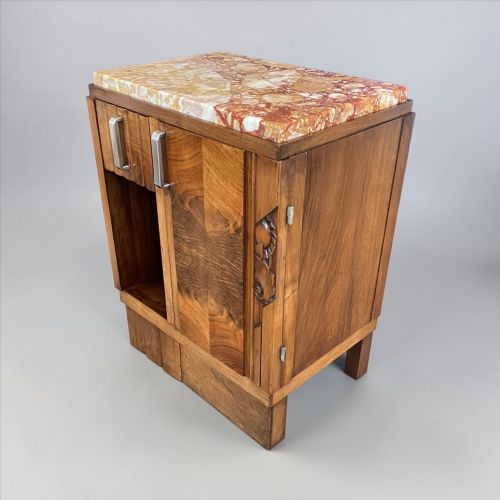
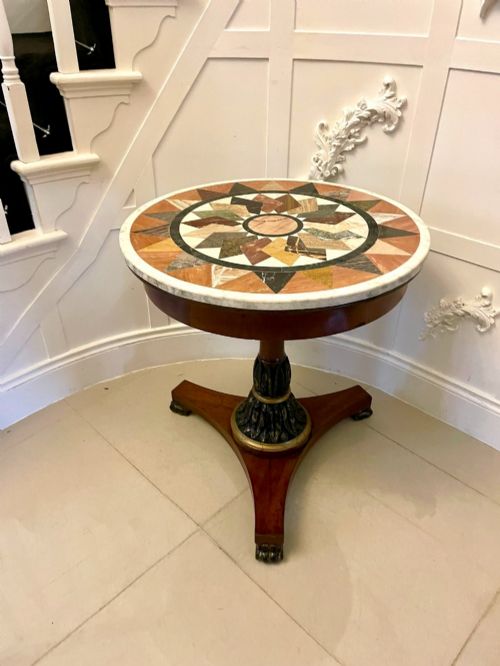
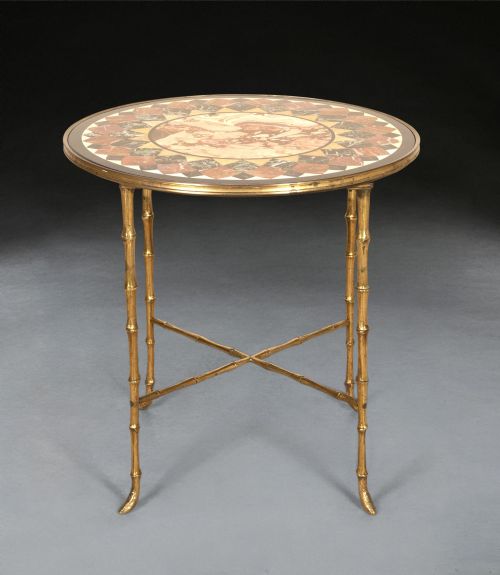
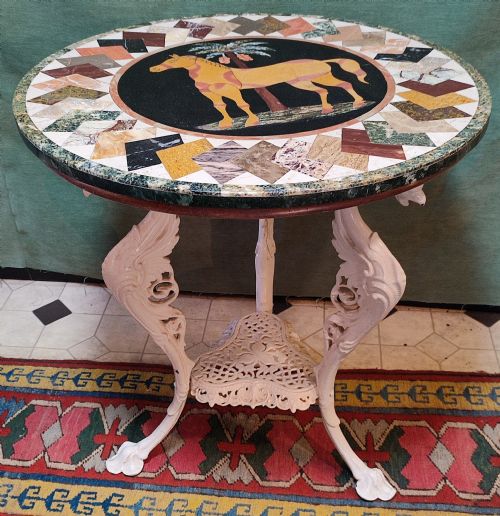
A geometric marble table is a piece of furniture defined by a stone surface composed of arranged geometric marble or specimen marble sections, often supported by timber, metal, or brass bases. Buyers seek these tables for their intricate mosaic-like patterns and the heavy, tactile presence of natural stone.
The selections available range from nineteenth-century Victorian and Grand Tour specimens to early twentieth-century Art Deco forms. Occasional tables, side tables, centre tables, and console tables make up the primary shapes found within this grouping.
Earlier nineteenth-century examples often feature elaborate specimen marble tops combined with mahogany, rosewood, or cast iron supports. Later twentieth-century versions lean towards Art Deco styling, pairing geometric stone elements with clean architectural lines.
What varies in quality
The precision of the stonecutting and the tightness of the joints between individual marble segments distinguish finer geometric marble tables from simpler examples. A superior table displays seamless alignment across complex geometric patterns without visible filler in the interstices.
The choice of supporting materials and secondary woods also dictates the grade of the piece. Tables utilising dense hardwoods like mahogany and satin birch alongside finely cast brass or iron demonstrate a higher level of craftsmanship than those built with utilitarian secondary timbers.
Geometric Marble Table Retail Price Guide 2026
Typical asking prices for geometric marble table among the pieces listed under this phrase on Sellingantiques today, from the lower quarter to the upper quarter. They describe what is for sale here now, not the wider market.
One recorded piece pairs strict geometric stone with a sculptural clock titled Thoughts.
Ferdinand Priess·Garrards
The Geometric Marble Table Glossary
- Specimen marble
- Marble tops composed of numerous small pieces of different coloured and textured stones arranged in geometric or pictorial patterns. These were frequently collected during the Grand Tour.
- Grand Tour
- A cultural journey undertaken by wealthy young Europeans in the eighteenth and nineteenth centuries, bringing home souvenirs such as architectural models and specimen stone tabletops.
- Occasional table
- A small, movable table designed for specific, intermittent use within a room, such as holding a lamp, book, or decorative object.
- Centre table
- A freestanding table designed to stand away from walls, intended to be viewed from all sides within the middle of a room.
- Satin birch
- A light-coloured timber with a lustrous, shimmering grain frequently utilised for cabinetwork and table bases during the nineteenth century.
Geometric Marble Table: Frequently Asked Questions
What is a geometric marble table?
A geometric marble table is a piece of furniture featuring a tabletop assembled from multiple cut pieces of coloured stone arranged in patterns. These tables range from Victorian specimen designs to Art Deco creations.
They serve as functional surface furniture while functioning primarily as decorative art objects due to the intricate stonework.
How do I date a marble table?
Dating relies upon examining the supporting base construction, timber choices, and overall aesthetic style. Nineteenth-century examples often show Grand Tour influences or heavy mahogany frames.
Twentieth-century iterations typically display streamlined Art Deco geometry, sometimes paired with metal or iron bases rather than traditional cabinet timbers.
Where were these tables made?
Many specimen marble tops originated in Italian workshops catering to travellers on the Grand Tour, while the bases were frequently assembled in Britain or France.
European cabinetmakers and metalworkers collaborated to set imported stone slabs onto local timber frames and cast metal supports.
How do I care for marble?
Marble requires gentle cleaning with a soft cloth and mild, pH-neutral soap to avoid dulling the polished surface. Acidic substances can etch the stone and must be wiped away immediately.
Using coasters and mats helps protect the historical surface from moisture rings and physical knocks.