



Geometric Floor Light
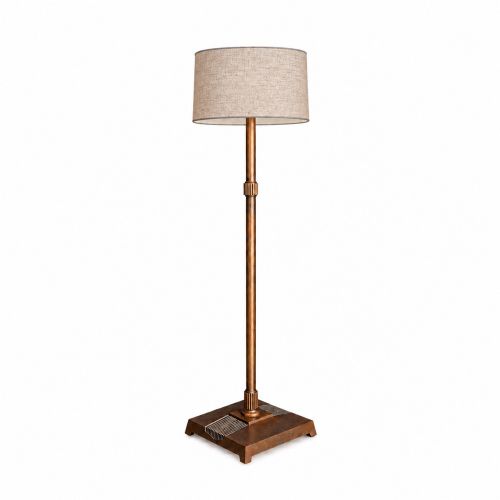
A geometric floor light brings architectural presence to a room, offering tall, structured illumination rooted in the twentieth century.
Geometric Floor Light
A geometric floor light takes the form of a tall standard lamp or uplighter, designed to cast ambient or direct illumination in a domestic interior. You encounter these primarily as Art Deco standard lamps dating from the nineteen twenties and nineteen thirties, capturing the industrial and architectural ambitions of the period.
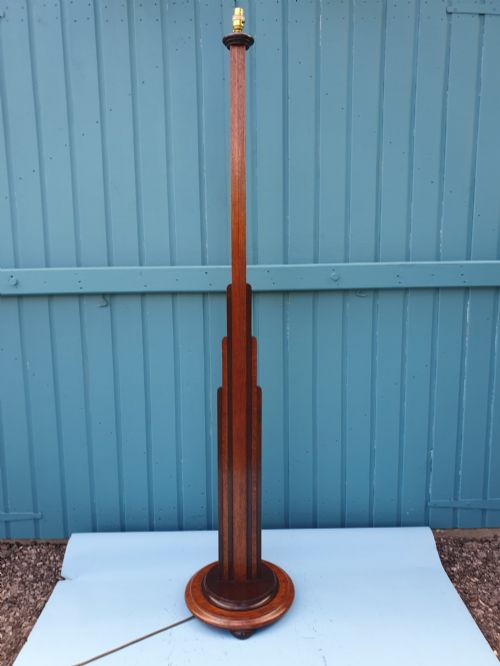
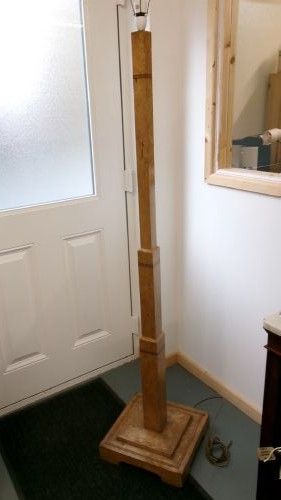
The design vocabulary draws on the skyscraper and Odeon styles, creating vertical emphasis through stepped tiers and linear woodwork. Standard lamps from this era often incorporate circular or octagonal bases to ground the height.
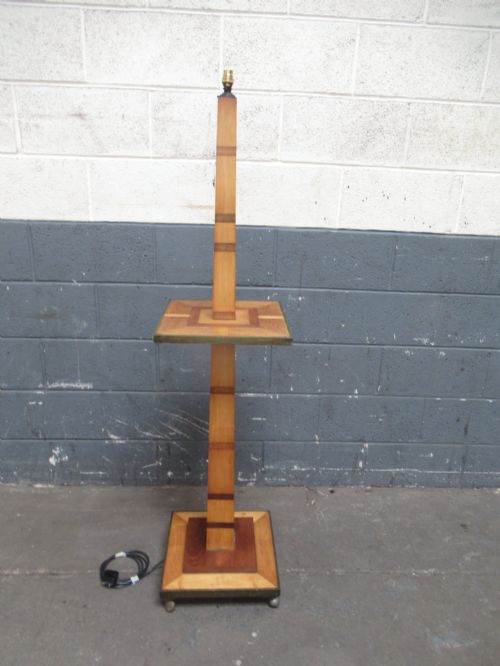
Makers utilised contrasting timbers and metals to accentuate the geometric form, resulting in pieces that function as both lighting and sculpture. These floor lights suit spaces that embrace early twentieth-century design without excessive ornamentation.
How they were made
Cabinetmakers constructed these floor lights using solid and veneered hardwoods, notably oak, walnut, satinwood, and ebony, selected for their rich grain patterns and durability. Woodwork is frequently paired with exposed metals such as brass and copper to introduce industrial contrast.
Techniques relied on precise joinery to build the stepped profiles characteristic of the period, alongside metal spinning and polishing for the hardware. Shades often employed linen to diffuse the light cast by the upright standard.
Geometric Floor Light Retail Price Guide 2026
Typical asking prices for geometric floor light among the pieces listed under this phrase on Sellingantiques today, from the lower quarter to the upper quarter. They describe what is for sale here now, not the wider market.
Some pieces lean so heavily into architectural ambitions they double as miniature skyscrapers.
What varies in quality
Quality rests in the architectural ambition of the woodwork and the purity of the geometric silhouette. Pieces that incorporate contrasting timber veneers, such as ebony details set against golden oak or blond walnut, demonstrate a higher level of decorative ambition.
The integration of solid metals like brass or copper elevates a standard lamp above simpler constructions. Proportions also dictate success, with superior examples maintaining a balanced, commanding vertical line from base to shade.
The Geometric Floor Light Glossary
- Standard lamp
- A tall floor-standing light designed to illuminate a room from a vertical position. These pieces typically feature a weighted base and a central wooden or metal shaft.
- Art Deco
- A design style spanning the nineteen twenties and nineteen thirties, characterised by geometric shapes, streamlined forms, and modern industrial materials. It replaced the flowing curves of earlier decorative movements.
- Uplighter
- A type of floor lamp that directs light upwards towards the ceiling rather than downwards. This configuration provides indirect, ambient illumination for an entire space.
- Skyscraper style
- An architectural and decorative aesthetic from the interwar period inspired by tall urban buildings. It employs stepped vertical tiers and strong geometric lines.
Geometric Floor Light: Frequently Asked Questions
How do I date a geometric floor light?
Dating relies on the materials, timber choices, and stylistic cues present in the construction. Pieces from the nineteen twenties and nineteen thirties typically exhibit the linear forms and contrasting woods associated with Art Deco design.
Examine the construction methods and the specific styling, such as skyscraper tiers or simple circular bases, to narrow down the decade of manufacture.
What is the difference between an uplighter and a standard lamp?
An uplighter directs its illumination straight up toward the ceiling to create ambient room lighting. A standard lamp generally accommodates a wider shade that casts light both downwards and outwards for reading or general tasks.
Both formats utilise tall vertical shafts made from wood or metal to support the electrical components.
How do I care for wooden lamp standards?
Maintain the timber by dusting regularly with a soft, dry cloth and avoiding harsh chemical polishes that can degrade original finishes. Keep the lamp away from direct heat sources and strong sunlight to protect the wood grain and veneers.
Periodically check the wiring and lampholder to ensure safe electrical operation.