



Geometric End Table
A geometric end table brings structured angles and period character to a room, offering functional surface space with distinct architectural presence.
Geometric End Table
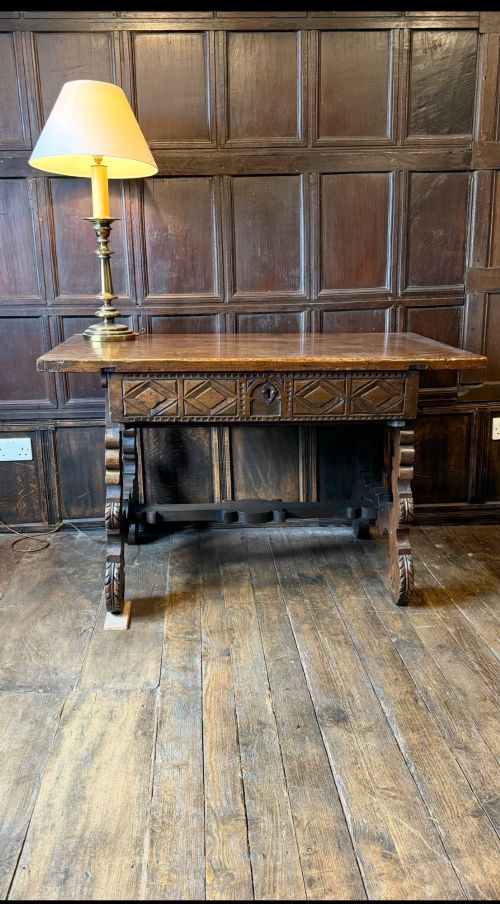
A geometric end table spans several distinct eras and styles, appearing most frequently in the robust forms of the 1930s Art Deco period alongside earlier 17th century Jacobean, Victorian, and Arts and Crafts examples.
The selection encompasses side tables, occasional tables, coffee tables, and nests of tables, providing compact surfaces suited to resting books or lamps.
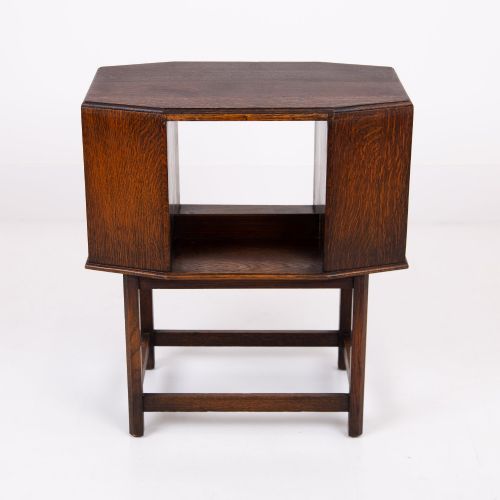
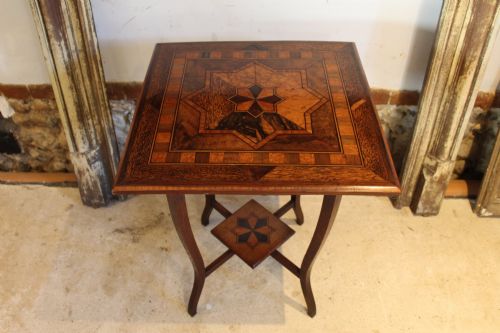
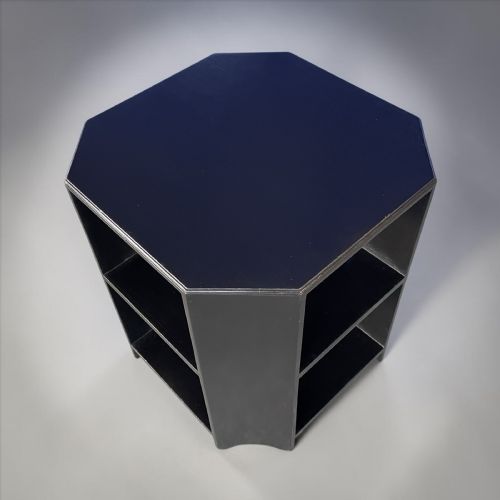
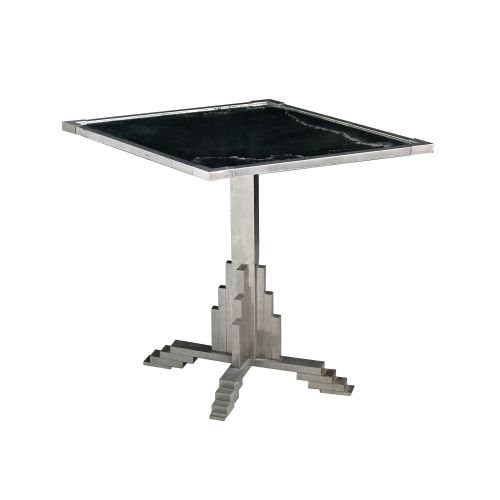
Makers utilised various geometric layouts, from octagonal shapes to parquetry inlays and modernist block forms, drawing on an array of historical design influences.
How they were made
Construction relies upon traditional timbers such as oak, walnut, mahogany, and rosewood, often paired with ebonised wood, stained wood, or metal elements.
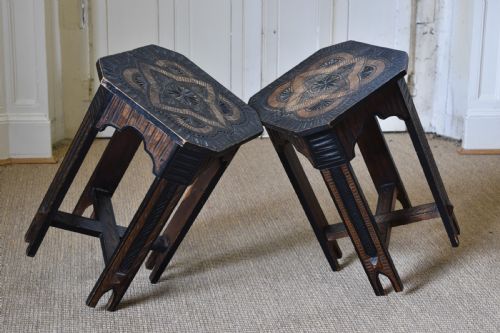
Detailing includes chip carving, specimen wood marquetry, and parquetry inlay, demonstrating precise craftsmanship across different historical periods.
Tulip-shaped walnut tables bring a touch of floral geometry to the 1930s lineup.
What varies in quality
The distinction between standard examples and finer pieces lies in the precision of the parquetry and marquetry work, particularly when handling complex geometric patterns in specimen woods.
Selection of timber grain and the integrity of structural joins dictate the lasting character of each table, separating simpler utility items from more ambitious modernist designs.
The Geometric End Table Glossary
- Parquetry
- A geometric mosaic of wood pieces used for decorative floors and tabletops. It creates a repeating pattern across the surface.
- Marquetry
- The art and craft of applying pieces of veneer to a structure to form decorative designs. Specimen woods are frequently utilised in this process.
- Occasional table
- A small table designed for intermittent use in a living space. These include side, lamp, and coffee variants.
- Ebonised wood
- Timber treated to resemble ebony through staining or painting. This technique creates a dark, uniform finish popular in modernist design.
Geometric End Table: Frequently Asked Questions
What periods do these tables come from?
The pieces span several centuries, with examples originating from the 17th century, the Victorian era, the Arts and Crafts movement, and the 1920s and 1930s Art Deco period.
Art Deco and modernist designs appear most frequently in the current selection, alongside occasional antique Jacobean and Victorian pieces.
How were geometric end tables used?
These tables served as functional surface furniture in reception rooms and parlours, holding lamps, books, or decorative objects.
Versatile forms such as nests of tables and octagonal occasional tables allowed for flexible placement beside seating.
What materials are commonly found?
Construction primarily involves solid timbers and veneers including oak, walnut, mahogany, and rosewood, occasionally accented with metal or ebonised wood.
Finer examples incorporate specialist decorative techniques such as specimen wood marquetry and chip carving.
How do I identify Art Deco tables?
Art Deco pieces from the 1920s and 1930s often feature clean geometric lines, blonde oak, contrasting walnut and ebony, or mirrored top surfaces.
They frequently take octagonal or modernist block forms rather than traditional curved period silhouettes.