




Geometric Diamond Solitaire
A geometric diamond solitaire is a ring centred on a single stone, combining sharp lines with early twentieth-century design.
Geometric Diamond Solitaire
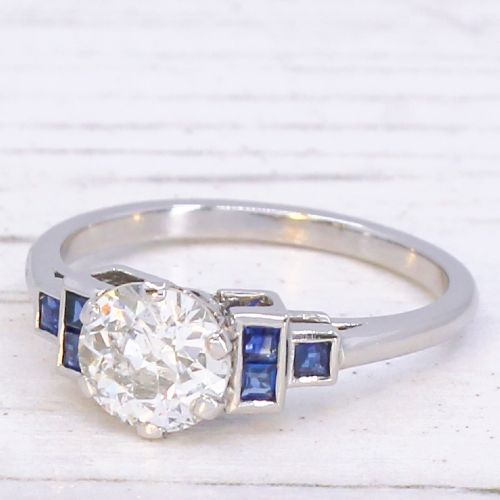
A geometric diamond solitaire ring centres on a single prominent stone, often framed by the linear motifs of the Art Deco period. These pieces appear frequently from the nineteen-twenties and nineteen-thirties, reflecting the architectural taste of those decades.
Engagement rings dominate this selection, frequently combining a central diamond with sapphire accents, pearls, or white opal. The forms span from strict Edwardian settings through to later mid-century revivals.
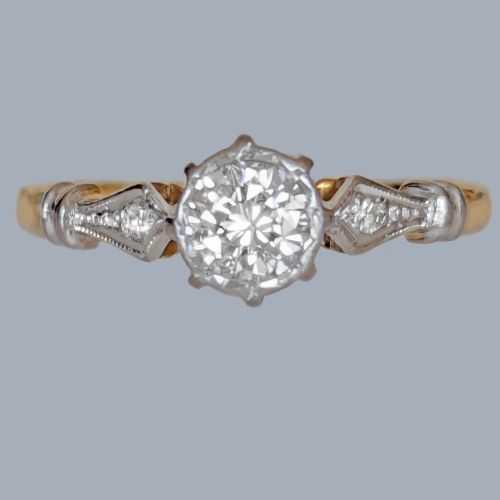
Buyers encountering these designs will notice a strong reliance on old cut and transitional cut diamonds. The mountings often incorporate contrasting metals like yellow gold and platinum to define the angular geometry.
How they were made
Goldsmiths utilised durable combinations of platinum and eighteen-carat white or yellow gold to construct these settings. Platinum provided the necessary strength to hold intricate geometric frameworks with minimal metal bulk.
Central stones typically feature old cut or old European cut diamonds, shaped by hand rather than modern automated processes. Additional elements such as enamel work or calibre-cut sapphires were integrated directly into the metal armature.
Several rings sneak bright splashes of enamel and opal past the strict geometry, proving the twenties knew how to throw a curveball.
What varies in quality
The sophistication of the metalwork dictates the upper tier of these pieces, particularly where platinum and gold are combined to create crisp architectural angles. Superior examples exhibit precise symmetry in the geometric shoulders and secure, hand-finished settings.
The Geometric Diamond Solitaire Glossary
- Old cut diamond
- A diamond cut popular before the modern brilliant style, characterised by a smaller table and a higher crown. These stones produce a distinctive softer glow under candlelight.
- Art Deco
- A design style from the nineteen-twenties and thirties defined by geometric shapes, symmetry, and clean lines. It heavily influences the mountings of these rings.
- Platinum
- A dense, durable white metal utilised extensively in period mountings for its ability to hold fine details securely. It forms the setting base for many diamond pieces here.
- Transitional cut
- A diamond facet arrangement bridging old cuts and modern brilliants, emerging around the second quarter of the twentieth century. It retains deep proportions with a slightly smaller culet.
Geometric Diamond Solitaire: Frequently Asked Questions
What defines a geometric diamond solitaire?
These rings focus on a single central diamond set within architectural, linear mountings typical of the early twentieth century.
The design relies on symmetry and angular metalwork, frequently incorporating platinum alongside gold.
Which periods do these rings come from?
The selection spans the Edwardian era through the Art Deco period and into mid-century revivals.
Nineteen-twenty and nineteen-thirty pieces form the core of the available styles.
Are sapphires used in these rings?
Several pieces combine a central diamond with sapphire accents or borders to add colour contrast.
These complementary stones follow the same strict geometric arrangements as the primary mount.
How do old cut diamonds differ?
Old cut diamonds feature hand-polished facets designed to catch gaslight and candlelight rather than modern electrical illumination.
They generally display smaller tables and higher crowns than contemporary stones.