


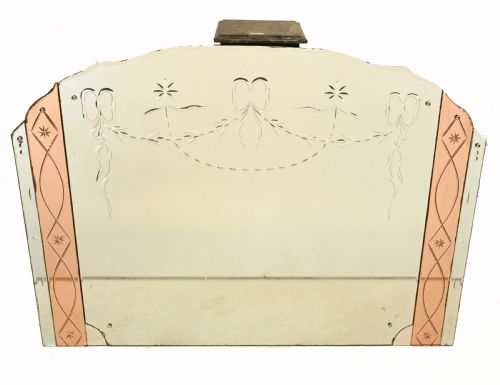
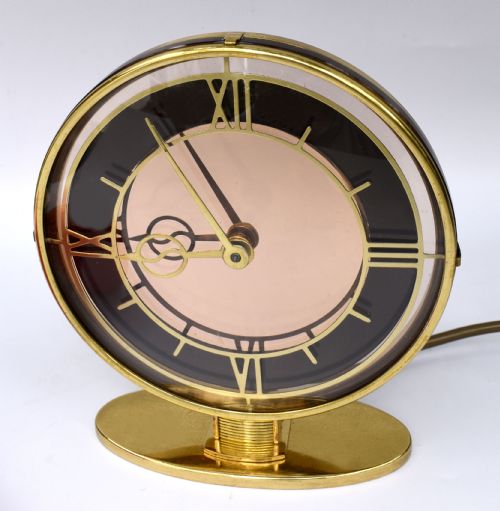
Geometric Art Deco Mirror
A geometric art deco mirror brings sharp angles and striking symmetry into a room, offering both functional reflection and strong period design.
Geometric Art Deco Mirror
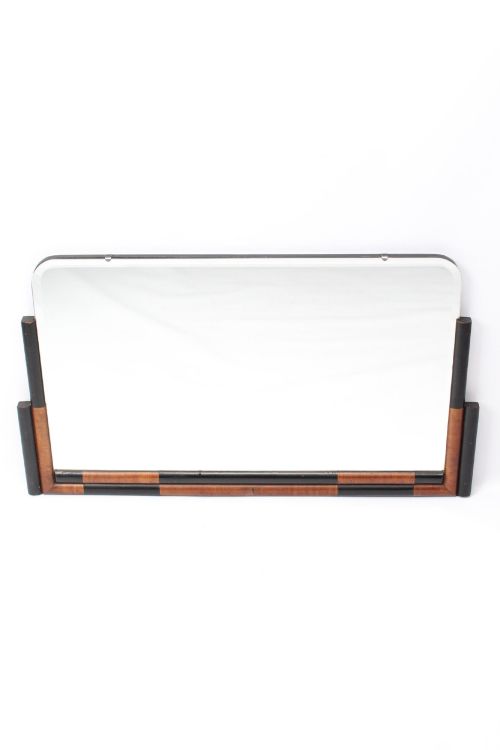
A geometric art deco mirror draws the eye through clean lines, angular forms, and distinctive panel arrangements. Buyers searching for a geometric art deco mirror encounter items primarily from the 1920 and 1930 periods, spanning styles such as Art Deco and American Art Deco.
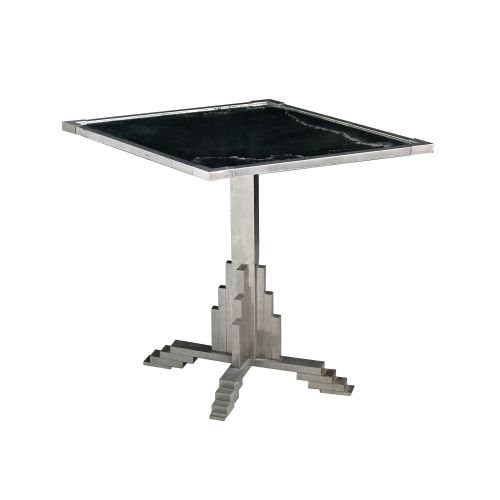
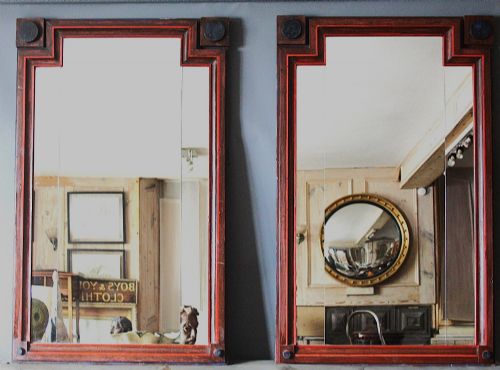
The selection here encompasses wall mirrors, vanity mirrors, and wall clocks featuring mirrored elements, alongside related items like side tables and mantel clocks. Pieces originate from English, French, and Czech workshops, displaying both frameless constructions and framed formats.
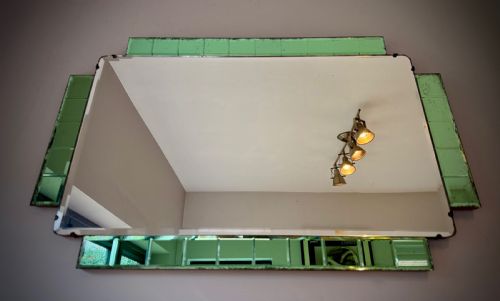
Frameless wall mirrors with green glass panels frequently appear, alongside diamond wall mirrors and octagonal display stands. Each object utilises the characteristic geometry of the interwar decades to create a defined focal point.
Materials and construction
Makers utilised glass, mirrored glass, and wood such as walnut alongside ebonised finishes. Metal components incorporate chrome, brass, and silver plate to provide structural support and decorative contrast.
Techniques combine traditional glass bevelling with layered panel assembly. Paint and coloured glass inserts add distinct visual sections within the overarching geometric framework.
The listings on this site combine wall mirrors and vanity mirrors with related glass decanter sets and mantel clocks.
Determining quality
Quality rests in the precision of the glass cutting and the integrity of the original panels. Superior examples maintain clear silvering across the glass and secure assembly within the frame or backing.
Materials dictate distinction, with substantial walnut frames or complex multi-panel coloured glass arrangements marking higher-tier pieces. The combination of functional mechanical elements, such as clock movements, adds complexity to the construction.
Mosey
The Geometric Art Deco Mirror Glossary
- Art Deco
- A design style characterised by sleek lines, geometric shapes, and modern materials popular during the 1920 and 1930 periods. It emerged in France before spreading internationally.
- Bevelled glass
- Glass with an angled edge cut and polished to a specific width. This technique catches light and adds depth to the mirror surface.
- Ebonised
- Wood treated to resemble ebony, typically through staining or painting. This dark finish provides a sharp contrast against reflective glass.
Geometric Art Deco Mirror: Frequently Asked Questions
How do I date these mirrors?
Dating relies on the materials, assembly techniques, and stylistic markers associated with the interwar decades. Pieces from the 1920 period often display distinct structural frames or specific coloured glass inserts.
Items from the 1930 period frequently utilise frameless designs or integrated clock movements. Comparing the hardware and backing materials helps confirm the production era.
Where should I hang a wall mirror?
These mirrors suit spaces that benefit from reflected light and strong focal points, such as hallways or living rooms. Positioning them above mantelpieces or side tables balances the proportions of the room.
Ensure the wall fixings match the weight of the specific frame and glass construction. Secure mounting is essential for heavier diamond or panelled formats.
How do I clean the glass?
Maintenance requires gentle cleaning methods to protect the original silvering and surrounding materials. Use a soft cloth and a mild glass cleaner applied sparingly.
Avoid letting moisture seep behind the edges of the glass or into wooden frames. Regular dusting preserves the painted and metallic surfaces.