



Gentlemans Double Wardrobe
A gentlemans double wardrobe is a fitted clothing store for the bedroom, offering robust hanging space and internal compartments.
Gentlemans Double Wardrobe
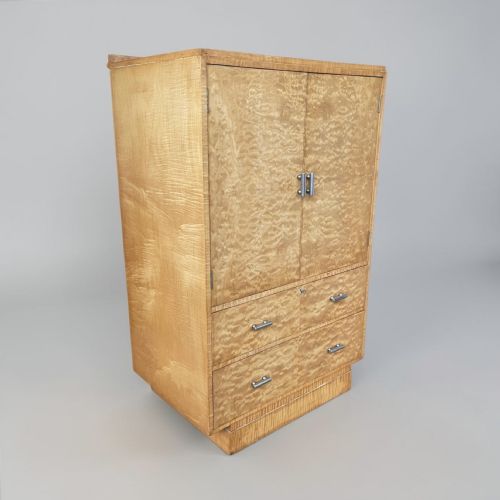
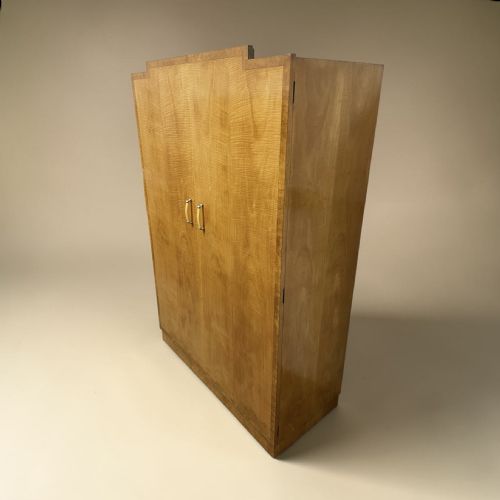
A gentlemans double wardrobe is a substantial piece of bedroom furniture designed to store tailored clothing, suits, and accessories efficiently. These pieces typically take the form of double-door cabinets, compactums, or tallboys that combine hanging space with internal drawers and shelving.
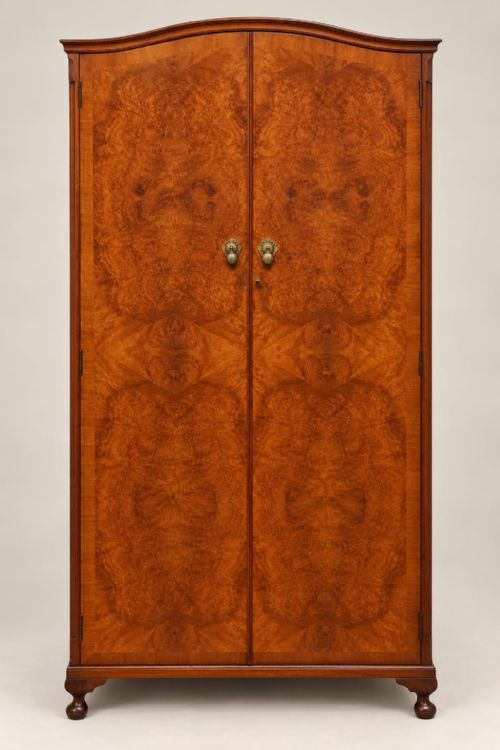
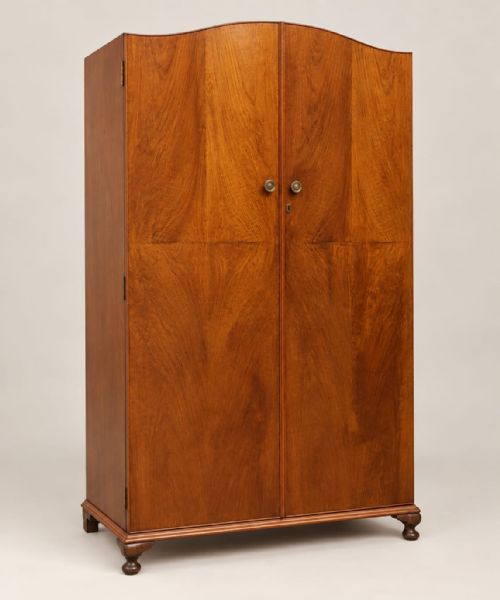
The versions most commonly met on this page span the Edwardian era, the Art Deco period of the 1930s, and earlier Georgian or Victorian craftsmanship. They offer practical storage capacity whilst serving as architectural focal points within a bedroom.
How they were made
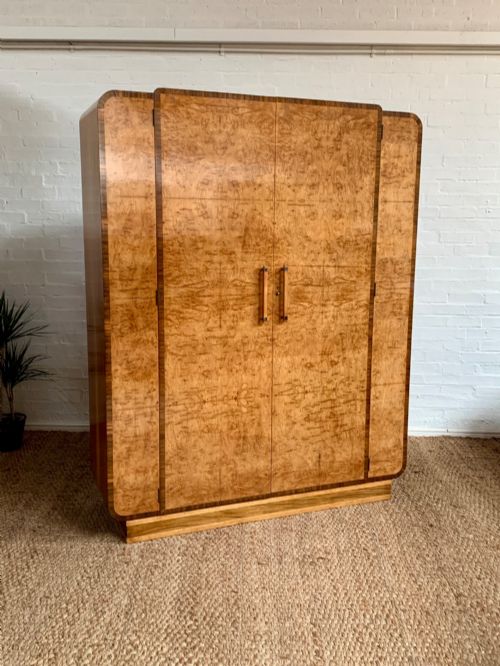
Makers utilised dense timbers such as mahogany, walnut, and burr walnut, frequently applying birds-eye maple veneer to create striking exterior patterns on the doors. Brass hardware such as hinges, handles, and lock escutcheons provided functional durability and contrast against the polished wood.
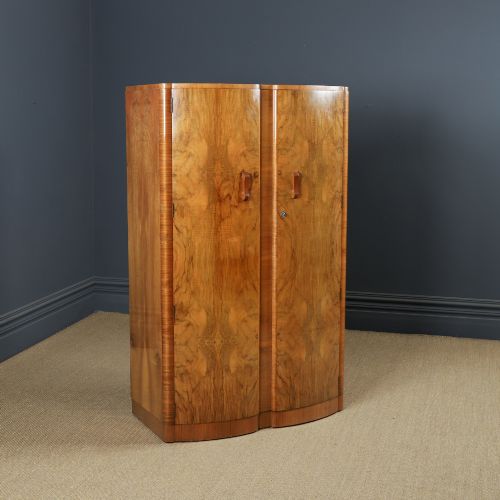
Construction techniques balanced structural integrity with decorative surface design, particularly evident in the curved bow-front configurations and fitted internal compartments seen in Art Deco and Edwardian examples.
Gentlemans Double Wardrobe Retail Price Guide 2026
Typical asking prices for gentlemans double wardrobe among the pieces listed under this phrase on Sellingantiques today, from the lower quarter to the upper quarter. They describe what is for sale here now, not the wider market.
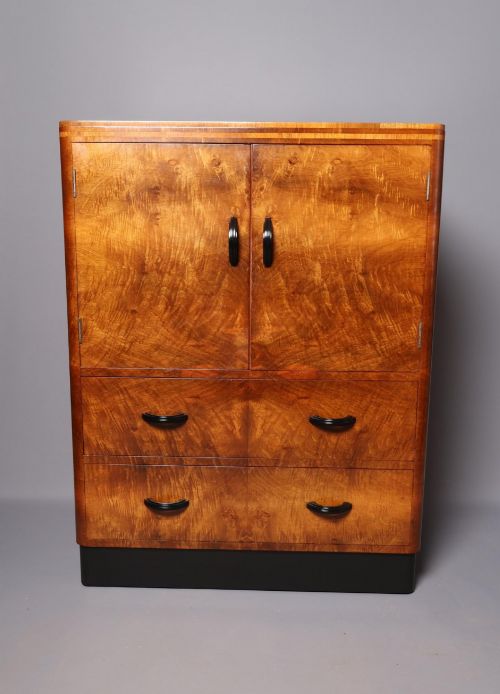
Bakelite appears alongside fine burr walnut, uniting sleek modern synthetics with centuries-old cabinetmaking traditions in a single wardrobe.
What varies in quality
Quality rests in the selection of timber veneers and the precision of the internal fittings, such as specialised pull-out trays and tailored compartments. Pieces featuring burr walnut or birds-eye maple demonstrate superior decorative ambition compared to plain mahogany surfaces.
The complexity of the exterior design, from simple Edwardian framing to sweeping Art Deco bow-front architecture, dictates the level of craftsmanship invested in the cabinet.
maples & co
The Gentlemans Double Wardrobe Glossary
- Compactum
- A multi-functional wardrobe that combines hanging space with internal drawers, shelves, and sometimes smaller compartments. This format provides comprehensive storage within a single footprint.
- Tallboy
- A tall storage cabinet that positions drawers beneath or beside a hanging section. It maximises vertical capacity in rooms with high ceilings.
- Veneer
- A thin layer of decorative wood, such as burr walnut or birds-eye maple, applied to a sturdier base timber. This technique creates elaborate grain patterns across large cabinet doors.
- Bow front
- A convex, curved front elevation popular in Art Deco furniture design. It softens the hard angles of a large bedroom cabinet.
- Escutcheon
- A protective metal plate surrounding a keyhole, commonly cast in brass. It prevents the wood around the lock from sustaining wear.
Gentlemans Double Wardrobe: Frequently Asked Questions
What is a compactum wardrobe?
A compactum is a specialised storage cabinet that integrates hanging space, shelves, and internal drawers into one unit. It provides a complete organizational system for a bedroom.
These pieces were designed to hold folded garments alongside longer hanging coats and suits, offering an alternative to standard two-door hanging cupboards.
How do I date an Art Deco wardrobe?
Art Deco wardrobes typically date from the 1930s and display geometric lines, contrasting veneers like burr walnut, and curved bow-front designs. They often lack the heavy ornamentation of earlier Victorian styles.
The use of modern materials like bakelite alongside traditional hardwoods also points firmly toward this mid-century period.
Are these wardrobes suitable for modern clothes?
These wardrobes offer deep interior spaces, though internal hanging depths can sometimes reflect the narrower cut of historical tailoring. Many feature adjustable or fixed shelving alongside hanging rails.
Buyers should measure coat hanger widths against internal depths to ensure modern garments hang without pressing against the closed doors.