

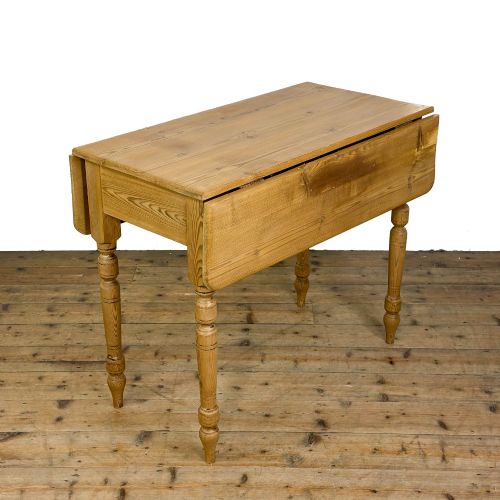


Gateleg Kitchen Table
A gateleg kitchen table offers folding leaves for flexible dining space, bringing period charm and robust everyday utility into the heart of the home.
Gateleg Kitchen Table
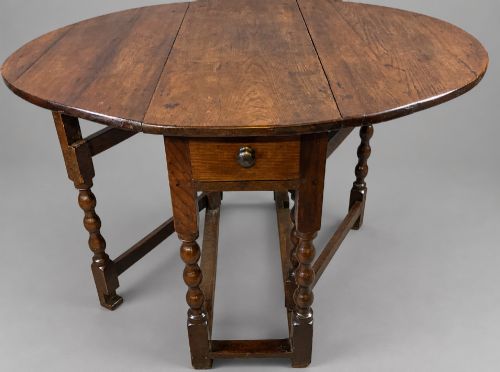
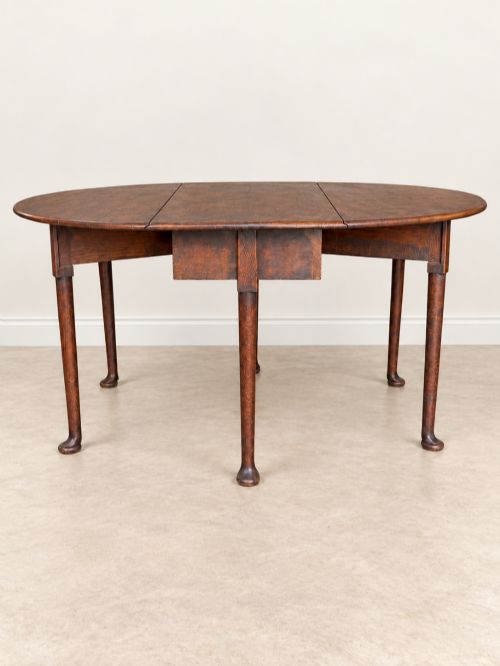
A gateleg kitchen table is a drop-leaf dining table supported by pivoting legs that swing out like gates to hold the leaves upright. These tables range from compact twentieth-century spacesavers to substantial seventeenth-century and Georgian dining formats.
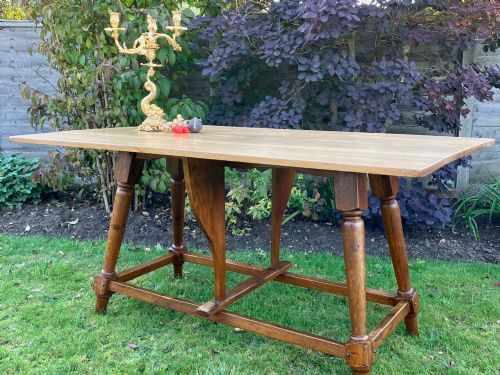
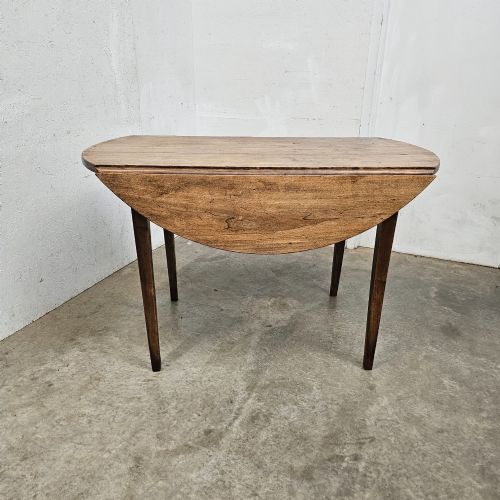
The versions most commonly met on this page span the seventeenth, eighteenth, nineteenth, and twentieth centuries, appearing in forms such as French, Swedish, and rustic country styles. They function primarily as dining tables or drop-leaf tables designed to adapt easily to varying room sizes.
Makers shaped these pieces from timber such as oak, pine, and fruitwood, often employing solid oak or painted finishes. Their adaptability makes them practical choices for modern kitchens requiring traditional character.
How they were made
Makers constructed these tables predominantly from solid oak and pine, occasionally utilising fruitwood for specific components. Iron hardware frequently reinforced the pivoting mechanisms that support the folding leaves.
Joinery techniques matched the period of production, allowing the gate legs to bear the weight of extended leaves securely. Surfaces were finished in natural wood tones or treated with paint, reflecting regional styles from English farmhouse to Swedish country.
Gateleg Kitchen Table Retail Price Guide 2026
Typical asking prices for gateleg kitchen table among the pieces listed under this phrase on Sellingantiques today, from the lower quarter to the upper quarter. They describe what is for sale here now, not the wider market.
Nineteenth-century Swedish makers occasionally painted their pine drop-leaf tables to brighten long winters.
What varies in quality
Quality rests in the integrity of the timber selection and the precision of the pivoting leg mechanism. Solid oak examples from earlier periods demonstrate heavier construction compared to lighter nineteenth-century pine or twentieth-century spacesaver formats.
The sophistication of the regional style, whether Georgian, French country, or Jacobean Revival, influences the visual depth of the piece. Superior examples maintain balanced proportions between the fixed centre table and the drop leaves.
The Gateleg Kitchen Table Glossary
- Gateleg table
- A table with hinged leaves supported by legs that swing outward on gates. This design allows the surface area to expand or contract as needed.
- Drop-leaf table
- A table featuring a fixed centre section and movable flaps on the sides. These flaps drop down when not in use to save floor space.
- Refectory table
- A long narrow dining table traditionally used for communal dining. The listings include examples combined with drop-leaf construction.
- Spacesaver
- A modern descriptive term for furniture designed to occupy minimal floor space. These pieces often feature solid oak construction tailored for smaller rooms.
Gateleg Kitchen Table: Frequently Asked Questions
How do I use a gateleg table daily?
Keep one or both leaves folded down against the centre section when floor space is needed for everyday kitchen tasks. Swing the pivoting gate legs outward to support the leaves whenever extra dining space is required.
This simple folding mechanism allows the furniture to adapt instantly to different household demands throughout the day.
What materials are these tables made from?
The pieces available here are constructed primarily from solid oak and pine, with occasional examples in fruitwood. Some surfaces feature applied paint finishes typical of regional traditions.
Iron hardware frequently supports the pivoting leg structures, ensuring stability when the leaves are raised.
How do I identify the period of a table?
Examine the timber species, joinery methods, and overall styling to gauge the era of production. Seventeenth-century and Georgian pieces typically display heavier oak construction and formal detailing, while nineteenth-century pine examples often show rustic country characteristics.
Twentieth-century versions frequently emphasise compact spacesaving utility.
Are these tables suitable for small kitchens?
Yes, the drop-leaf design makes them exceptionally well-suited for rooms with limited space. You can collapse the leaves to create a narrow footprint against a wall.
Raising the leaves provides an immediate dining surface for four to six people without permanent spatial commitment.