






Garnet Gemstone Ring
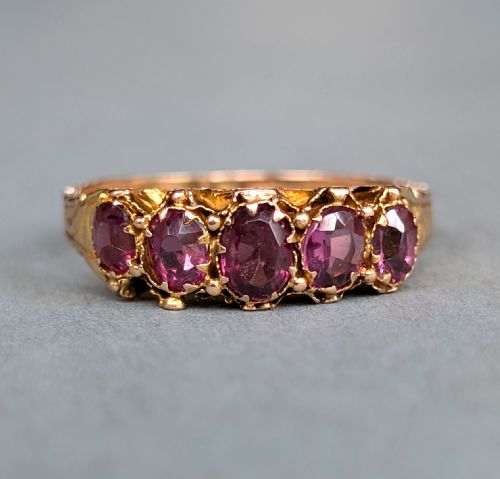
A garnet gemstone ring brings deep crimson fire to the hand, drawing upon centuries of goldsmithing traditions from Georgian clusters to mid-century modernist designs.
Garnet Gemstone Ring
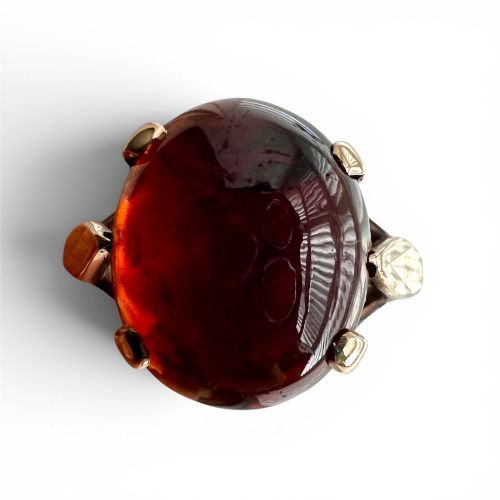
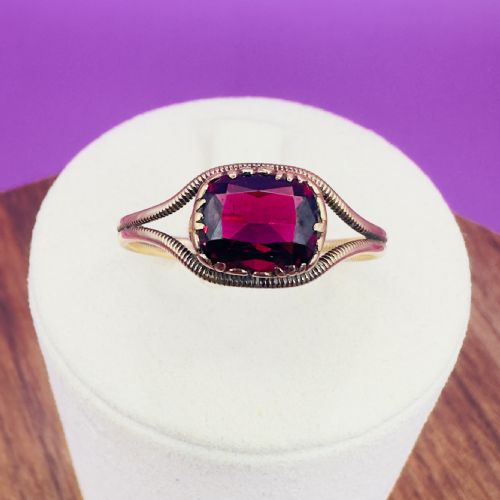
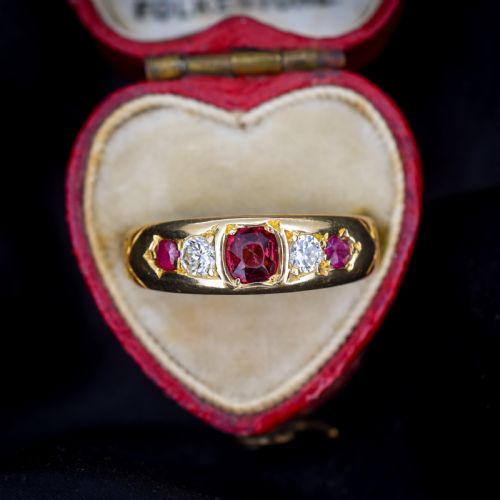
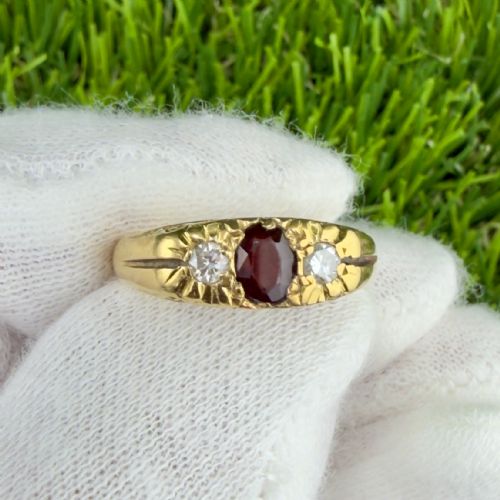
A garnet gemstone ring is a finger ornament centred on deep red garnet stones, often accompanied by diamonds, seed pearls, or other coloured gems. When searching for a garnet gemstone ring, buyers encounter pieces spanning from the Georgian and Victorian eras through to the mid-twentieth century.
Materials and construction
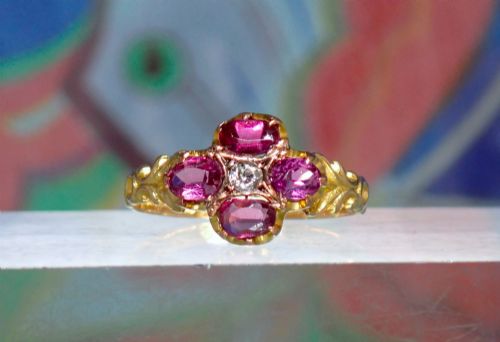
Goldsmiths constructed these rings using various purities of yellow gold, notably nine carat, fifteen carat, and eighteen carat gold, alongside platinum mountings in later twentieth-century pieces. Stones were secured using traditional claw settings, collets, and cluster arrangements that positioned diamonds or seed pearls around the central garnet.
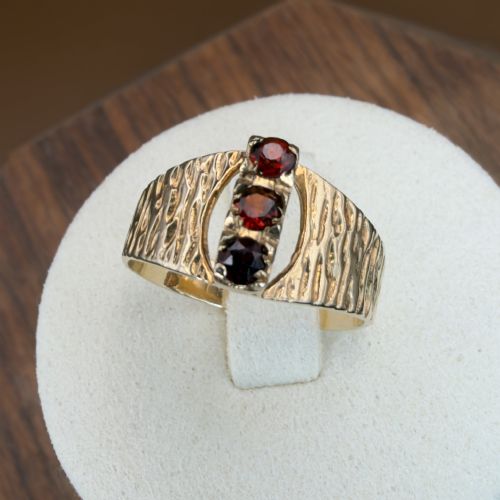
Craftsmen utilised techniques such as old mine cutting and old European cutting for accompanying diamonds, while bands often featured cast details, hand-engraving, or textured finishes like bark effect to complement the stones.
Garnet Gemstone Ring Retail Price Guide 2026
Typical asking prices for garnet gemstone ring among the pieces listed under this phrase on Sellingantiques today, from the lower quarter to the upper quarter. They describe what is for sale here now, not the wider market.
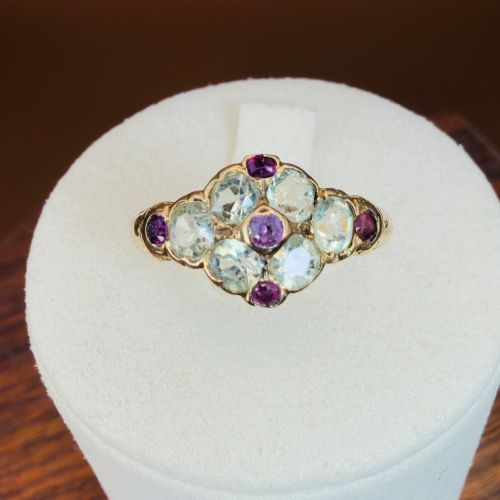
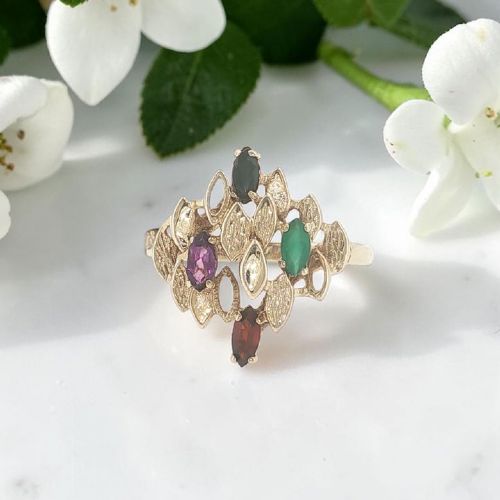
One ring holds a secret conversation in gemstones, spelling out a silent message of regard through rubies, emeralds, garnets, amethysts, and diamonds.
What varies in quality
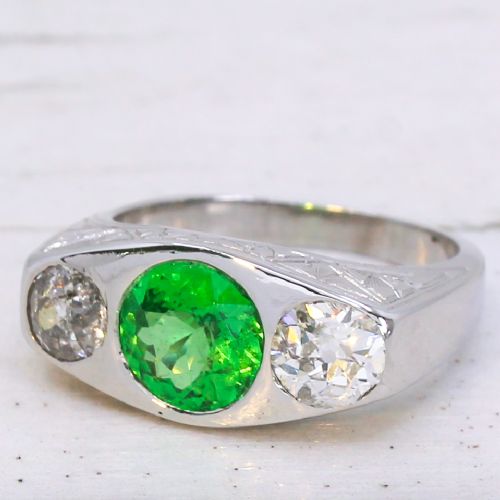
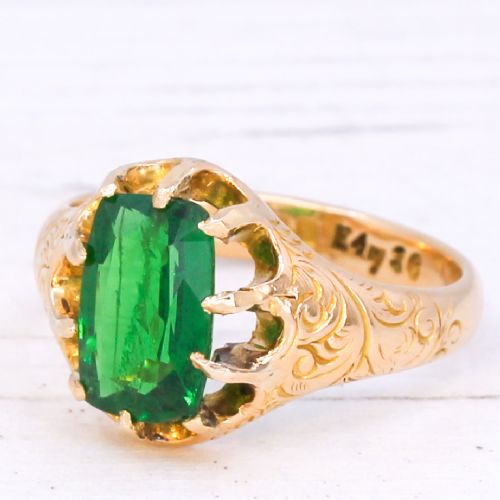
The quality of a garnet gemstone ring rests upon the depth of colour and clarity of the central garnet, combined with the integrity of the surrounding precious metalwork. Higher-tier examples display exceptional stone selection, such as vibrant demantoid or tsavorite garnets paired with well-matched old cut diamonds.
Construction standards also differentiate pieces, with superior rings demonstrating robust settings that securely hold each stone and refined proportions in the gold or platinum band, whereas simpler vintage items may rely on lighter gauge mountings.
The Garnet Gemstone Ring Glossary
- Almandine garnet
- A dense variety of garnet known for its deep red to brownish-red colour, frequently seen in Victorian cluster rings.
- Cabochon
- A gemstone shaped and polished with a smooth, rounded domed surface rather than faceted edges.
- Cluster ring
- A ring design featuring a central gemstone encircled by a group of smaller stones, often diamonds or seed pearls.
- Old mine cut
- An early diamond cut characterised by a cushion-like shape, high crown, and a small table facet, typical of antique jewellery.
- Tsavorite
- A grossular garnet valued for its intense transparent green colour, appearing in twentieth-century platinum and gold dress rings.
Garnet Gemstone Ring: Frequently Asked Questions
How do I care for my garnet ring?
Garnets measure between six and a half and seven and a half on the Mohs hardness scale, making them suitable for regular wear with sensible precautions. Clean them using warm soapy water and a soft brush, avoiding harsh chemical dips or ultrasonic cleaners that might damage softer accompanying stones like seed pearls.
Store your ring separately from harder gemstones such as diamonds to prevent scratching the gold mountings or the garnet facets. Removing the ring during heavy manual tasks preserves both the setting and the integrity of the older gold alloys.
What is a REGARD ring?
A REGARD ring is a sentimental Victorian piece that spells out the word REGARD using the first letter of each gemstone set into the band. These rings traditionally incorporated a ruby, emerald, garnet, amethyst, ruby, and diamond.
Originating in France during the nineteenth century, these pieces served as tokens of affection and devotion. The arrangement showcases varied colourful stones alongside the central garnet in a cohesive cluster formation.
How can I tell a Victorian garnet ring from a vintage one?
Victorian garnet rings typically feature lower karat yellow golds like fifteen carat, closed-back settings in older Georgian-transition pieces, or hand-engraved shank details. The gemstone cuts often display the irregular facets typical of nineteenth-century lapidary work.
Vintage rings from the mid-twentieth century more commonly utilise nine carat gold, distinct textured surfaces like bark effects, or stamped maker marks associated with later twentieth-century assay offices. The overall silhouette and claw configurations also reflect the manufacturing standards of the nineteen-forties and fifties.