


Garden Plinth Ornament
A garden plinth ornament elevates sculptural stone and iron forms to create focal points in planting schemes.
Garden Plinth Ornament
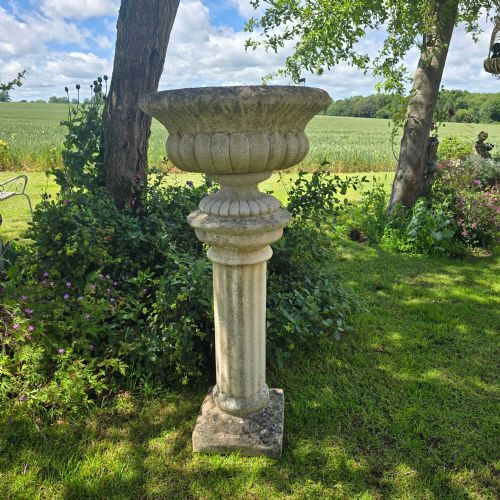
When you search for a garden plinth ornament, you encounter pedestals, bases, and columns supporting statues, urns, and sundials. The selection ranges from nineteenth century cast iron foundry pieces to mid twentieth century reconstituted stone statues.
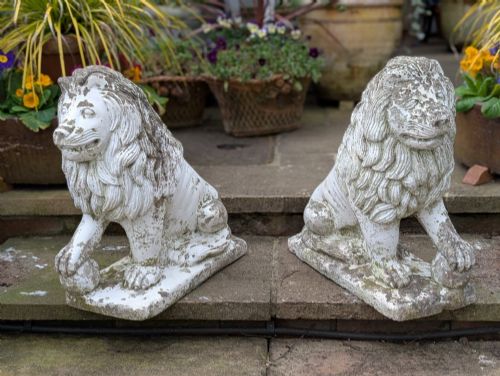
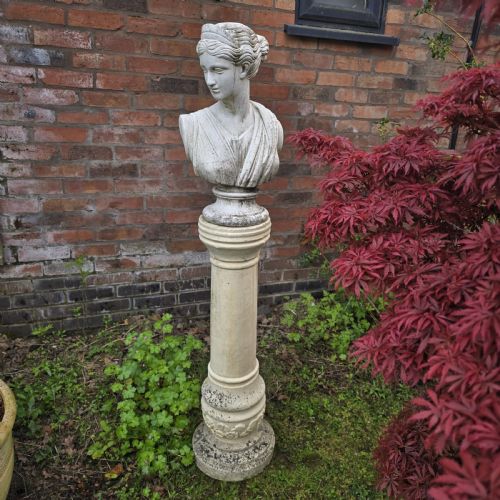
Most examples combine a raised architectural base with a classical subject such as a bust, lion, or seasonal figure. These forms draw on neoclassical and Victorian traditions to anchor lawns and terraces.
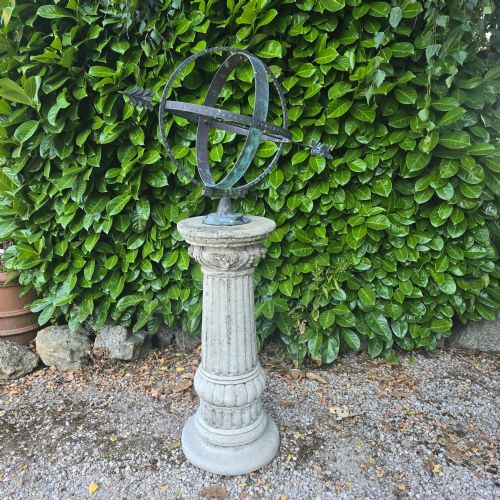
The objects span Georgian, Victorian, and Edwardian periods alongside later twentieth century interpretations. Common configurations pair stone pedestals with bronze armillary spheres, terracotta planters, or carved stone deities.
Materials and construction methods
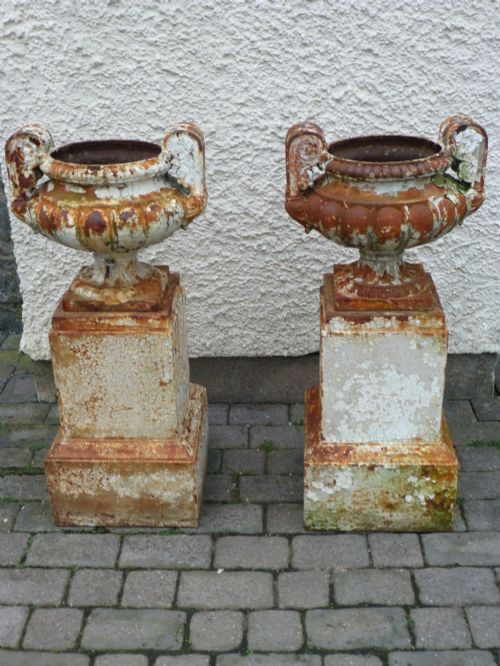
Foundries utilised cast iron for robust campana urns and structural bases, often pairing metal with stone plinths. Makers such as Falkirk Carron and Andrew Handyside produced durable iron garden ornaments through traditional casting.
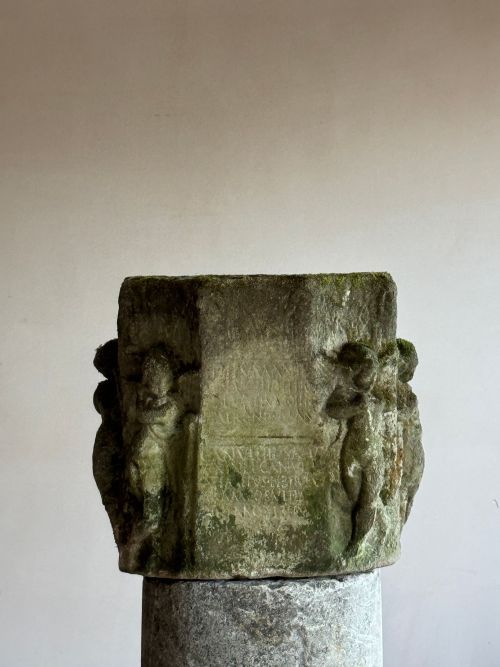
Stonemasons carved limestone, sandstone, and granite for architectural pedestals and sundials. Alternatively, workshops poured reconstituted stone and cast stone into moulds to replicate classical forms like Roman altars and Medici lions.
Materials span reconstituted stone, cast iron, terracotta, bronze, and natural limestone across Victorian, Edwardian, and mid twentieth century periods.
Distinguishing quality in garden ornaments
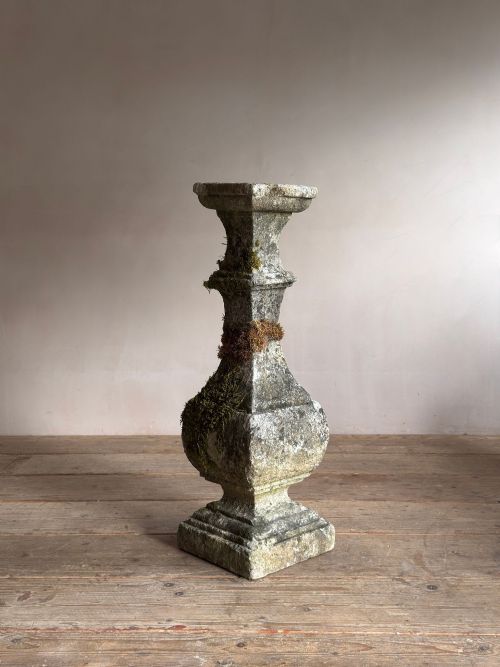
Surface patination and weathering indicate age and material stability. Natural moss growth and uniform oxidation enhance cast iron and stone, whereas inferior binders in poor reconstituted stone lead to surface friability.
Falkirk Carron·Andrew Handyside
The Garden Plinth Ornament Glossary
- Plinth
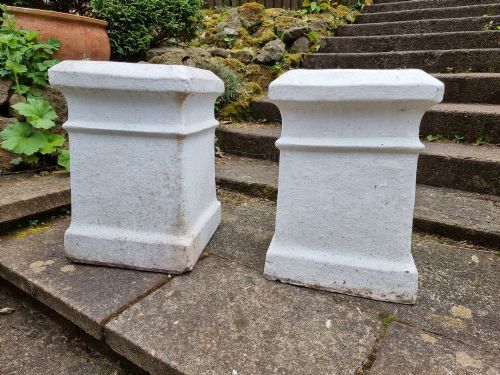
- A heavy base or pedestal supporting a statue, urn, or column. It lifts garden ornaments above ground level to create a distinct architectural silhouette.
- Campana urn
- A bell shaped vessel with a flaring rim, frequently mounted on a matching pedestal. This form originates in classical antiquity and saw revival in Victorian metalwork.
- Armillary sphere
- A skeletal model of celestial spheres featuring rings centred on a dial. These instruments serve as sundials when mounted upon stone pedestals.
- Reconstituted stone
- A composite material made from crushed stone and cement binder moulded into architectural shapes. It provides a durable alternative to natural carved stone.
- Salt glazed
- A ceramic finish achieved by throwing common salt into the kiln during high temperature firing. This process creates a dense, vitreous surface resistant to frost.
Garden Plinth Ornament: Frequently Asked Questions
How do I choose the right plinth for a garden statue?
Match the weight and scale of the plinth to the sculpture it supports. Heavy stone busts and cast iron urns require sturdy architectural bases to ensure stability on uneven ground.
Consider the material context of your garden. Reconstituted stone and weathered limestone blend naturally with foliage, while cast iron introduces dark, crisp silhouettes.
Can cast iron garden ornaments stay outside in winter?
Cast iron handles cold weather well if the metal has been properly painted or sealed to prevent deep rust formation. Regular inspection helps maintain the protective coating against damp conditions.
Ensure that hollow iron urns or pedestals do not accumulate standing water that could freeze and crack the metal seams during severe frosts.
What is the difference between reconstituted stone and natural stone?
Natural stone is quarried directly from the earth, featuring unique geological grain and hand carved detailing. Reconstituted stone combines crushed aggregate with binders, poured into moulds to replicate classical forms.
Both materials weather outdoors, but hand carved limestone and sandstone often display sharper chisel marks and greater longevity than moulded alternatives.
How do I clean weathered garden ornaments safely?
Wash stone and iron surfaces gently using water and a soft bristle brush. Avoid harsh chemical cleaners or pressure washers that strip away beneficial historical patination and erode the surface.
Allow lichens and light weathering to remain on antique stone and ironwork, as these organic layers contribute to the visual character of the piece.