




Fruit Basket Artwork
Fruit basket artwork brings together centuries of painted and stitched still life scenes, offering rich traditional charm for your walls.
Fruit Basket Artwork
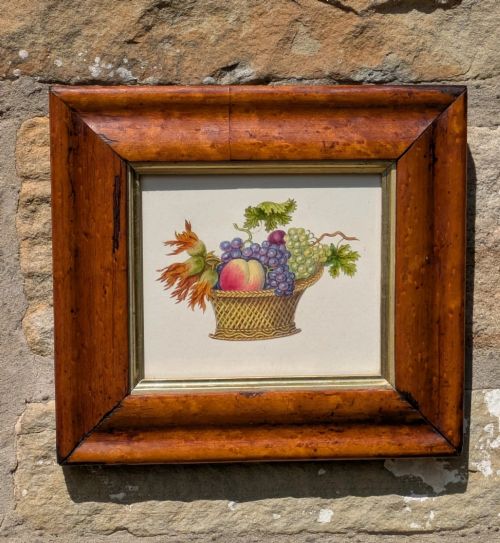
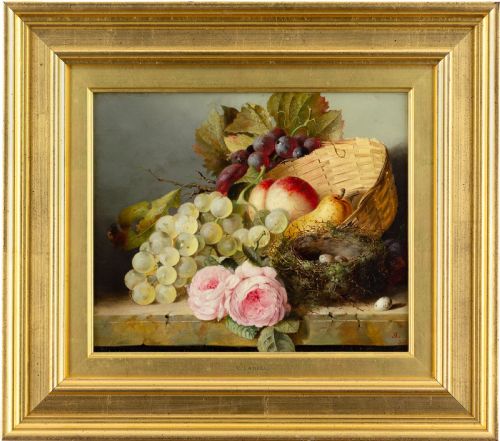
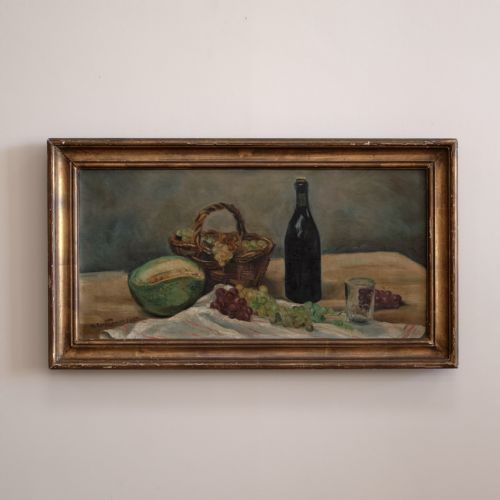
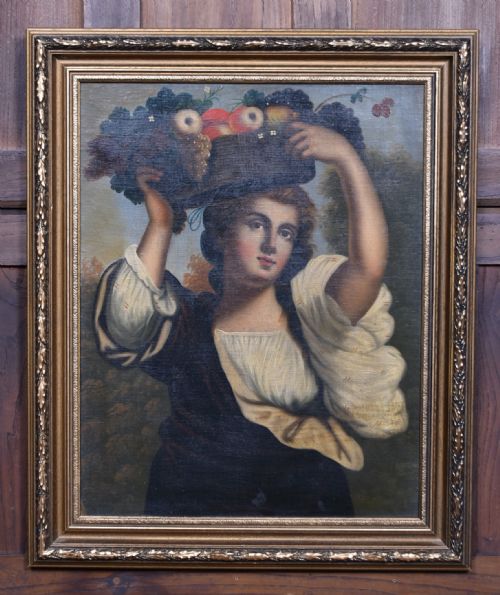
Fruit basket artwork covers centuries of traditional wall art, ranging from early oil paintings to detailed watercolours and silk embroideries. When you search for fruit basket artwork, you encounter varied depictions of baskets laden with apples, grapes, and other produce, often rendered in Flemish Baroque or classical Victorian styles.
The pieces on this page span the seventeenth century through to the early twentieth century, capturing changing European artistic approaches to still life. You are most likely to meet nineteenth-century oil paintings on canvas and traditional watercolours in framed presentations.
How they were made
These works rely on traditional media including oil paint on canvas, watercolour on paper, and silk thread embroidery. Artists built up their compositions using stretched canvas or sturdy paper supports, frequently housed within period giltwood or gilt wood frames.
Makers applied oil paint to achieve deep tonal contrasts seen in Flemish Baroque pieces, while watercolourists employed delicate washes to capture lighter studies. Embroiderers utilised silk threads on fabric grounds, securing the finished panels inside octagonal wooden frames.
Fruit Basket Artwork Retail Price Guide 2026
Typical asking prices for fruit basket artwork among the pieces listed under this phrase on Sellingantiques today, from the lower quarter to the upper quarter. They describe what is for sale here now, not the wider market.
Represented periods range from the seventeenth century through the Regency and Victorian eras to the early twentieth century.
What varies in quality
Quality in these pieces depends upon the handling of light, texture, and naturalism within the composition. Master works demonstrate subtle rendering of fruit skins, woven wicker textures, and spatial depth, whereas lesser examples rely on flat application and rigid arrangement.
The execution of framing also distinguishes the range, with original giltwood surrounds offering greater period integrity than later replacements. The reputation of the painter or embroiderer further elevates a piece, as seen in works by documented nineteenth-century artists.
Edward Ladell·Gaspar Peeter Verbruggen·Helena Maguire·Alfred Arthur Brunel de Neuville
The Fruit Basket Artwork Glossary
- Oil on Canvas
- Pigment suspended in drying oil applied to a woven fabric stretched across a wooden frame. This primary medium allows for rich colour blending and textured brushwork.
- Giltwood
- Wood carved and covered with a thin layer of gold leaf or metal gilt. It provides ornate framing for traditional paintings and embroideries.
- Watercolour
- Paint consisting of colourants suspended in a water-soluble vehicle, typically applied to paper. It yields translucent washes suited to delicate botanical and fruit studies.
- Flemish Baroque
- An exuberant seventeenth-century artistic style characterised by dramatic lighting and dense, theatrical arrangements. Works in this tradition display rich detail in natural subjects.
- Silk Embroidery
- Needlework executed using fine silk threads on a textile ground. In period examples, this technique creates textured pictorial scenes mounted in decorative frames.
Fruit Basket Artwork: Frequently Asked Questions
What periods do these artworks span?
The selection includes pieces created from the seventeenth century through to the early twentieth century. You will find examples representing Regency, Victorian, and Flemish Baroque traditions.
Earlier works often reflect dramatic continental styles, while nineteenth and early twentieth-century pieces lean towards classical still life and illustrative watercolours.
How should I hang a framed oil painting?
Heavy framed oil paintings require secure wall anchors suited to the weight of the timber and canvas. Hang them away from direct sunlight and damp conditions to protect the paint and giltwood.
Ensure the hanging wire or brackets on the back of the frame are stable before mounting.
How do I identify a nineteenth-century piece?
Nineteenth-century works often show specific stylistic traits associated with Victorian genre art or classical European schools. Canvas preparation, framing materials, and artist signatures offer further clues to the date of creation.
Comparing the handling of subject matter to documented painters from the era helps confirm the period.