



Frosted Glass Ceiling Shade
A frosted glass ceiling shade softens glare while casting a clean, even diffusion across a room.
Frosted Glass Ceiling Shade
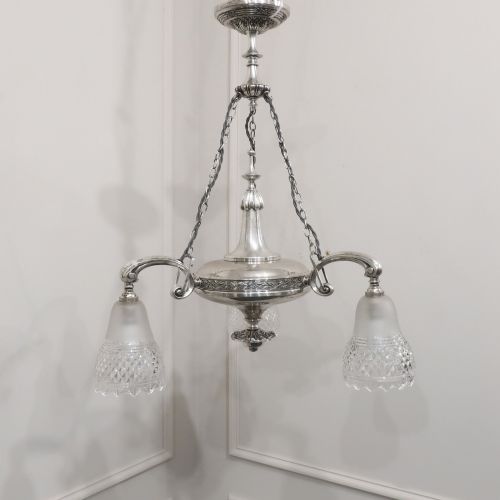
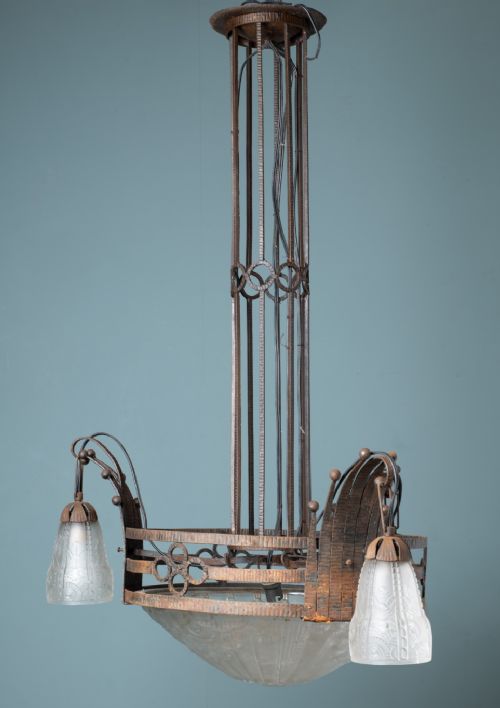
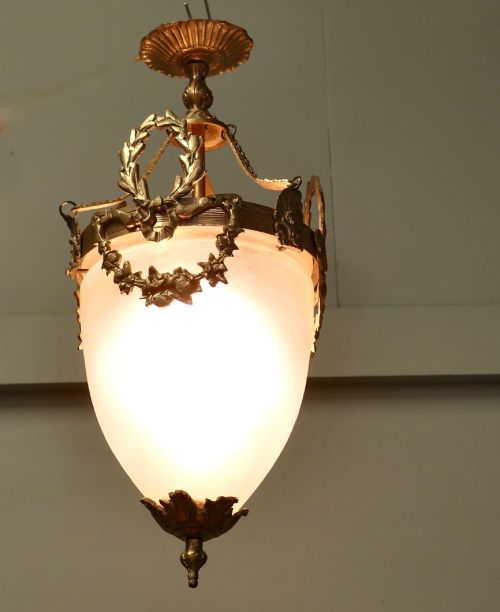
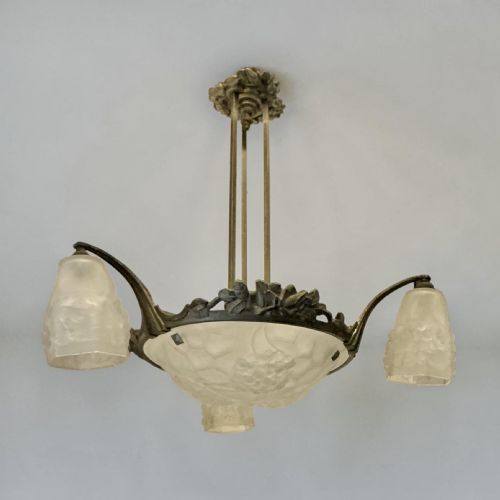
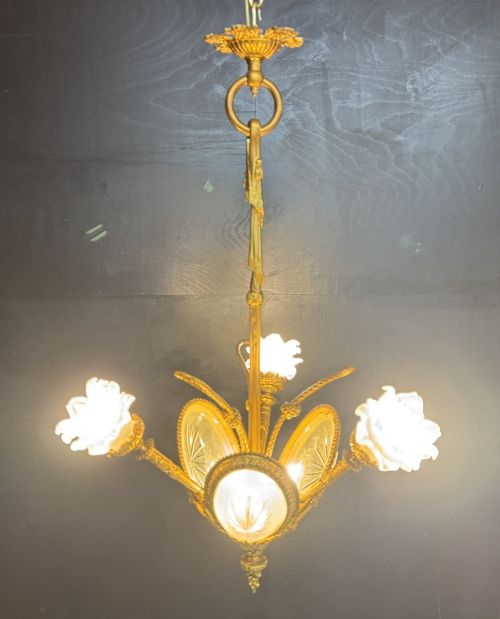
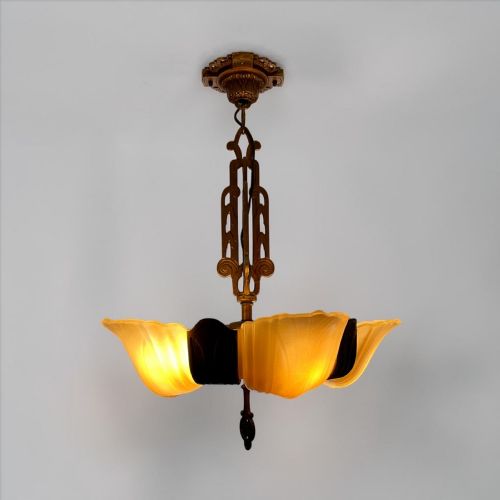
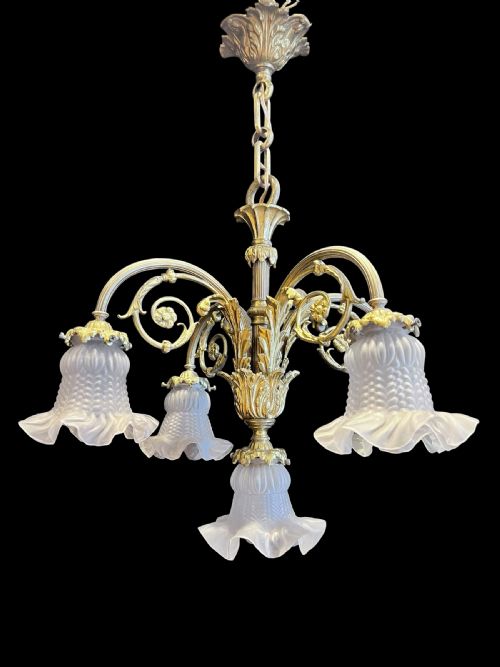
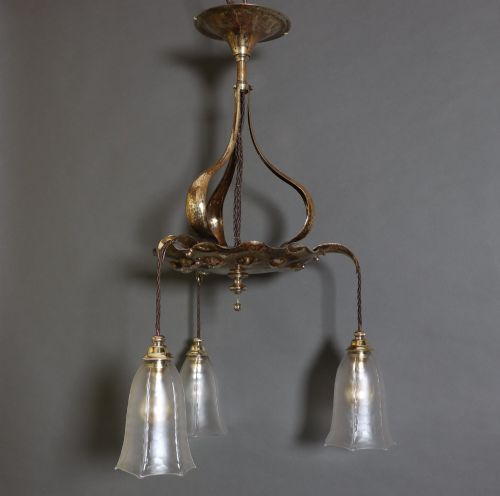
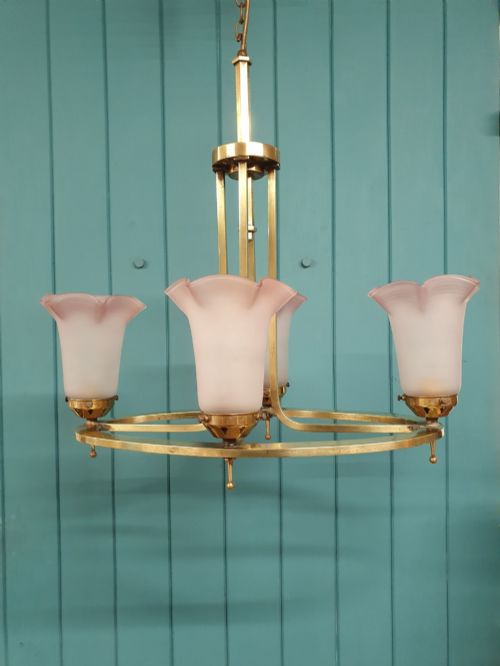
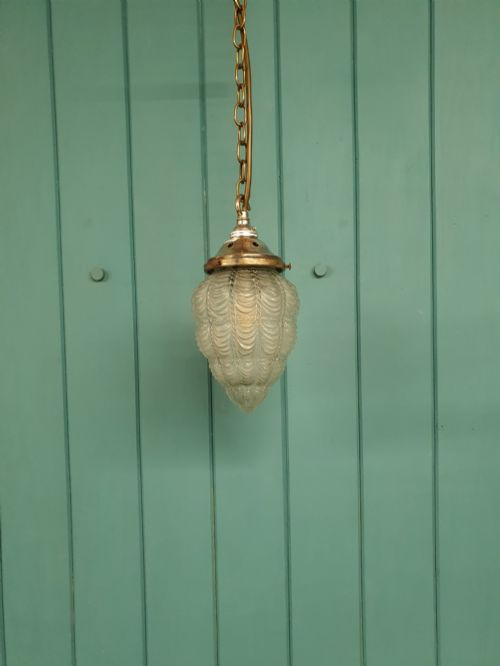
A frosted glass ceiling shade brings a diffuse, atmospheric quality of light to a room, prized for its ability to soften harsh interior illumination. When you search for frosted glass ceiling shade, you encounter a range of forms spanning from Victorian pendants to streamlined Art Deco slip shades and geometric plafonniers. The selection here leans heavily towards the early twentieth century, showing how makers adapted translucent glass to changing domestic tastes.
These fixtures serve as central lighting points in hallways, sitting rooms and dining spaces, suspended on brass, copper or chrome mounts. The glass itself takes many shapes, from clam shell bowls and opalescent cylinders to simple frilly pendants and moulded bowls. Whether hanging low as a single pendant or fitted closely as a ceiling-hugging fixture, the design prioritises a warm, even spread over direct brilliance.
Materials and Working Methods
The construction of these pieces relies on the pairing of translucent glass with structural metalwork, predominantly cast or spun brass, copper and bronze. Glass surfaces were rendered opaque through acid-etching, sandblasting or moulding, which altered the natural transparency to create a satin or frosted finish. Workshops utilised metal mountings to secure heavy glass shades safely to ceilings, employing galleries, chains and brass fixings that complemented the industrial or decorative arts styles of the period.
Moulding and pressing techniques allowed makers in the interwar years to produce thick glass shades with deep relief patterns, such as floral motifs or geometric ribs. Artisans of the Arts and Crafts movement incorporated beaten copper and hand-finished bronze, showing a distinct preference for tactile metalwork alongside simple glass forms. The resulting assemblies balance mechanical precision in the glass press with traditional metal-smithing.
Frosted Glass Ceiling Shade Retail Price Guide 2026
Typical asking prices for frosted glass ceiling shade among the pieces listed under this phrase on Sellingantiques today, from the lower quarter to the upper quarter. They describe what is for sale here now, not the wider market.
Listings feature frosted glass paired with brass, bronze, chrome and copper across Edwardian, Victorian and Art Deco styles.
Assessing the Craftsmanship
Quality in these light fittings rests upon the weight and purity of the glass and the integrity of the metal mounts. Finer examples display crisp moulding with sharp relief work and uniform frosting that diffuses light without cloudy patches or thinning spots. The thickness of the glass bowl or shade dictates its durability and resonance, setting superior artistic pieces apart from mass-produced commercial alternatives.
The supporting metalwork reveals the standard of manufacture, with heavy cast brass, detailed bronze chasing and substantial copper frames indicating better workshop origins. Signed pieces or those retaining original patination on the metal mounts command greater appreciation from collectors. The harmony between the glass diffuser and its hanging apparatus determines the overall balance and visual presence of the fixture.
Émile-Jacques Ruhlmann·René Lalique·Verrerie Des Vosge·Jean Gauthier·F&C Osler
The Frosted Glass Ceiling Shade Glossary
- Plafonnier
- A ceiling-mounted lighting fixture that sits close to the surface, typically featuring a bowl-shaped glass shade held by metal clips or a central mount. This form directs illumination upwards and outwards into the room.
- Slip Shade
- A moulded glass insert used in sets within a metal frame, popular in American and European Art Deco lighting design. These pieces slot into a basket-like fixture to form a cohesive bowl or drum shape.
- Opalescent Glass
- Glass containing mineral additives that create a milky, pearlescent appearance with shifting tones of blue and amber when lit. It diffuses light softly while adding rich colour depth.
- Acid-Etched
- A decorative technique using acid to eat away the surface of the glass, producing a permanent frosted or matte texture. This process allows for delicate translucent patterns against clear or semi-opaque backgrounds.
Frosted Glass Ceiling Shade: Frequently Asked Questions
How do I clean frosted glass?
Wash the glass gently in warm water with a mild, non-abrasive detergent, using a soft cloth to avoid scratching the matte surface. Rinse thoroughly and dry with a lint-free towel to prevent water spots.
Avoid harsh chemical cleaners or abrasive scouring pads, which can damage the delicate acid-etched or sandblasted finish built up over decades.
Were these lights originally electrified?
Many fixtures from the late nineteenth and early twentieth centuries were originally designed for gas or oil before being converted to electricity as domestic power became widespread. Surviving pieces often show adaptation work on the original burners and galleries.
Today, these lights require modern rewiring to meet current safety standards while retaining their historic brass and glass components.
How do I date a glass shade?
Dating relies on stylistic clues, such as the geometric symmetry of Art Deco pieces or the hand-hammered metalwork characteristic of the Arts and Crafts movement. The weight of the glass, the type of metal alloy used in the mount, and the manufacturing technique provide further chronological markers.
Comparing the mounting hardware and screw threads to known period examples helps narrow down the decade of production.
Can these hang from low ceilings?
Plafonniers and close-fitting ceiling lights are specifically designed for rooms with restricted vertical clearance, mounting directly against the plaster. They provide ample illumination without the physical intrusion of a long-drop pendant.
Chandeliers and multi-arm pendants with suspension chains can often be shortened by removing links, provided the electrical cord is adjusted accordingly.