

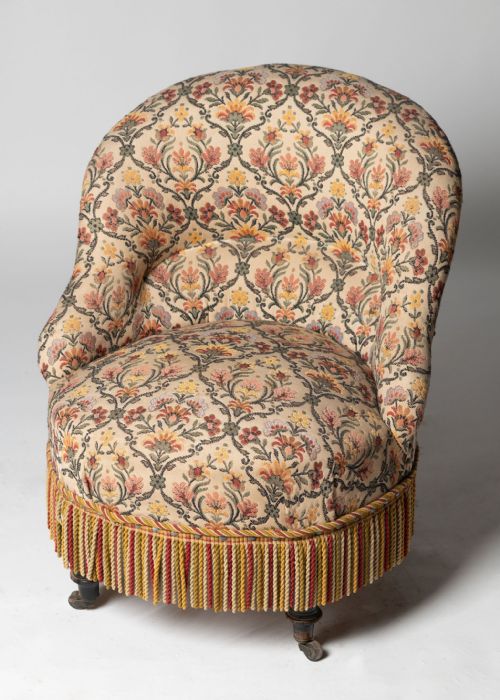
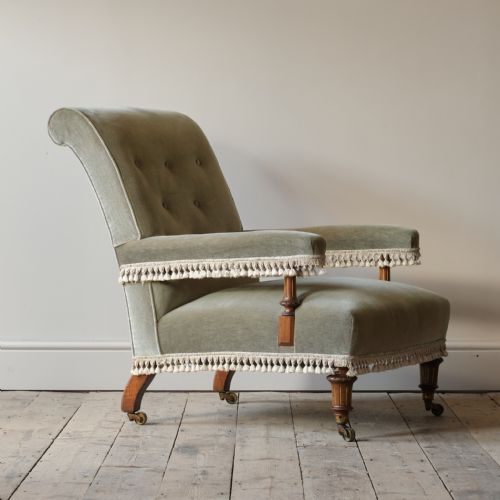
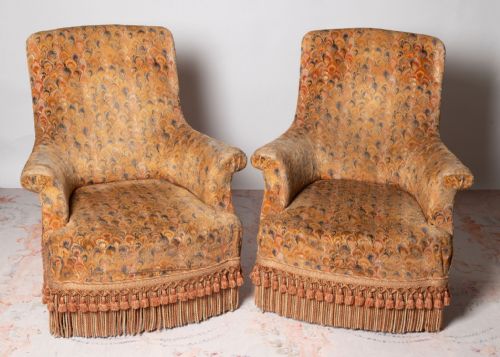
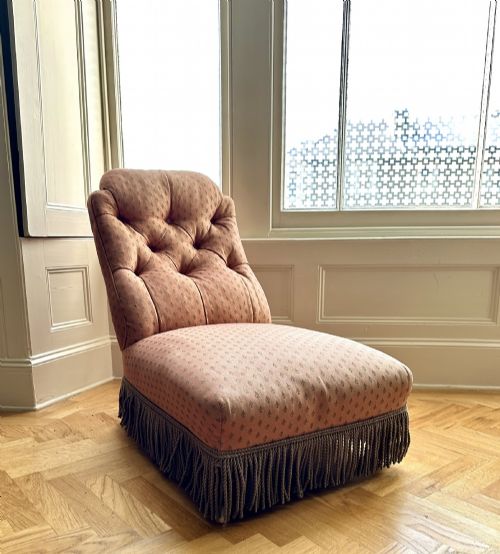


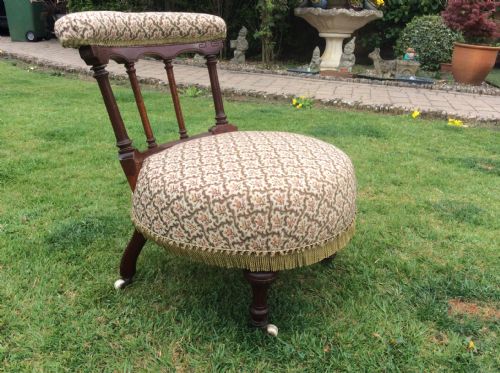
Fringe Upholstered Chair
These fringe upholstered chair examples offer deep Victorian comfort and low lines, anchored by traditional textile trims.
Fringe Upholstered Chair
A fringe upholstered chair brings together low seating forms like slipper chairs, bedroom chairs and compact armchairs with decorative textile hanging trims along the base. Buyers seeking this phrase encounter nineteenth century Victorian and Napoleon III formats alongside earlier seventeenth century oak cross frame styles and later art deco pieces.
The most common versions on this page are nineteenth century slipper chairs and open armchairs, often upholstered in velvet or patterned fabric and finished with a distinct lower fringe. Makers range from documented workshops such as Gillows and J.Mills to country house styles and French empire designs.
Forms span from daybeds and chaise longues to side chairs and wing armchairs, showing how varied seating heights and frame profiles were adapted for domestic comfort across different decades.
How they were made
Frames are built from hardwoods including mahogany, oak and general timber, providing the structural skeleton for padded seating. Joinery methods support heavy sprung or stuffed interiors designed for deep domestic use.
Upholstery relies on traditional textiles such as velvet and woven fabric, secured over internal stuffing and finished with applied fabric fringe borders and brass detailing.
Fringe Upholstered Chair Retail Price Guide 2026
Typical asking prices for fringe upholstered chair among the pieces listed under this phrase on Sellingantiques today, from the lower quarter to the upper quarter. They describe what is for sale here now, not the wider market.
Listings feature items spanning the seventeenth century through to the 1930s, constructed from mahogany, oak, and general timber.
What varies in quality
Quality rests in the integrity of the underlying wood frame and the precision of the joinery, distinguishing sturdy architectural builds from lighter decorative pieces. The weight and grain of timbers like mahogany or oak set the foundational standard for each seat.
Execution shows in the harmony between the textile upholstery, such as velvet or Kilim carpet, and the hand-applied fringe trims. Finer examples maintain original proportions and maker attribution, while others reflect simpler country house production.
Gillows·J.Mills
The Fringe Upholstered Chair Glossary
- Slipper chair
- A low-set bedroom chair traditionally designed without arms to ease dressing. These seats sit close to the floor and frequently feature fringe trim.
- Napoleon III
- A French nineteenth century design style drawing on eclectic historical revivals. Pieces from this period often use rich textiles and decorative frames.
- Cross-frame armchair
- A seating form featuring intersecting diagonal wooden stretchers supporting the arm structure. This architectural format appears in seventeenth century and later revival pieces.
- Open armchair
- A seat with un-upholstered wooden arm supports exposing the timber frame. These designs highlight the craftsmanship of makers like Gillows.
- Wing arm chair
- A high-backed seat featuring protective side panels designed to shield against drafts. Fine quality examples often pair this form with deep upholstery and detailed fringes.
Fringe Upholstered Chair: Frequently Asked Questions
What is a fringe upholstered chair?
A fringe upholstered chair is a historic seat featuring decorative textile trims hanging along the base, encompassing Victorian slipper chairs, Napoleon III armchairs, and nineteenth century daybeds.
These pieces combine traditional wood frames with soft upholstery fabrics like velvet, brass accents, and low profiles designed for domestic comfort.
How do I date these chairs?
Dating relies on identifying frame styles, timber choices, and upholstery characteristics recorded across the nineteenth century, art deco period, and seventeenth century roots.
Details such as oak cross-frames, mahogany open arms, and specific Victorian or French empire proportions help place each piece in its proper era.
Where were these chairs used?
These seating forms served multiple domestic spaces, from formal reception rooms and country house libraries to private bedrooms and dressing rooms.
Slipper chairs and bedroom chairs offered low, accessible seating, while larger armchairs and daybeds provided substantial lounging comfort.
How do I care for antique upholstery?
Preserving these textiles involves gentle cleaning methods that protect delicate velvet, woven fabrics, and original fringe trims from wear.
Keeping frames away from direct sunlight and excessive moisture helps maintain the underlying timber and historic stuffing materials.