


Fringe Shade Desk Lamp
A fringe shade desk lamp brings soft, diffused illumination to a workspace through period textiles and metalwork.
Fringe Shade Desk Lamp
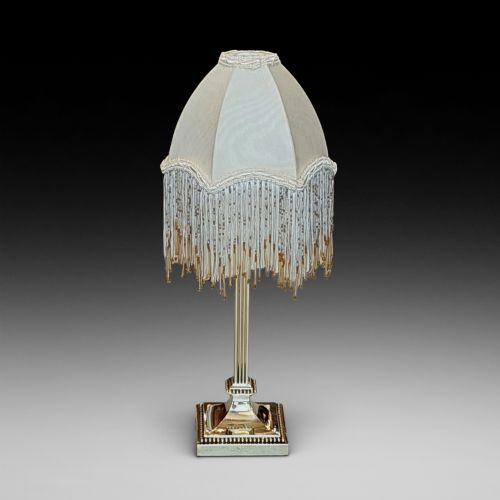
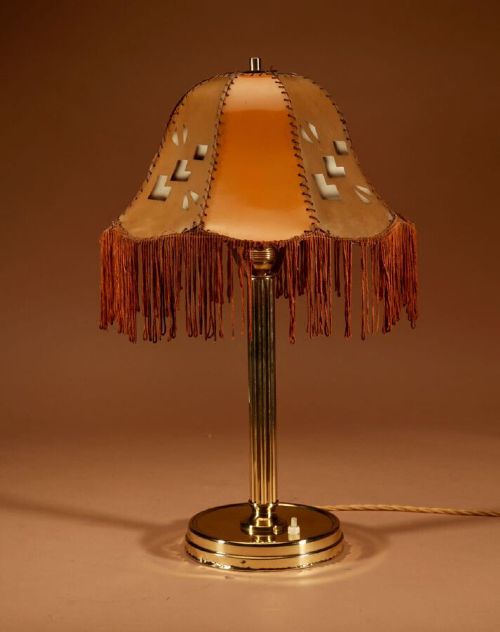
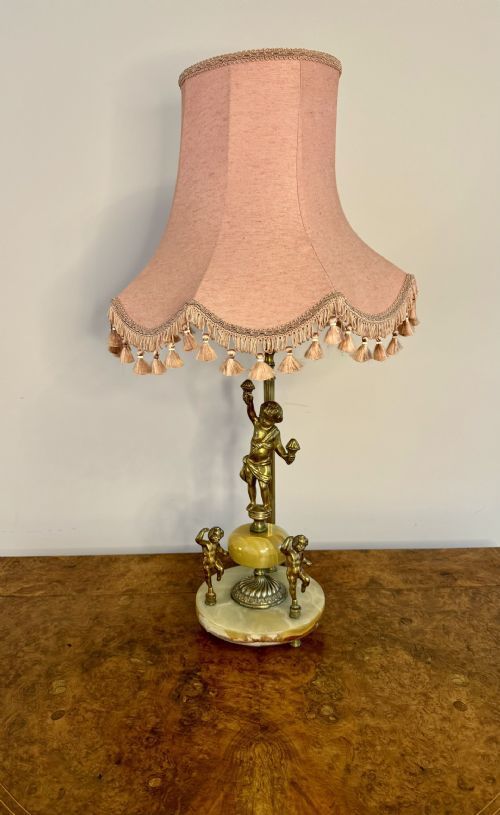
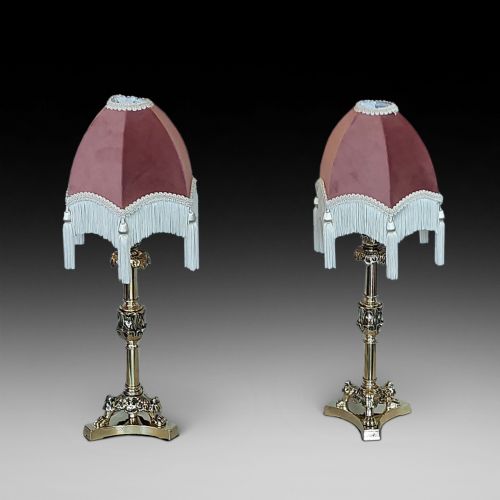
When you search for a fringe shade desk lamp, you encounter lighting fixtures that merge functional illumination with decorative textiles and sculptural metal bases. The selection on this page draws primarily from the Victorian and Edwardian eras, alongside pieces dated from the nineteenth century up to 1920, showing how earlier forms like candlesticks and oil lamps were adapted for electricity.
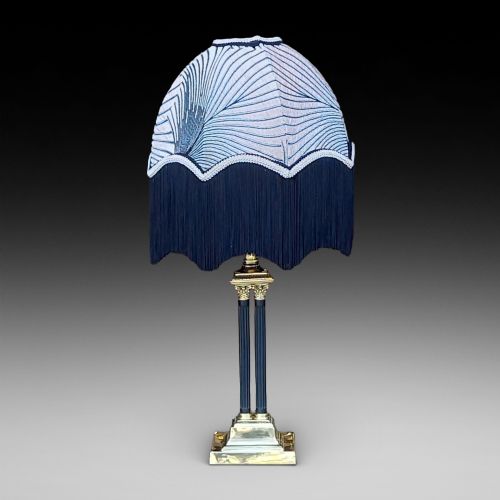
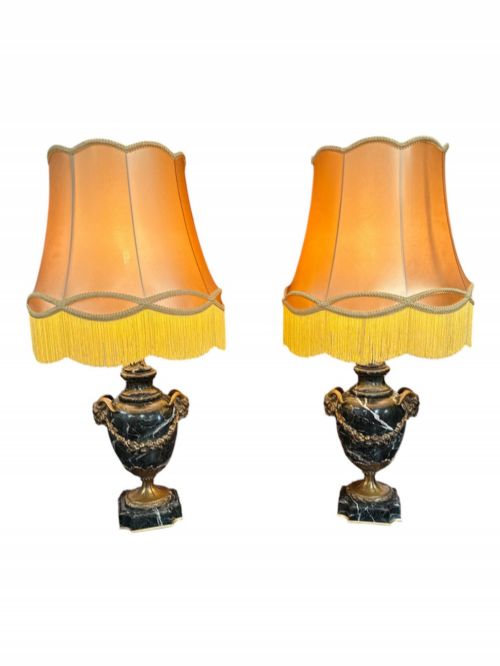
The dominant forms span classical columns in brass, marble urns, and figural bases in bronze and gilt metal. Alongside these, styles such as Art Nouveau, Art Deco, and Neoclassical Revival shape the character of the metalwork, while fabric and silk elements provide the characteristic softened glow.
Materials and construction
The physical build relies heavily on cast and spun brass, gilt bronze, and spelter, often paired with structural elements of marble, onyx, and cut glass. Many examples originate from converted candlesticks or oil lamps, demonstrating period ingenuity in adapting older metalware for electrical fittings.
Shades and mounts incorporate textiles such as silk and fabric, complemented by decorative fringe details. Metal components frequently utilise cold painting, patination, and gilt mounting to achieve distinct surface finishes across Art Nouveau and revival styles.
Minerva with her stags stands ready to illuminate the room.
Assessing quality and craftsmanship
Quality reveals itself in the weight and precision of the metal casting, whether in a Corinthian column or a figural bronze base. Heavier gauge brass and crisply detailed hand-chased gilt bronze separate superior examples from simpler pressed metal alternatives.
The integrity of the conversion work and the harmony between the base and the shade dictate the overall standard. Finer pieces maintain original patination on the bronze or brass without heavy intervention, while lesser specimens show crude alterations.
The Fringe Shade Desk Lamp Glossary
- Corinthian column
- A classical architectural support featuring an ornate capital decorated with acanthus leaves. This form frequently translates into tall brass and silver plate table lamp bases.
- Spelter
- An alloy of zinc and lead used as a cost-effective substitute for bronze. It is commonly found in figural and decorative lamp bases from the late nineteenth and early twentieth centuries.
- Ormolu
- A gilded bronze technique developed in France, creating a rich gold-coloured surface finish. It appears on mounted urns and decorative bases from the nineteenth century.
- Cold painted
- A method where bronze or metal figures are painted with oil paint without subsequent firing. This finish is characteristic of detailed Victorian and Edwardian ornamental pieces.
- Majolica
- A type of colourful tin-glazed earthenware. It provides contrasting ceramic sections on mixed-material table lamps.
Fringe Shade Desk Lamp: Frequently Asked Questions
What periods do these lamps come from?
The pieces span the Victorian and Edwardian eras, alongside early twentieth-century examples up to 1920. Earlier nineteenth-century items often represent conversions from oil lamps or candlesticks.
Design influences range from classical revival styles to Art Nouveau and Art Deco. Each period brings distinct metal casting techniques and decorative motifs.
Were these always electric lamps?
Many examples began life as oil lamps, candlesticks, or figural statuary before being converted to electricity. This adaptation practice is common among antique lighting.
Original metal bases from the nineteenth century frequently house modern internal wiring while retaining their historical mounts and columns.
What metals are commonly used?
Brass is the predominant metal, appearing in columns, urn mounts, and cast bases. Gilt bronze, spelter, and silver plate also feature prominently across the collection.
Surface finishes vary from polished brass to patinated bronze and fire-gilded ormolu, depending on the manufacturing period and style.
How do I identify Art Nouveau examples?
Art Nouveau lighting incorporates organic, flowing lines inspired by natural forms, frequently utilising bronze and floral motifs. These pieces often date from the late nineteenth to early twentieth century.
Unlike strict classical revival designs, they favour asymmetrical silhouettes and stylized plant or figure representations.