



Fretwork Walnut Stand
These fretwork walnut stand pieces are Victorian display items and canterburys designed to hold books, music, and magazines in style.
Fretwork Walnut Stand
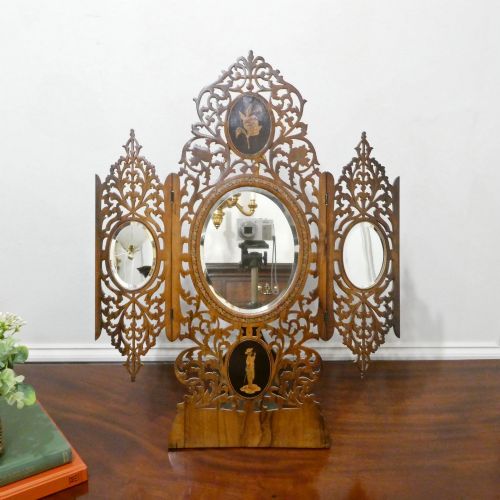
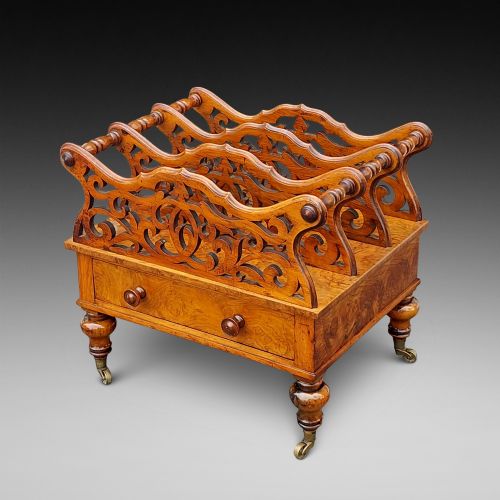
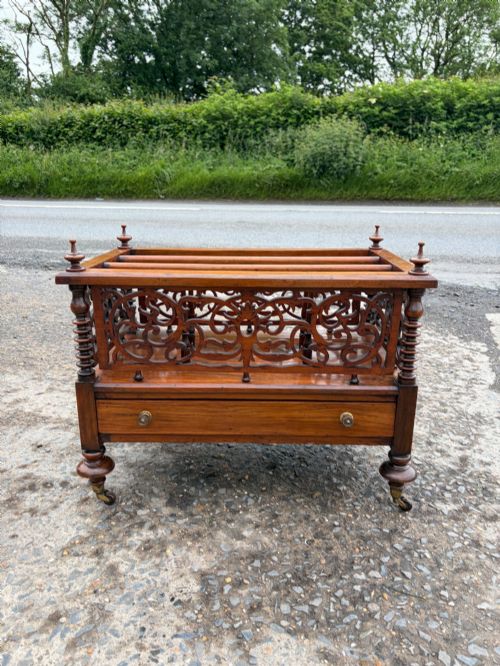
A fretwork walnut stand typically takes the form of a Canterbury, whatnot, or display shelf dating from the nineteenth century. These pieces serve practical functions in the home, combining shelving and compartment storage with ornamental pierced woodwork.
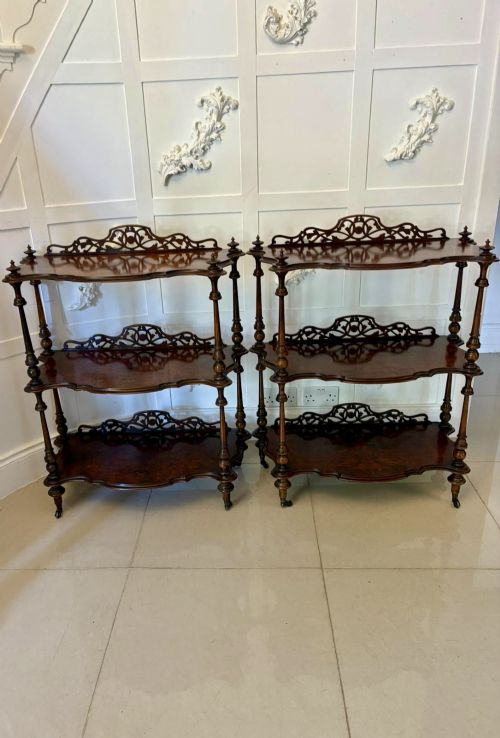
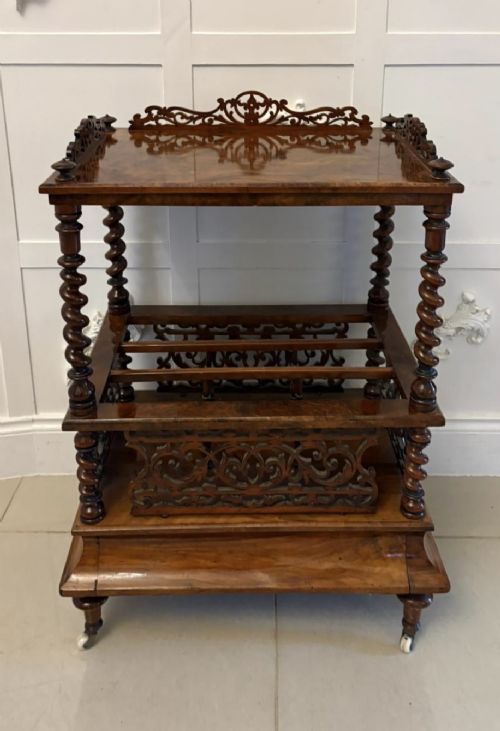
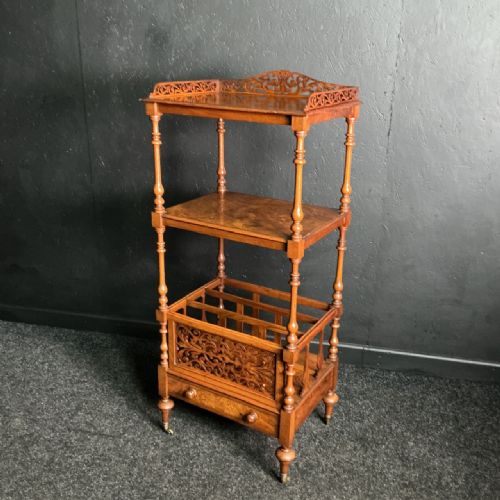
The version most commonly encountered on this page is the Victorian burr walnut Canterbury or multi-tiered whatnot. These examples often feature inlaid details, turned supports, and pierced fretwork panels that showcase the rich grain of the timber.
The spectrum of quality
Quality rests in the selection of the burr walnut veneer and the crispness of the pierced fretwork. Superior examples display dense, lively grain patterns matched symmetrically across the surfaces rather than plain timber.
The complexity of the form dictates distinction, such as demi-lune display consoles, multi-tiered shelving units with finely turned columns, and integrated drawers with original hardware. Finer pieces combine marquetry inlay with structural stability.
Some Victorian canterburys feature hollow barley twist supports that make music storage look remarkably breezy.
The Fretwork Walnut Stand Glossary
- Canterbury
- A low stand fitted with divisions for holding sheet music, folios, or magazines, often mounted on castors. Many incorporate a drawer below the main compartment.
- Whatnot
- An open set of shelves supported by columns or pillars, designed for displaying ornaments and books. They range from corner units to tall multi-tiered freestanding shelves.
- Burr walnut
- A veneer sliced from the growth warts or burls of walnut trees, prized for its swirling, mottled grain patterns. It forms the decorative surface on high-status Victorian furniture.
- Fretwork
- Ornamental perforated woodwork cut in patterns using a scroll saw or fretsaw. This technique decorates the partitions and galleries of canterburys and display stands.
- Marquetry
- The art of applying pieces of veneer to a structure to form decorative patterns and pictures. It frequently appears on the tabletops and shelves of Victorian cabinet work.
Fretwork Walnut Stand: Frequently Asked Questions
What is a walnut whatnot used for?
A whatnot is an open shelving unit designed for the display of ornaments, small objects, and books. In nineteenth-century interiors, these tiered stands provided accessible display space across multiple levels.
They appear in corners or as freestanding furniture pieces. The design allows objects to be viewed from multiple angles within a room.
What distinguishes burr walnut from plain walnut?
Burr walnut comes from the abnormal growth burls of the tree, producing a swirling, highly figured grain pattern. Plain walnut displays a straighter, more uniform grain structure without the characteristic knots and eyes of burr timber.
Cabinet makers used burr walnut as a decorative veneer on prominent surfaces like tabletops and Canterbury fronts. This veneer was typically reserved for higher-quality furniture.
Where should I place a display stand at home?
Display stands and corner whatnots fit well in living rooms, studies, or hallways where they hold books, magazines, or decorative items. Corner shelves make use of unused room angles while providing vertical display space.
Freestanding models work effectively away from walls if finished on all sides. Their open structure keeps rooms feeling light while offering functional storage.