

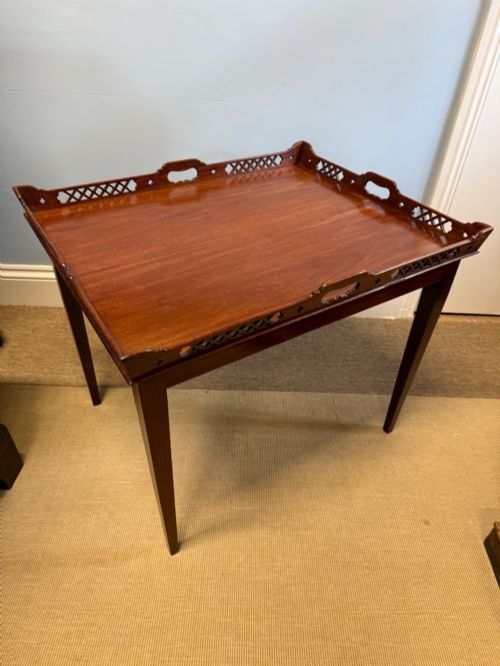


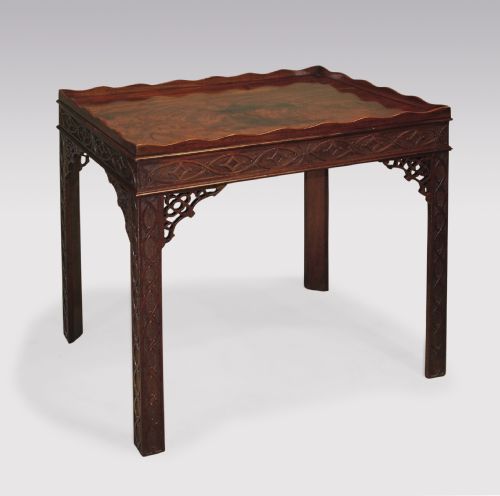


Fretwork Tray Table
These fretwork tray table pieces bring centuries of mahogany craftsmanship into the home, offering both practical surface space and distinct period character.
Fretwork Tray Table
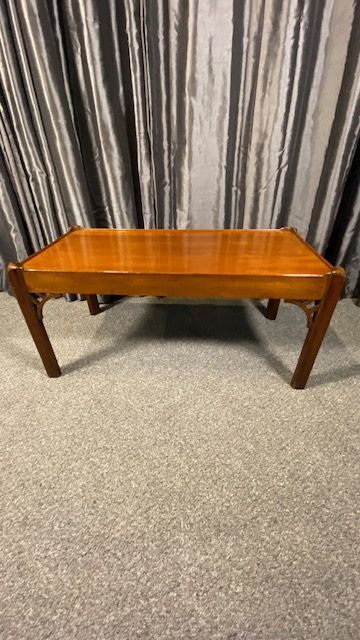
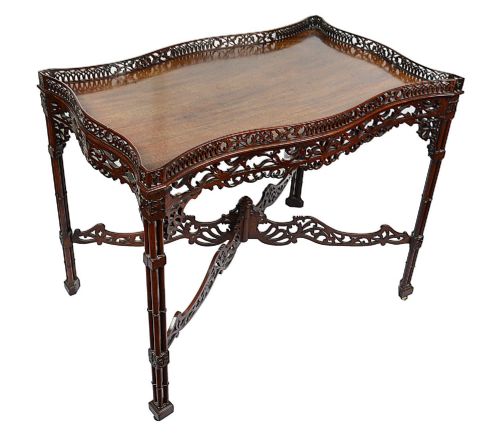
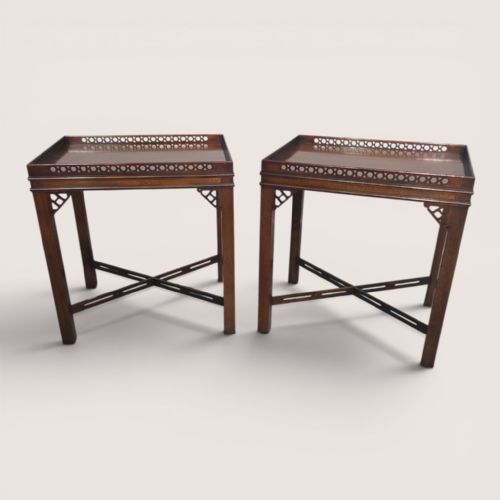
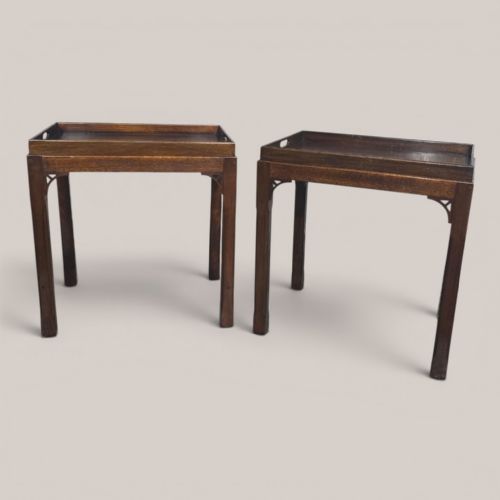
A fretwork tray table combines raised tray edges with intricate pierced woodwork, serving as a versatile piece for entertaining or display across various historic periods. When searching for a fretwork tray table, buyers encounter forms ranging from formal silver tables to low coffee tables and compact lamp tables.
The selections span from original mid-to-late 18th-century examples to later 19th-century interpretations and 20th-century revivals. Georgian and Edwardian iterations dominate, alongside pieces from the 1900s, 1910s, 1920s, and 1930s.
Makers produced these functional items as side tables, occasional tables, wine tables, and coffee tables. Mahogany remains the defining timber uniting these diverse historical periods and styles.
Materials and Construction Methods
Cabinetmakers relied almost exclusively on mahogany to achieve the structural integrity required for delicate pierced galleries and slender supports. This dense timber allowed artisans to carve crisp geometric and interlaced fretwork patterns along the tray edges without splitting.
Joinery techniques combined traditional framing with precise manual fret-sawing, connecting the raised tray tops securely to the table bases. Workshops balanced decorative openwork with durable load-bearing surfaces suited for holding silver or serving drinks.
Fretwork Tray Table Retail Price Guide 2026
Typical asking prices for fretwork tray table among the pieces listed under this phrase on Sellingantiques today, from the lower quarter to the upper quarter. They describe what is for sale here now, not the wider market.
Early butler's trays often feature finger cutouts so staff could haul them away swiftly when the gin ran dry.
Assessing Craftsmanship and Design
The distinction between standard examples and superior pieces rests upon the crispness of the pierced carving and the depth of the mahogany grain. Hand-cut fretwork exhibits organic variation and sharp interior angles that distinguish bespoke cabinetmaking from later mechanical production.
Proportion and wood selection also dictate the hierarchy of these tables. Richly figured timber and balanced framing elevate an occasional or silver table from a utilitarian item to a refined focal point.
The Fretwork Tray Table Glossary
- Fretwork
- Openwork woodwork cut with a scroll saw in repetitive geometric or scrolling patterns. It decorates the raised edges of tray tables.
- Silver table
- A specific form of side table designed in the 18th century to display tea services or silverware upon its galleried top.
- Chippendale style
- A decorative aesthetic drawing upon the mid-18th-century designs of Thomas Chippendale, featuring characteristic carved details and mahogany construction.
- Butler's tray
- A removable tray top with hinged or fixed sides, resting upon a folding or stationary stand.
- Occasional table
- A small, movable table intended for intermittent use around a room, encompassing wine and lamp table variations.
Fretwork Tray Table: Frequently Asked Questions
What is a fretwork tray table used for?
These tables function primarily as movable surfaces for serving drinks, displaying silver, or holding lamps in living spaces.
Their raised gallery edges originally kept items secure while being carried or used for entertaining.
How do I date a mahogany tray table?
Dating relies on examining the construction marks, timber patina, and stylistic adherence to periods like the Georgian era or Edwardian revival.
Earlier 18th-century pieces show hand-cut joinery and aged mahogany surfaces, whereas 20th-century revivals utilise cleaner machinery cuts.
Are these tables sturdy enough for daily use?
The dense mahogany timber provides natural structural strength, though the delicate fretwork galleries require gentle handling.
Placing them in low-traffic areas helps protect the pierced decorative edges from accidental knocks.
What is the difference between a silver table and a coffee table?
Silver tables generally stand at traditional side-table height with tall legs and elaborate pierced galleries for display.
Coffee table versions adapt the same tray tops to lower proportions suited for modern seating arrangements.