





French Wool Tapestry
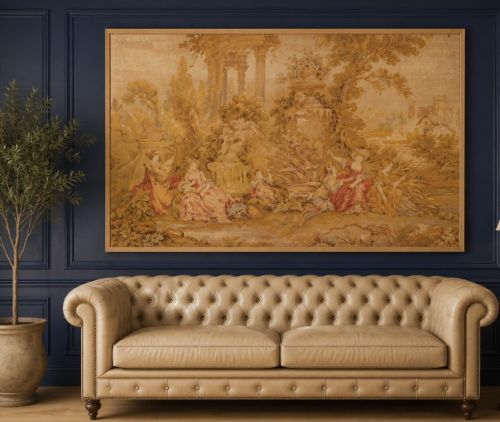
These french wool tapestry pieces bring historic pastoral scenes and woven architecture directly into modern rooms.
French Wool Tapestry
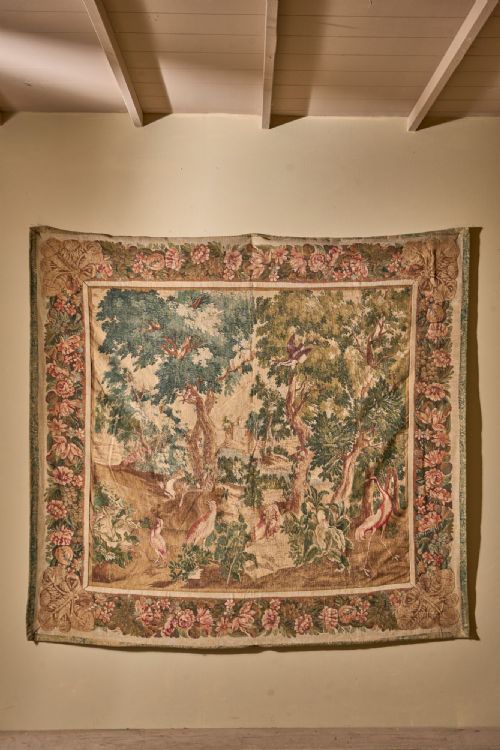
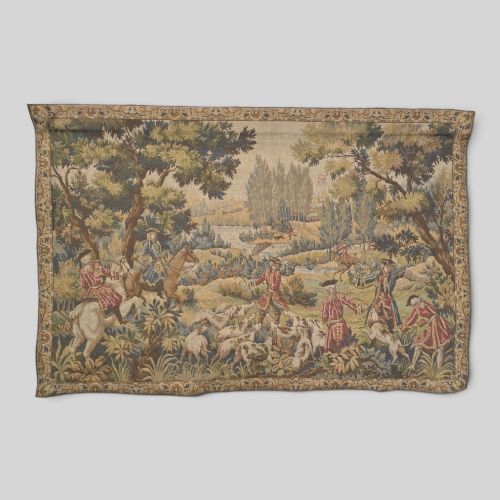
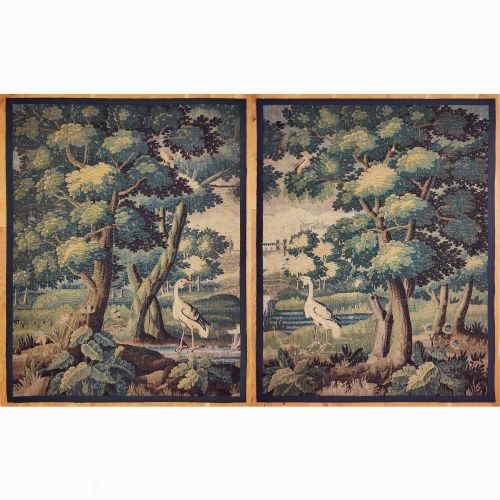
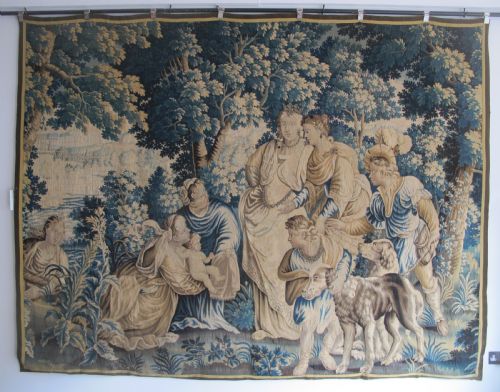
A french wool tapestry search reveals woven wall hangings, framed panels, carpets, and cushions originating from European workshops. Buyers encounter large verdure landscapes, pastoral figural scenes, and botanical motifs spanning multiple centuries.
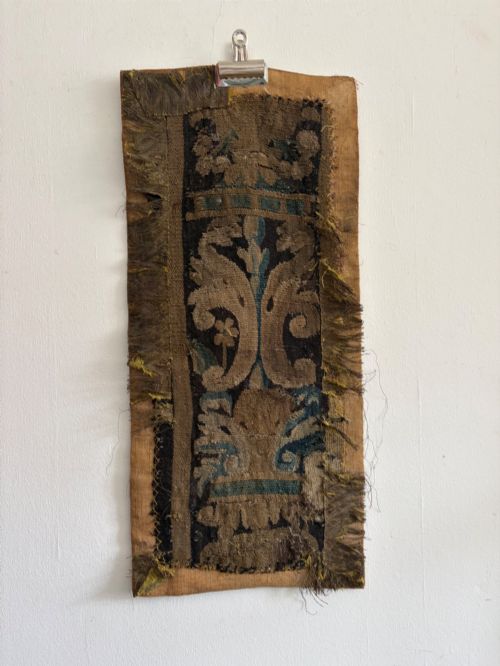
The selection ranges from early hand-woven needlework panels and border fragments mounted to linen up to large nineteenth-century wall art and decorative cushions. Aubusson workshops represent a dominant origin among these textile works.
Formats divide between expansive wall coverings designed for chateau interiors and smaller domestic furnishings like rugs and cushion covers. Many examples demonstrate traditional weaving techniques adapted for varied interior display.
How they were made
These textiles rely primarily on wool combined with silk, cotton, and linen yarns woven on traditional looms or worked by hand in needlepoint and petit point. Makers built pictorial depth by blending dyed threads across canvas and textile foundations.
Larger wall hangings often incorporate structural linen backings or wood mounting to support heavy woven wool panels. Smaller items such as cushions and rugs utilise durable wool foundations designed for functional interior use.
Several cushions have survived three centuries of sitting without losing their botanical charm.
What varies in quality
Quality rests upon the fineness of the weave, the complexity of the pictorial design, and the survival of the original dyed wool and silk colours. Verdure landscapes with rich botanical detailing show greater artistic ambition than simpler repetitive patterns.
The condition of the textile fibres and the integrity of any mounted panels dictate the overall preservation of the piece. Intricate needlework and complete pictorial compositions command stronger visual presence than fragmentary borders.
The French Wool Tapestry Glossary
- Verdure tapestry
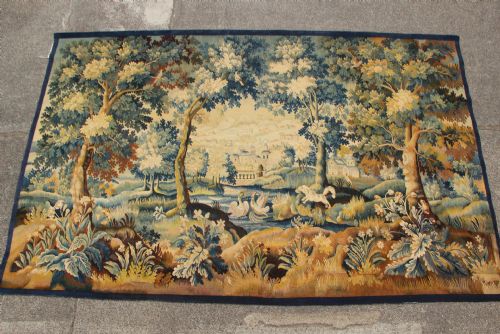
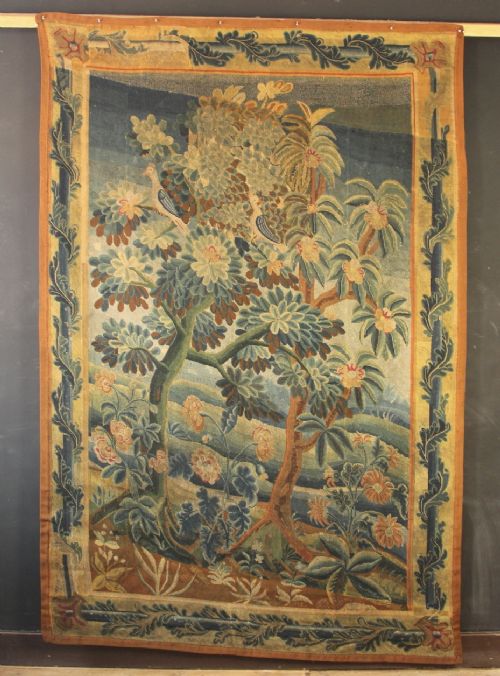
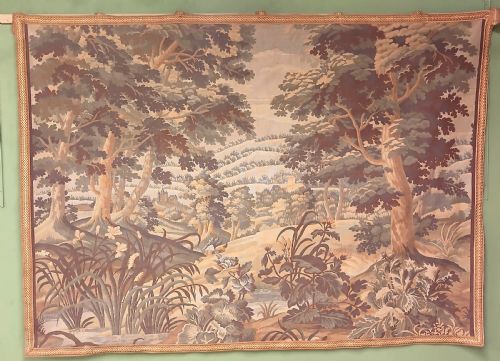
- A woven wall hanging featuring a stylized landscape dominated by foliage, trees, and often birds or animals. These pastoral scenes formed a major output for historic weaving centres.
- Aubusson
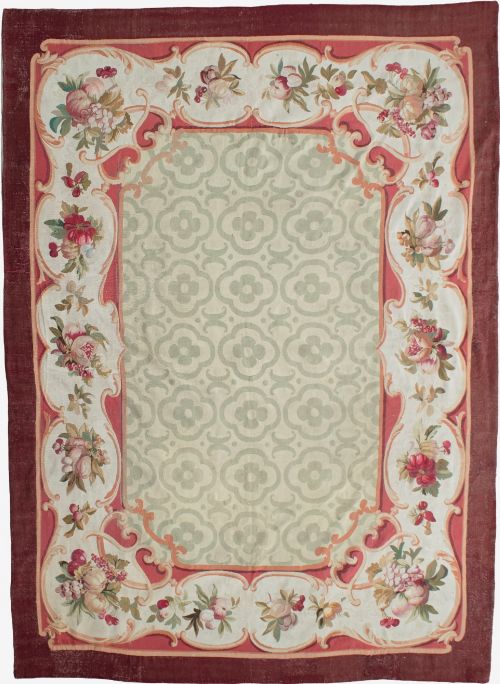
- A town in France renowned for producing woven carpets and wall tapestries since the seventeenth century. Pieces from this tradition often display floral, architectural, or figural compositions.
- Mille-fleurs
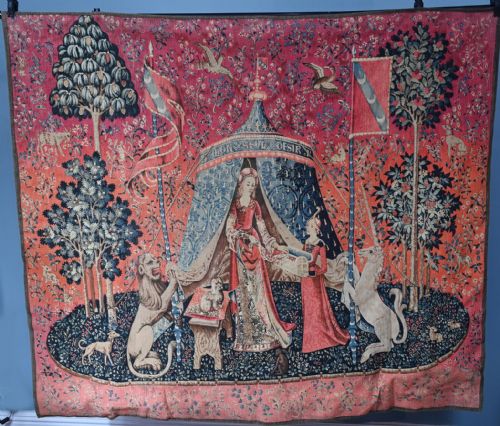
- A decorative style featuring a background filled with a multitude of small flowers and plants. This medieval aesthetic appears in classic woven wall coverings.
- Petit point
- A very fine needlepoint stitch worked on single-thread canvas. This technique allowed makers to achieve high detail in pictorial panels and cushions.
- Entre-fenêtre
- A narrow vertical tapestry panel designed specifically to hang on the wall space between windows. These tall formats match specific architectural proportions.
French Wool Tapestry: Frequently Asked Questions
How do I hang a heavy tapestry?
Large woven wall hangings require even weight distribution across a sturdy wooden batton or metal rod rather than single suspension points. Stitching a supporting casing to the reverse protects the textile structure from undue tension.
Professional mounting ensures the wool fabric hangs flat against the wall without distorting the warp and weft threads over time.
What is a verdure tapestry?
A verdure tapestry depicts a lush forest landscape filled with stylized trees, leaves, foliage, and occasionally distant châteaux or animals. These woodland scenes served as popular decorative wall coverings in historic French interiors.
Master weavers used varied green and earthy wool tones to create a sense of depth and natural abundance across the textile surface.
How do I clean antique wool textiles?
Gentle surface vacuuming through a protective mesh screen removes loose dust without catching delicate wool or silk threads. Water and liquid cleaners risk causing shrinkage or dye bleed in antique textiles.
Specialist textile conservators should handle major cleaning or structural stabilization to preserve the integrity of the woven fibres.
Where were Aubusson tapestries made?
Aubusson tapestries originated from workshops in the town of Aubusson and surrounding regions in central France. This tradition produced distinctive wall hangings, carpets, and furnishings for centuries.
Master artisans in these workshops specialised in both verdure landscapes and elaborate floral or figural compositions.