

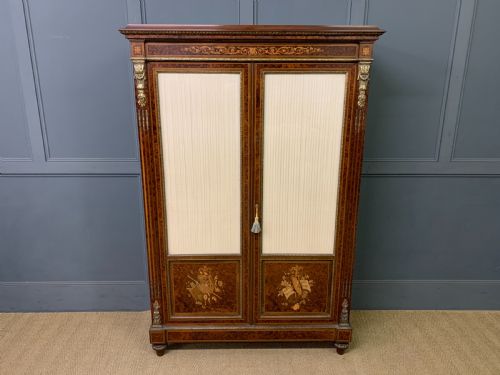


French Wooden Armoire
A french wooden armoire provides substantial storage while anchoring a room with centuries of continental craftsmanship.
French Wooden Armoire
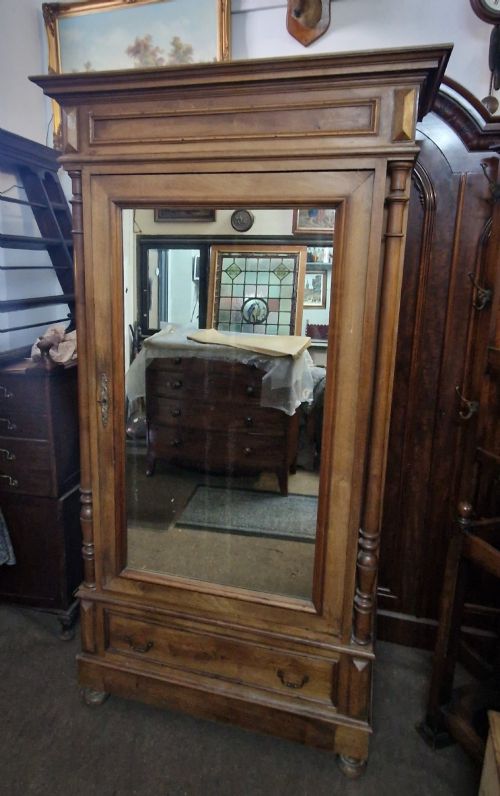
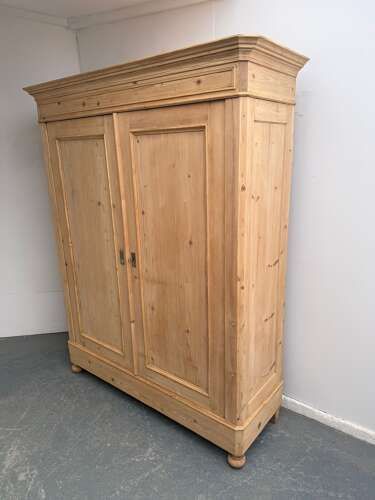
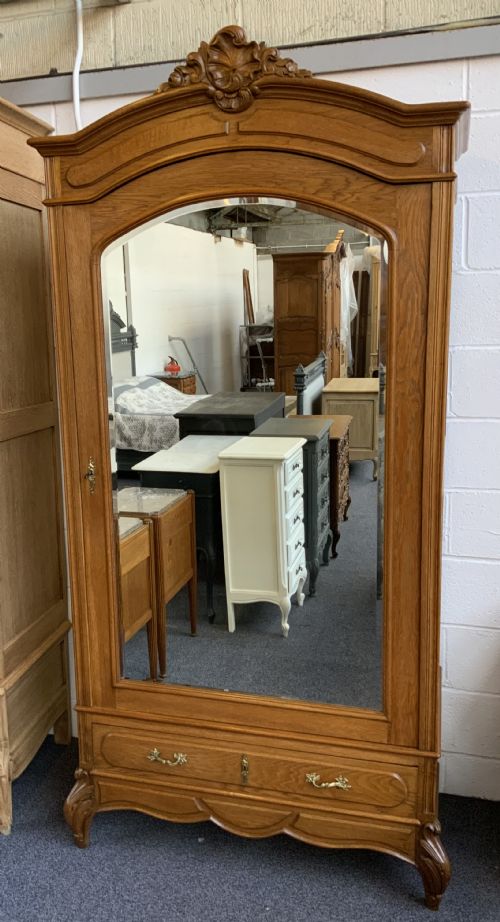
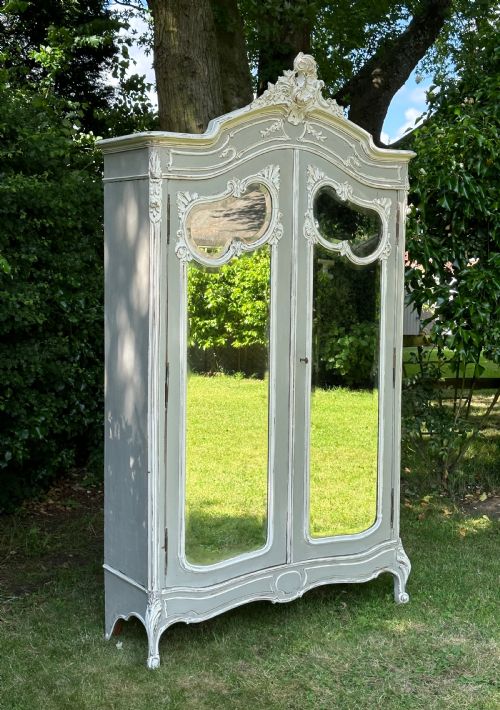
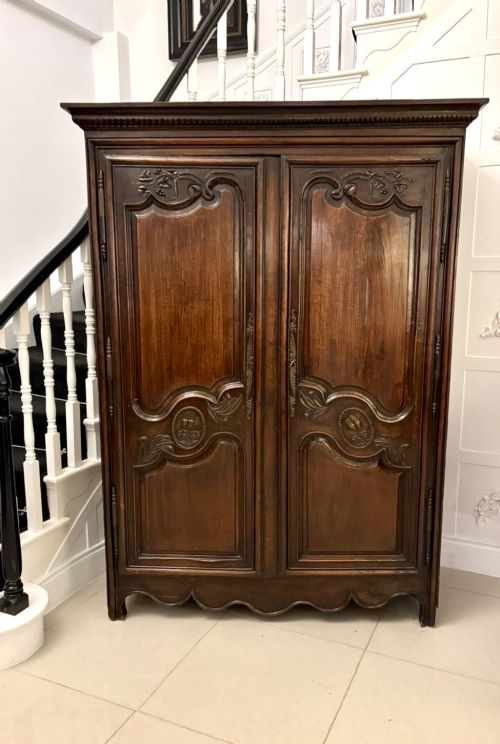
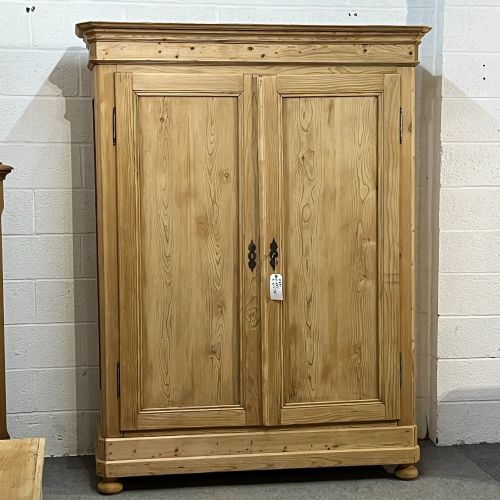
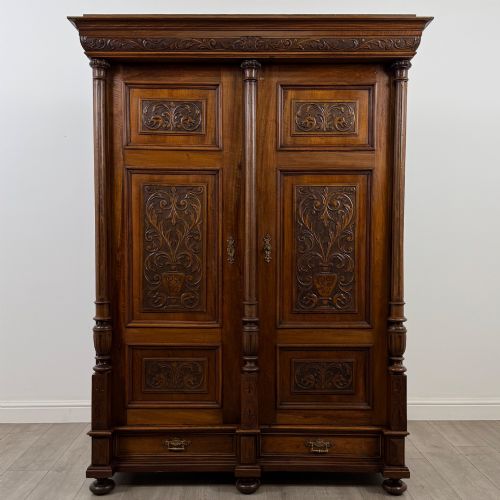
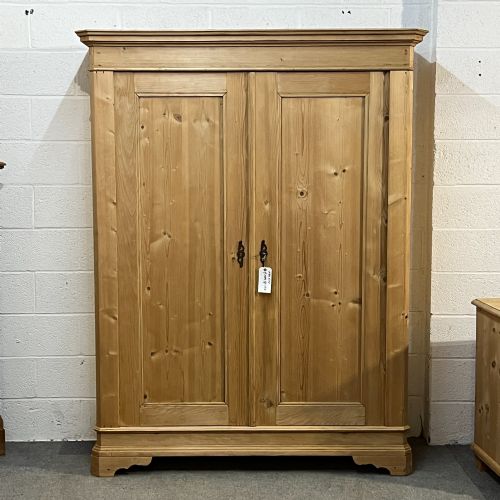
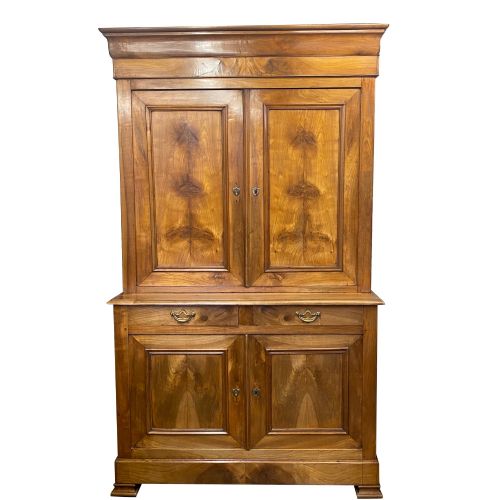
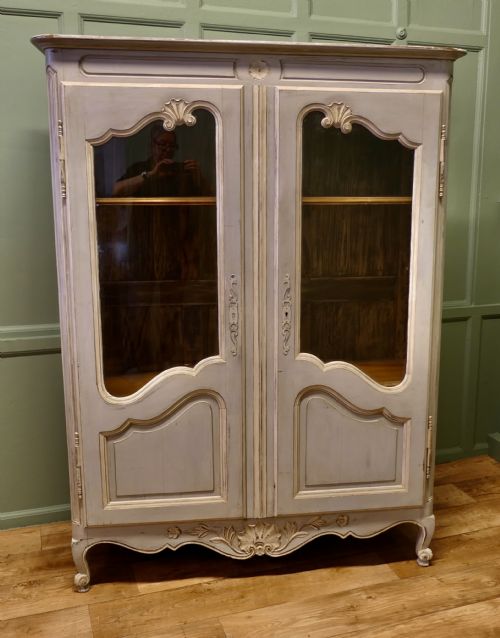
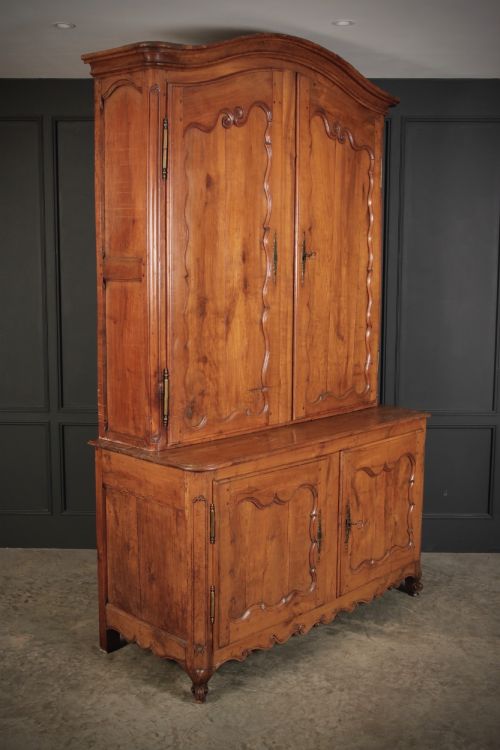
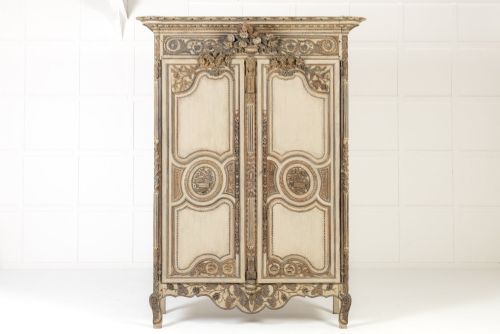
A french wooden armoire represents large-scale continental storage, appearing primarily in formats such as two-door wardrobes, single-door cupboards, and breakfront cabinets. Buyers seeking a french wooden armoire encounter substantial case furniture designed for domestic linen and clothing storage.
The pieces on this page span from the seventeenth century through the early twentieth century, reflecting regional workshops across France. Examples range from eighteenth-century provincial walnut and oak builds to later painted pine and mahogany iterations.
Materials and construction
Carpenters utilised native timbers including oak, walnut, cherry, chestnut, and pine, often selecting solid planks for heavy doors and structural framing. Joinery relied on traditional pegged mortise and tenon joints to support the considerable weight of large timber panels.
Surface treatments varied from waxed natural grain and bleached oak to original painted finishes and applied brass detailing. Carved ornamentation, when present, was executed directly into the solid wood of the doors, crests, and stiles.
French Wooden Armoire Retail Price Guide 2026
Typical asking prices for french wooden armoire among the pieces listed under this phrase on Sellingantiques today, from the lower quarter to the upper quarter. They describe what is for sale here now, not the wider market.
Listings include timber varieties such as oak, walnut, cherry, pine, chestnut, yew, mahogany, and amboyna.
Evaluating quality and proportion
Quality rests in the integrity of the timber selection and the crispness of hand-carved details on the panels and cornices. Superior examples maintain balanced proportions, straight stiles, and doors that hang true on their original iron or brass hinges.
The degree of original surface preservation also dictates standing, with untouched painted finishes or deep patinated walnut commanding greater interest than heavily restored or later altered carcasses.
The French Wooden Armoire Glossary
- Armoire
- A tall wardrobe or cupboard fitted with doors, traditionally used for storing garments and household linen.
- Cornice
- The decorative moulded projection that crowns the top of the cabinet structure.
- Provincial
- Describing furniture made in the regions outside Paris, characterised by local timbers and regional carving styles.
- Stile
- The upright vertical outer member of a door frame or cabinet panel.
- Vitrine
- A glass-fronted cabinet or bookcase designed for displaying objects.
French Wooden Armoire: Frequently Asked Questions
What fits inside an armoire?
These large cabinets accommodate hanging garments, folded linens, and shelving depending on the internal configuration of the specific piece. Many function as primary bedroom wardrobes or large storage cupboards.
Historical interiors utilised these cupboards for family textiles before fitted closets became standard in modern architecture.
How do I date an armoire?
Dating relies on examining the timber species, joinery methods, tool marks on the interior boards, and stylistic motifs such as Rococo curves or Louis XVI symmetry. Regional variations in provincial construction also offer clues to the period.
Later nineteenth and early twentieth-century versions often incorporate machine-sawn elements alongside traditional hand-planed surfaces.
Can these cabinets be disassembled?
Many larger continental armoires were constructed as knock-down units designed to be taken apart with wooden pegs or wedges for transport between rooms. This modular assembly method allowed bulky furniture to move through narrow doorways.
Buyers should inspect the specific construction to determine whether a piece separates into distinct top, base, and side sections.
How do I care for antique wood?
Maintenance requires stable indoor humidity and temperature to prevent timber from splitting or warping over time. Periodic applications of natural wax help nourish dry wood and maintain the surface patina.
Avoid placing large wooden furniture directly against heated radiators or in prolonged direct sunlight.