

French Wood Armchairs
French wood armchairs bring enduring elegance to a room, offering comfortable seating through classic carved frames and traditional upholstery.
French Wood Armchairs
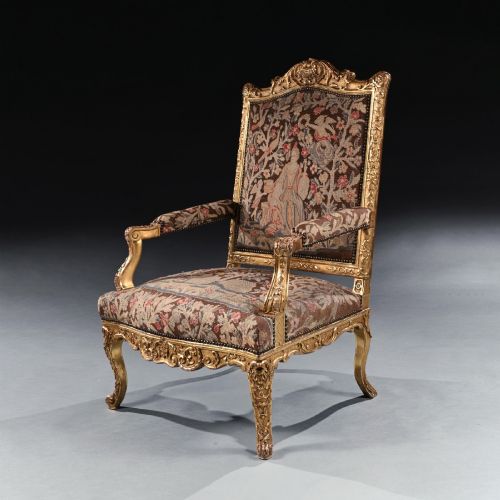
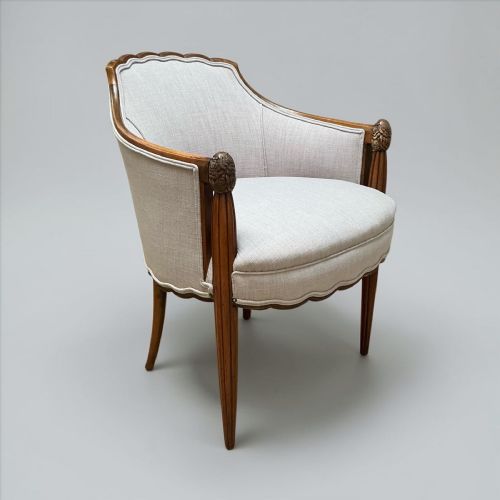
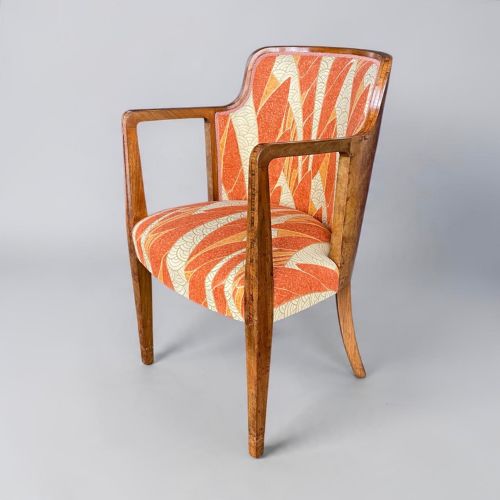
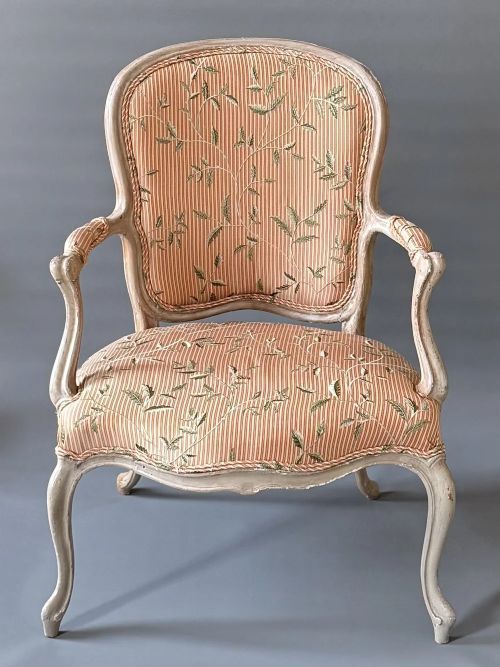
French wood armchairs encompass a wide variety of seating forms, ranging from formal salon chairs to relaxed bergere designs. Buyers seeking french wood armchairs will encounter pieces stretching from the eighteenth century through the art deco era, reflecting shifts in taste across multiple periods.
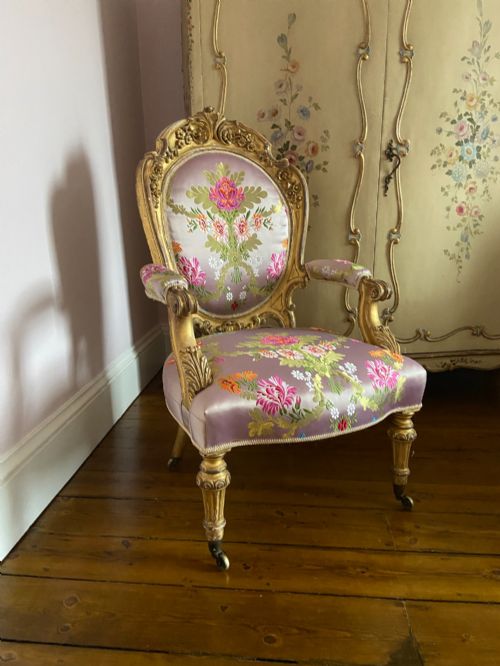
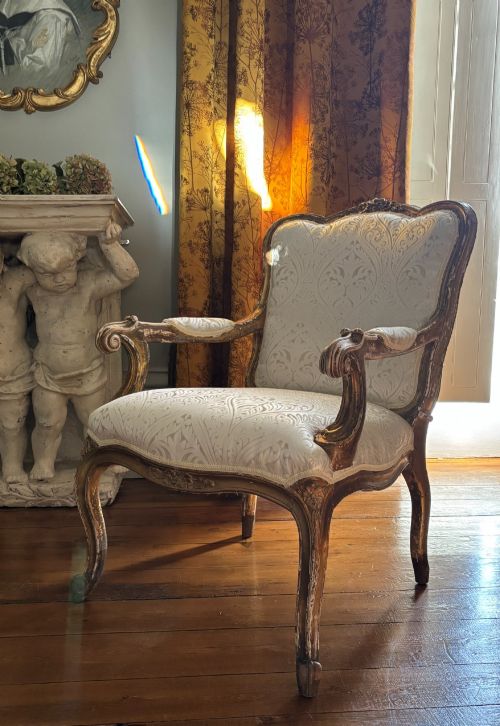
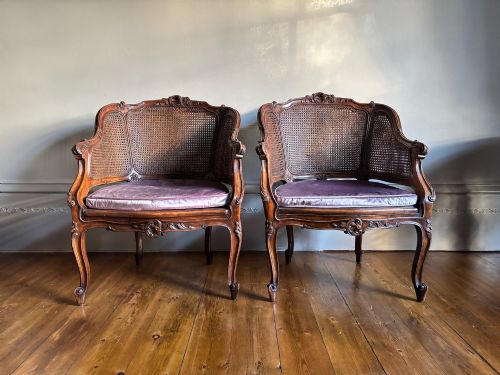
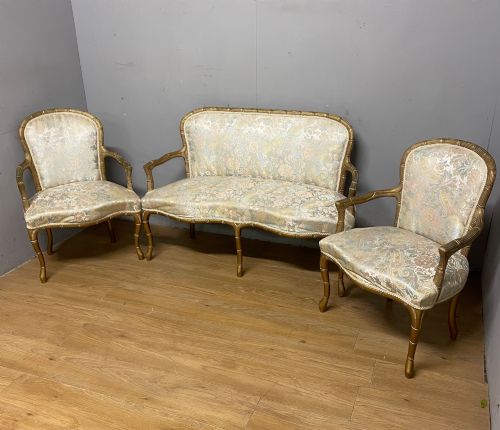
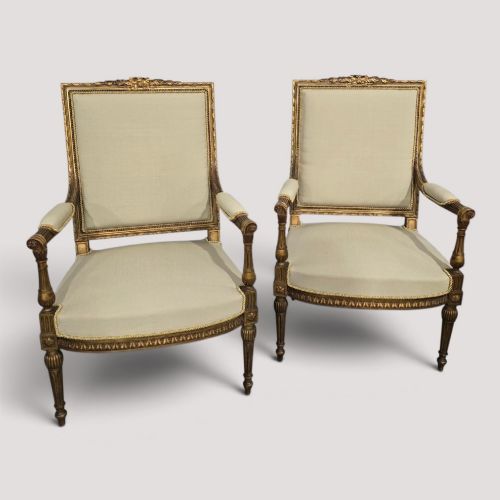
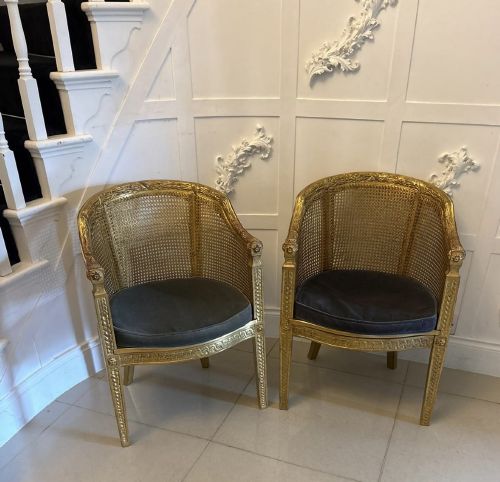
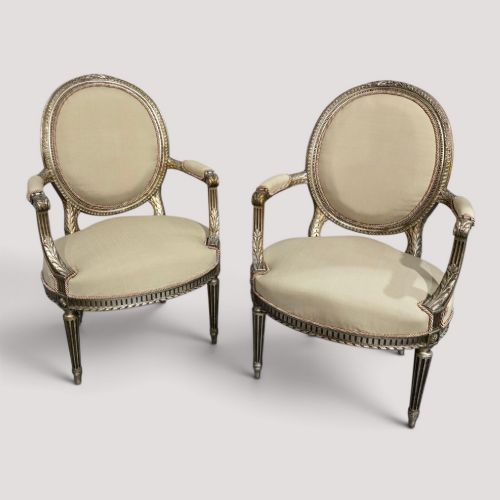
The selection on this page leans heavily toward nineteenth-century revivals alongside eighteenth-century originals, often appearing in matched pairs or larger salon suites. Forms vary from open armchair fauteuils to tub chairs and slipper chairs, constructed from traditional timber frames.
Materials and Construction
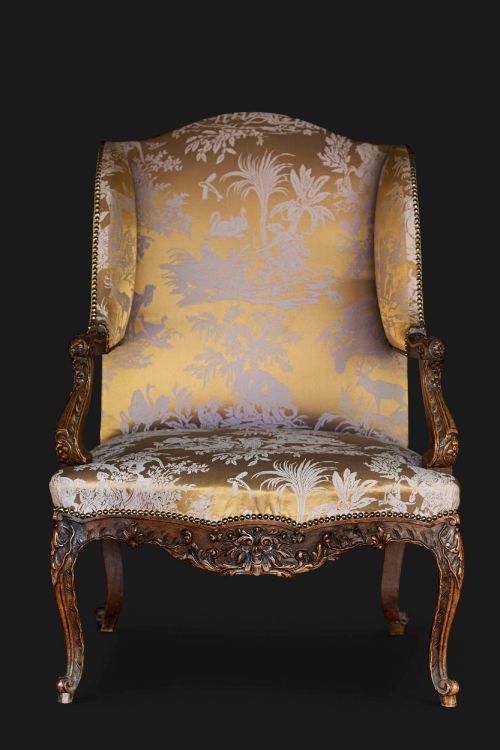
Craftsmen utilised solid timbers such as walnut, beech, and giltwood to build the structural frames, applying carving and gilding by hand. Frames frequently incorporate elaborate scrollwork, floral motifs, and structural joinery suited to the specific design period.
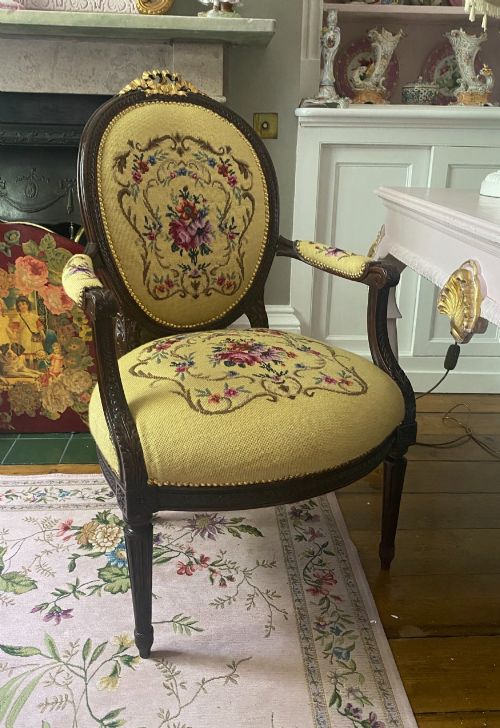
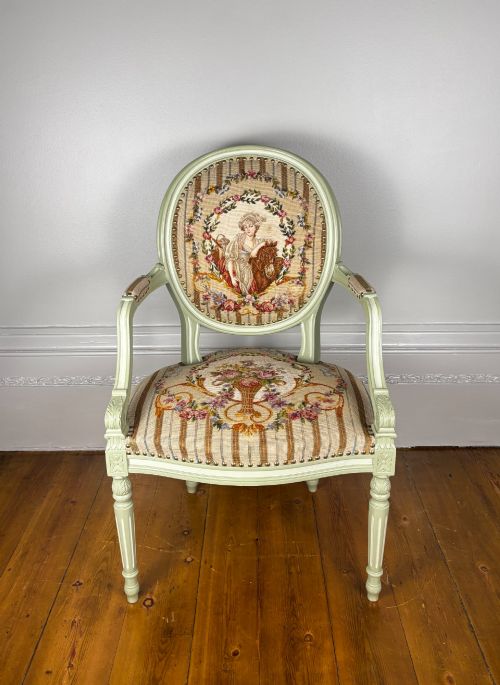
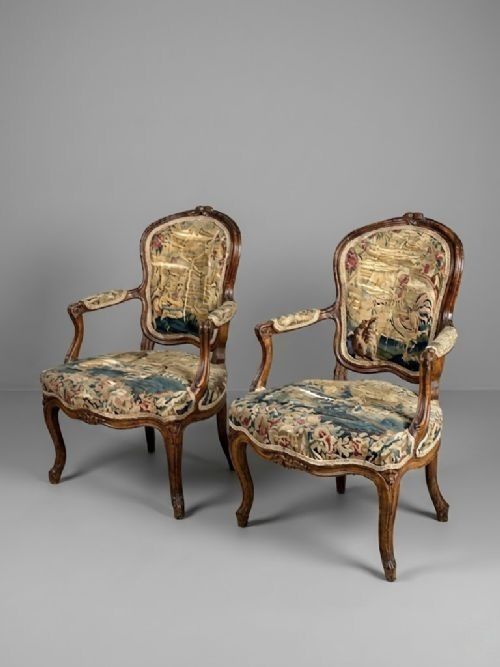
Upholstery relies on traditional textiles including silk, velvet, linen, and tapestry panels such as needlepoint or Aubusson weave. Brass tacking and webbing secure the interior stuffing, completing the construction of each seat.
French Wood Armchairs Retail Price Guide 2026
Typical asking prices for french wood armchairs among the pieces listed under this phrase on Sellingantiques today, from the lower quarter to the upper quarter. They describe what is for sale here now, not the wider market.
Listings feature wood types including walnut, beech, and giltwood, spanning periods from the eighteenth century to the art deco era of nineteen thirty.
Judging Craftsmanship
The distinction between ordinary and exceptional pieces rests in the crispness of the wood carving and the integrity of the original frame. Finer examples display deeply undercut ornamentation and harmonious proportions rather than mechanical uniformity.
Surface finish also dictates value, with period gilding, original paint finishes, or high-grade walnut patination holding greater distinction. The choice of covering textile, from hand-woven tapestry to pure silk, further separates standard seating from high-status items.
Jacob Desmalter·Henri Jacob·Colefax and Fowler
The French Wood Armchairs Glossary
- Bergere
- An enclosed upholstered armchair with wooden sides and a padded back, popular in eighteenth-century French design. These seats often feature a loose squab cushion over a cane or upholstered seat base.
- Fauteuil
- An open-framed armchair with upholstered back and armrests, exposing the wooden structure at the sides. This form originated in France and remains a staple of formal salon seating.
- Giltwood
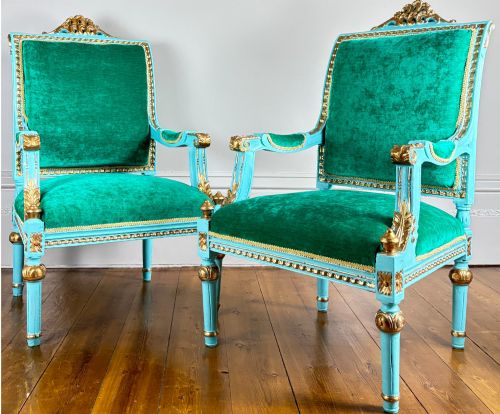
- Timber treated with a thin layer of gold leaf or gilt preparation, widely utilised on formal eighteenth and nineteenth-century frames. It provides a reflective surface that catches natural light in a room.
- Rococo
- A decorative style characterised by asymmetry, C-scrolls, and naturalistic plant motifs, prominent during the reign of Louis XV. The aesthetic prioritises flowing curves over rigid symmetry.
- Louis XVI
- A neoclassical style defined by straight lines, fluted columns, and geometric forms, emerging in the late eighteenth century. Pieces from this period often display balanced proportions and refined floral carvings.
French Wood Armchairs: Frequently Asked Questions
What is the difference between Louis XV and Louis XVI styles?
Louis XV design embraces asymmetrical curves, organic scrollwork, and flowing lines typical of the rococo movement. The forms feel dynamic and ornamental.
Louis XVI furniture shifts toward neoclassical geometry, featuring straight fluted legs and rectangular backs. The aesthetic values symmetry and restrained classical detailing.
How should I care for antique giltwood frames?
Giltwood requires gentle dusting with a soft, dry cloth to protect the delicate gold leaf application. Avoid moisture and chemical cleaning agents entirely.
Keep the chairs away from direct sunlight and temperature fluctuations to prevent the wood from drying out. Proper placement preserves both the timber substrate and the metallic finish.
Are these chairs suitable for daily use?
Many antique armchairs function well for everyday seating when the internal webbing and upholstery remain sound. Reinforcement of older frames may be necessary depending on the age of the piece.
Lighter salon chairs serve better in low-traffic settings, while sturdier bergere designs handle regular use. Checking the joinery ensures the frame can support continuous weight.