



French Travelling Trunk
These french travelling trunk pieces are robust pieces of luxury luggage built for transit, offering generous storage and enduring craftsmanship.
French Travelling Trunk
A french travelling trunk is a substantial piece of luggage designed for long journeys by train, ship or automobile. Buyers searching this phrase encounter sturdy containers intended to carry an extensive wardrobe across continents.
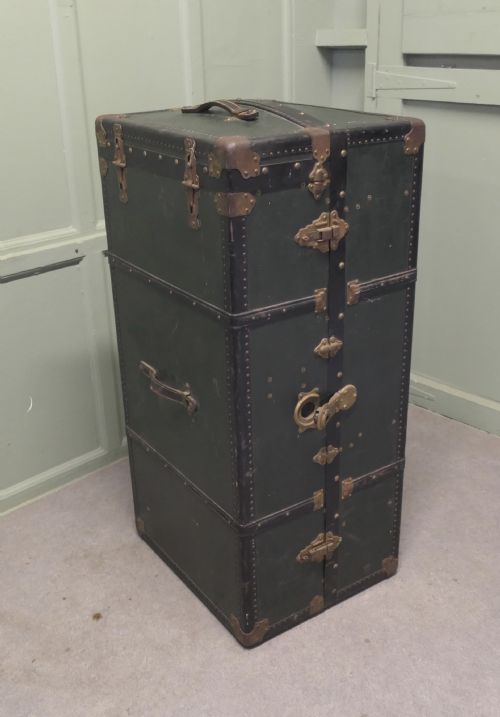
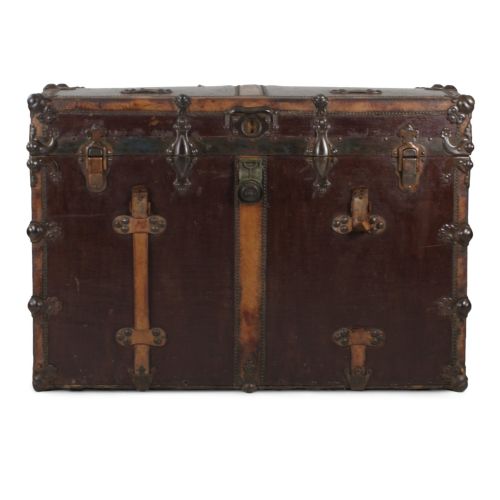
The pieces on this page span several decades from the nineteenth century into the twentieth, encompassing Edwardian examples, 1920s models, and 1930s creations. Forms range from large steamer trunks and wardrobe trunks to hat trunks, suitcases, and cabin portmanteaus.
Makers such as Louis Vuitton, Goyard, and Aux Etats Unis of Paris appear among the selections. These pieces reflect periods including Belle Epoque, Art Deco, and Early 20th Century French luxury luggage traditions.
How they were made
Makers constructed these trunks using wood as a rigid foundational core to withstand the rigours of transit. This timber frame provided the necessary structural integrity for stacking in luggage holds and railway carriages.
External surfaces were clad in materials such as leather, canvas, and metal, while brass hardware reinforced the corners, edges, and latches. Stencilled monograms, stamps, and signatures frequently mark the exterior, paired with fitted internal compartments designed for garments and accessories.
French Travelling Trunk Retail Price Guide 2026
Typical asking prices for french travelling trunk among the pieces listed under this phrase on Sellingantiques today, from the lower quarter to the upper quarter. They describe what is for sale here now, not the wider market.
Listings feature items from the 19th Century, Edwardian era, 1910, 1920, and 1930, utilising wood, leather, canvas, brass, and metal.
What varies in quality
The distinction between tiers rests upon the caliber of the materials and the prestige of the house. Pieces stamped by renowned makers command attention for their superior hardware, internal fittings, and structural execution.
Restoration status and the preservation of original canvas, leather, and brass elements also define the standing of a piece. Trunks retaining their internal wardrobe trays, hangers, and original signatures represent the upper echelon of surviving examples.
Louis Vuitton·Goyard·Aux Etats Unis
The French Travelling Trunk Glossary
- Steamer trunk
- A low-profile trunk designed to fit beneath a ship cabin berth or in restricted luggage spaces. These pieces combine compact height with reinforced construction.
- Wardrobe trunk
- A vertical trunk that opens to reveal hanging space and drawers on opposing sides. This design functions as a portable closet during extended travel.
- Portmanteau
- A large suitcase or trunk that opens into two equal compartments. The term derives from French roots describing a case for carrying cloaks.
- Hat trunk
- A specialised container formed to protect brimmed headwear during transit. These pieces feature shaped internal compartments suited to period fashion.
- Malle penderie
- The French term for a wardrobe trunk. This designation specifically identifies vertical luggage equipped for hanging garments.
French Travelling Trunk: Frequently Asked Questions
How do I use a trunk at home?
Trunks serve effectively as coffee tables, end tables, or blanket chests in modern living spaces. Their internal compartments provide discreet storage for household items.
Positioning a wardrobe trunk upright allows you to utilise internal shelving or hanging space as a decorative display cabinet. Smaller suitcases and hat trunks sit well on shelves or stack in corners.
What periods do these trunks cover?
The available pieces primarily span the nineteenth century through to the 1930s. This includes Edwardian eras, the 1910s, and the Art Deco period of the 1920s.
Design characteristics shift across these decades from leather-clad 19th-century styles to monogrammed canvas creations by renowned Parisian houses in the 1920s and 1930s.
How do I identify a maker?
Makers often marked their luggage with stencilled monograms, external stamps, or metal plaques fixed to the brass hardware. Signatures frequently appear directly on the canvas or leather exterior.
Examining the interior lining and internal labels reveals further details about the workshop or Parisian house responsible for the construction.
Are these trunks waterproof?
While historical canvas and leather exterior treatments offered protection against rain and sea spray during travel, period luggage is not entirely waterproof. Modern humidity and damp environments can damage the internal wood and paper linings.
Keep trunks in climate-controlled rooms away from direct moisture to preserve the original materials and internal fittings.