



French Travel Case
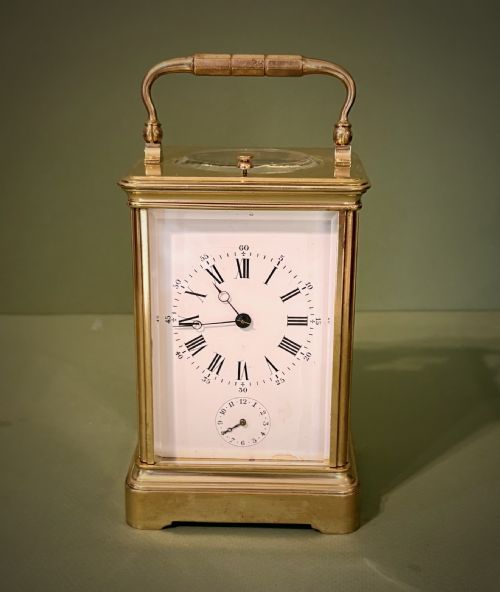
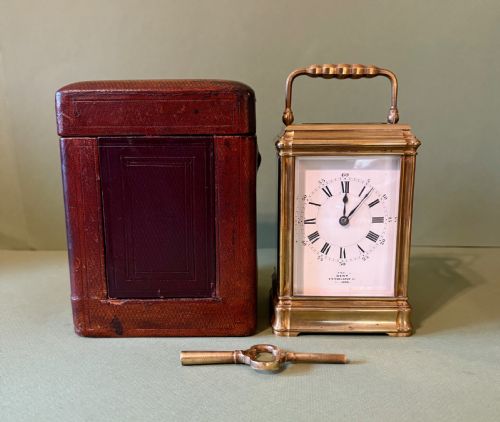
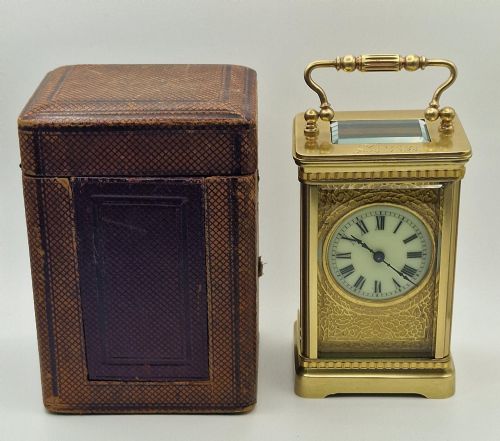
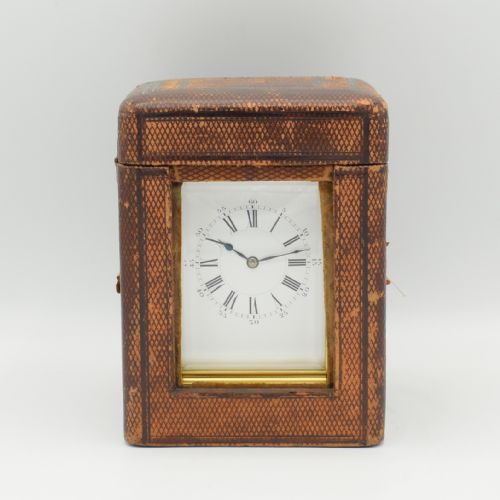
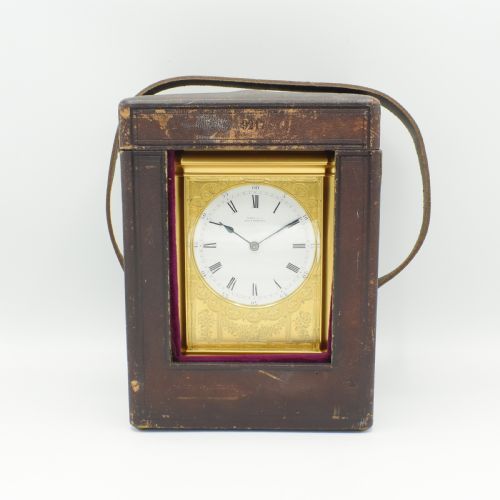
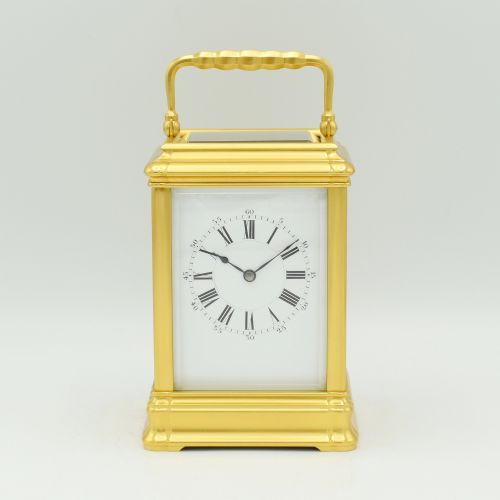
These pieces known as a french travel case are brass and gilt carriage clocks housed in leather or protective fitted travel boxes, built for timing journeys.
French Travel Case
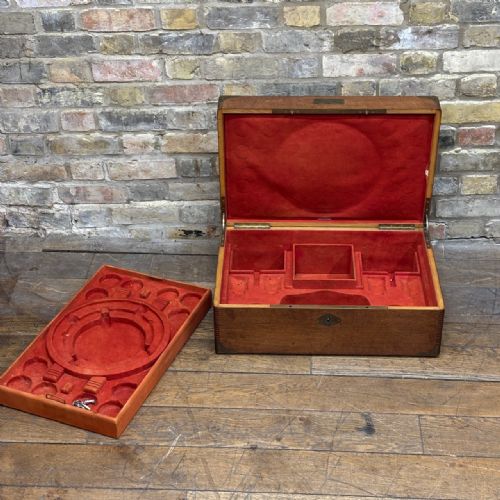
When you search for a french travel case, you encounter brass and gilt carriage clocks originating from the nineteenth century, often retaining their original fitted travel boxes or cases. These mechanical timepieces span periods from the Victorian era into the early twentieth century, reflecting French craftsmanship of the epoch.
The objects on this page predominantly take the form of carriage clocks, featuring glass panels and metal framing designed to withstand transit. Many examples incorporate complications such as striking mechanisms, repeaters, or alarms housed within specific case styles like the gorge case.
How they were made
Makers constructed these clocks using brass, gilt brass, and steel, assembling heavy glass panels into cast or engraved metal housings. Metalwork techniques involved gilding, fine engraving across the brass frames, and sometimes incorporating enamel panels.
Travel cases were tailored to fit each clock precisely, utilising leather over rigid foundations to protect the delicate escapements and glass faces during movement. Mechanical components relied on eight-day movements driven by springs.
French Travel Case Retail Price Guide 2026
Typical asking prices for french travel case among the pieces listed under this phrase on Sellingantiques today, from the lower quarter to the upper quarter. They describe what is for sale here now, not the wider market.
What varies in quality
Quality reveals itself in the crispness of the hand engraving on the brass case and the presence of specialised movement complications like petite sonnerie or alarms. Fineness of gilding and the retention of the original fitted travel box elevate an example.
Weight and construction of the brass case distinguish workshop standards, alongside the presence of maker signatures on the dial or movement backplate indicating origin from esteemed French horologists.
Henri Jacot·Drocourt·Antoine Redier·Margaine·Richard co·Pickford of London·James Grohe·Holingue
The French Travel Case Glossary
- Gorge case
- A stepped brass carriage clock case design with a curved handle mount. This style appeared frequently in late nineteenth century French production.
- Repeater
- A clock mechanism that chimes the hours and quarters upon pressing a button. This complication allowed time checks in the dark during travel.
- Petite sonnerie
- A striking train that sounds the hours on the hour and the quarters as they pass without repeating previous hours. It represents advanced horological work.
- Gilt brass
- Brass treated with a thin layer of gold or gold-coloured wash to provide a rich finish. This material protected the underlying metal from tarnishing.
- Alarm
- A secondary mechanism set to sound at a chosen hour using an internal bell. These additions suited portable timepieces intended for journeys.
French Travel Case: Frequently Asked Questions
What is a french travel case?
A french travel case typically refers to a portable mechanical clock housed within a protective leather box or fitted outer case designed for transit.
These nineteenth-century pieces combine brass framing, glass panels, and spring-driven movements intended to keep time accurately away from home.
How do I wind a carriage clock?
Winding requires a matching key inserted into the arbours on the backplate of the movement. Care must be taken not to overwind the mainsprings.
Most examples operate on an eight-day duration, requiring attention roughly once a week to maintain continuous running.
Why do some clocks have extra buttons?
Extra buttons or levers on the top or sides usually operate repeating mechanisms or alarms. Pressing them triggers the clock to chime the current time audibly.
Complications such as quarter-striking required additional gear trains within the brass housing to produce these audible signals.