






French Textile Art
French textile art brings together centuries of hand-woven tapestries, silk embroideries, and framed lace panels designed to transform domestic interiors.
French Textile Art
French textile art encompasses large wall hangings, framed tapestry panels, needlework pieces, and silk prints spanning from the seventeenth century through to the twentieth century. These works frequently reflect historical styles including French Baroque, Rococo, Neoclassical, and Aubusson designs.
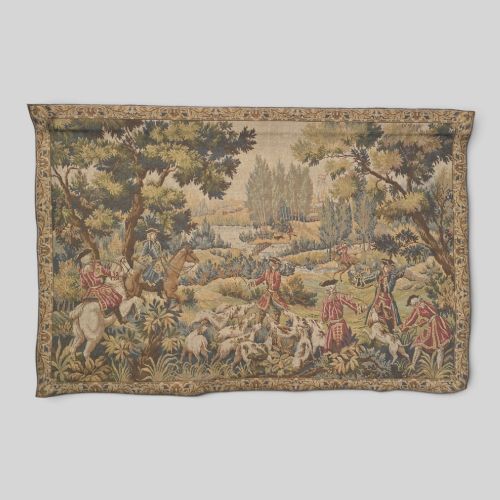
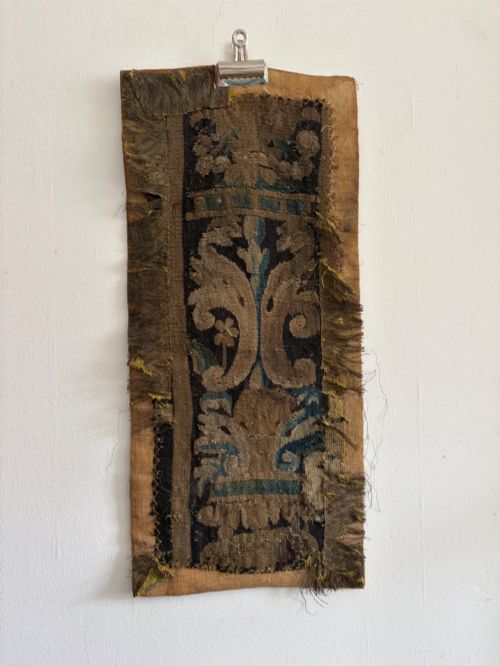
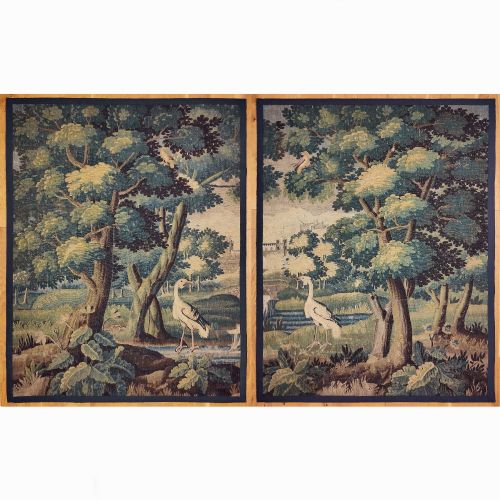
The most common items encountered on this page are nineteenth-century woven wall tapestries, verdure panels depicting natural foliage, and framed needlepoint fragments. Buyers also find specialised items such as lace samplers, silk embroideries, and seventeenth-century cushion covers mounted for display.
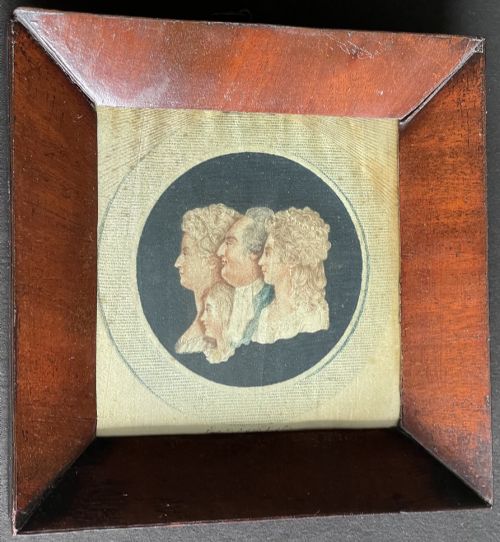
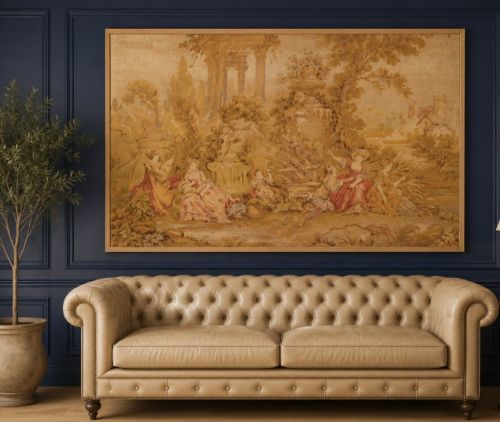
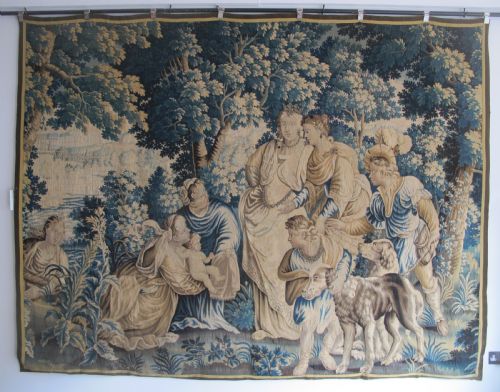
Pieces range from grand room-sized pastoral scenes and biblical Aubusson works down to smaller framed prints on silk and Ciselé silk velvet hangings. Originating primarily from French chateaux and workshops, these textiles bring traditional craftsmanship into contemporary settings.
Materials and construction methods
Makers utilised natural fibres including wool, silk, cotton, and linen to construct these heavy woven hangings, delicate needlework panels, and printed fabrics. Threads were often dyed in earthy tones for verdure scenes or rich polychrome palettes for figurative subjects.
Construction techniques combine traditional hand-weaving on looms with intricate needlepoint, embroidery, and specialised printing methods like Toile de Jouy. Many historical panels are mounted onto secondary supports such as linen or board, while others are secured within wooden or faux tortoiseshell frames.
French Textile Art Retail Price Guide 2026
Typical asking prices for french textile art among the pieces listed under this phrase on Sellingantiques today, from the lower quarter to the upper quarter. They describe what is for sale here now, not the wider market.
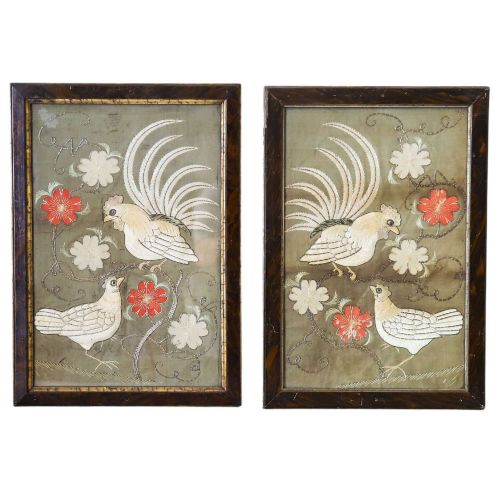
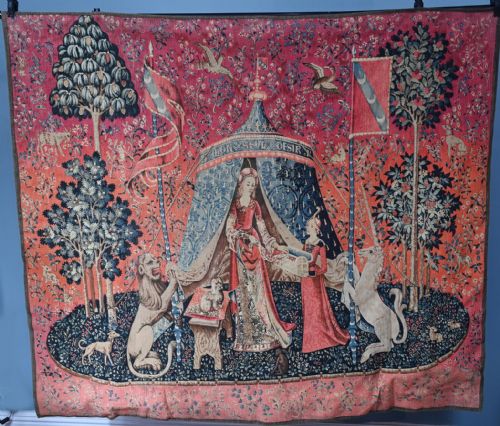
Cockerels and hens immortalised in silk embroidery share space with Napoleonic battles and unicorns wandering through mille-fleurs meadows.
Distinctions in quality
Quality in these textiles rests upon the density of the weave, the complexity of the pictorial design, and the survival of the original fibres. Finer pieces demonstrate precise needlework execution and sophisticated rendering of light, shadow, and botanical detail.
The integrity of the structural support and the preservation of natural dyes heavily influence the standard of a piece. Earlier seventeenth and eighteenth-century examples often show the passage of time through mounted fragments, whereas intact panels retain their original scale and compositional balance.
The French Textile Art Glossary
- Verdure tapestry
- A woven wall hanging dominated by lush foliage, trees, and often birds or animals. These landscape scenes were exceptionally popular in seventeenth and eighteenth-century French workshops.
- Aubusson
- A traditional style of tapestry originating from the town of Aubusson in France. These works are known for their pictorial landscapes and architectural motifs.
- Ciselé velvet
- A luxurious velvet fabric featuring a pattern created by cutting some pile loops while leaving others uncut. This technique produces contrasting textures against the silk ground.
- Needlework
- Designs created by stitching yarn or thread onto a pre-existing woven canvas or linen ground by hand. It forms the basis of many decorative panels and samplers.
- Toile de Jouy
- A cotton or linen fabric printed with pastoral or historical repeating scenes in a single colour. Originating in France, fragments are frequently preserved as framed artworks.
French Textile Art: Frequently Asked Questions
How do I hang a heavy French tapestry?
Large tapestries require even weight distribution to prevent distortion of the wool and silk fibres. Using a heavy-duty wooden baton or a concealed pocket sewn to the reverse ensures the piece hangs flat against the wall.
Smaller framed panels can be mounted using standard picture-hanging hardware suited to the weight of the timber frame. Ensure the display location avoids direct sunlight to protect the natural dyes.
How are antique silk embroideries preserved?
Silk textiles require stable environmental conditions with controlled humidity and protection from ultraviolet light. Framing under glass with a spacer prevents the delicate threads from compressing against the surface.
Many fragile panels are professionally mounted onto supportive linen backings to relieve tension on the original stitches.
Can I date a tapestry by its style?
Stylistic shifts provide clear indicators of a piece's period, moving from the ornate flourishes of seventeenth-century Baroque to the lighter, asymmetrical curves of eighteenth-century Rococo. Neoclassical works introduce classical architectural motifs and restrained symmetry.
Materials and framing techniques also offer clues, as nineteenth-century revivals often utilised modern looms alongside traditional hand-weaving methods.