




French Style Vanity Desk
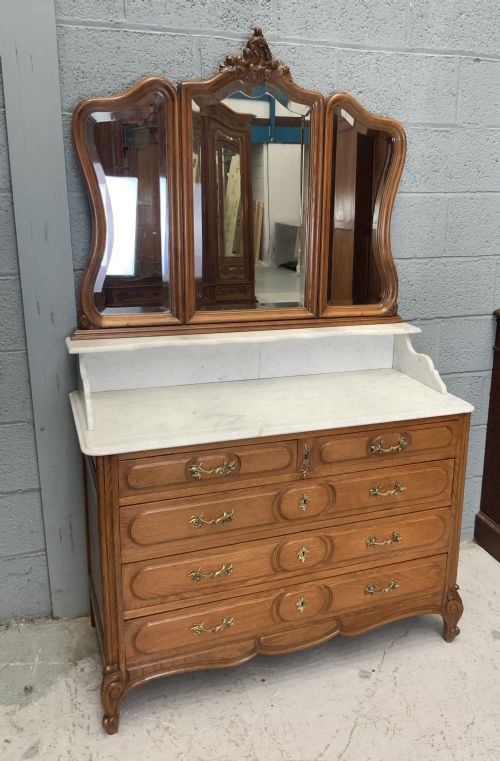
A French style vanity desk brings continental grace to a dressing room, offering fitted mirrors and compartments for daily grooming.
French Style Vanity Desk
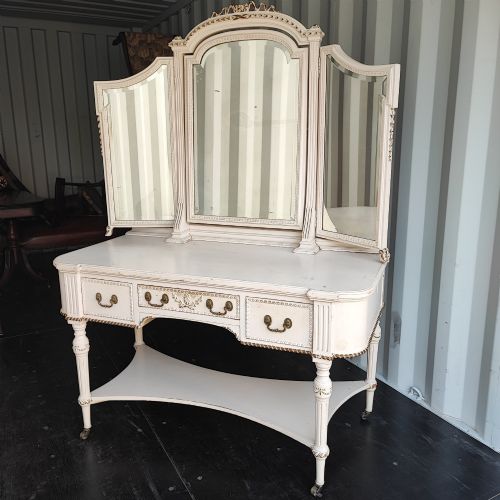
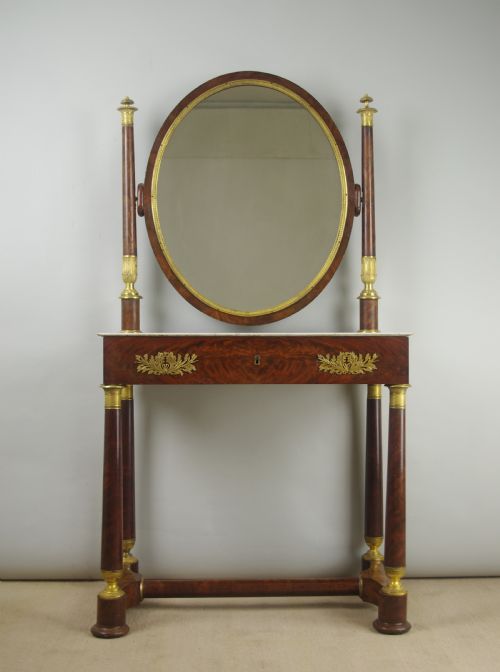
A French style vanity desk encompasses pieces designed for personal grooming and writing, spanning dressing tables, poudreuses, and bonheur du jours. These objects emerge primarily across the nineteenth century and into the early twentieth century, drawing on periods such as the Victorian era and revivals of earlier royal aesthetics.
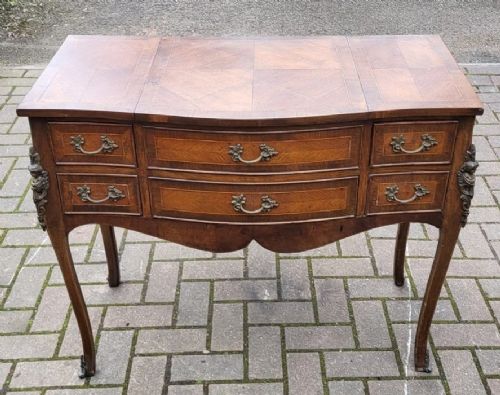
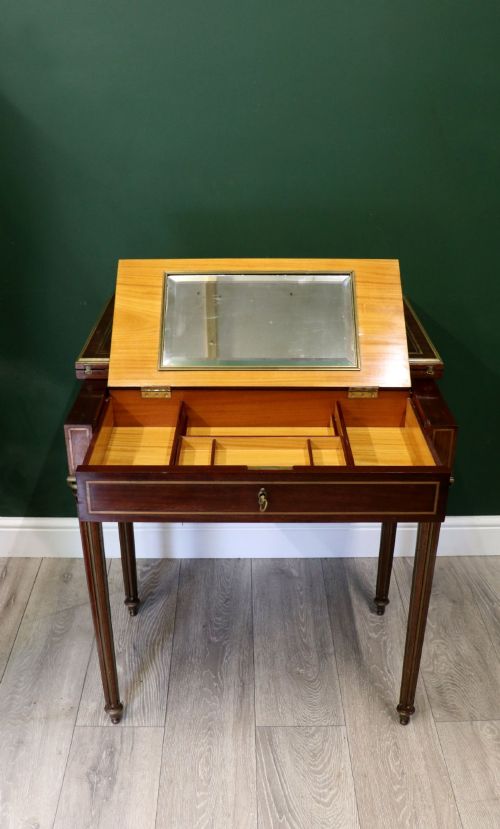
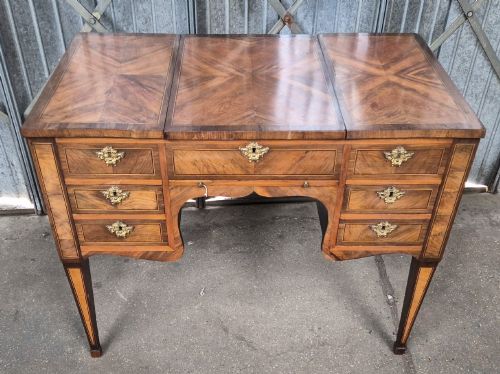
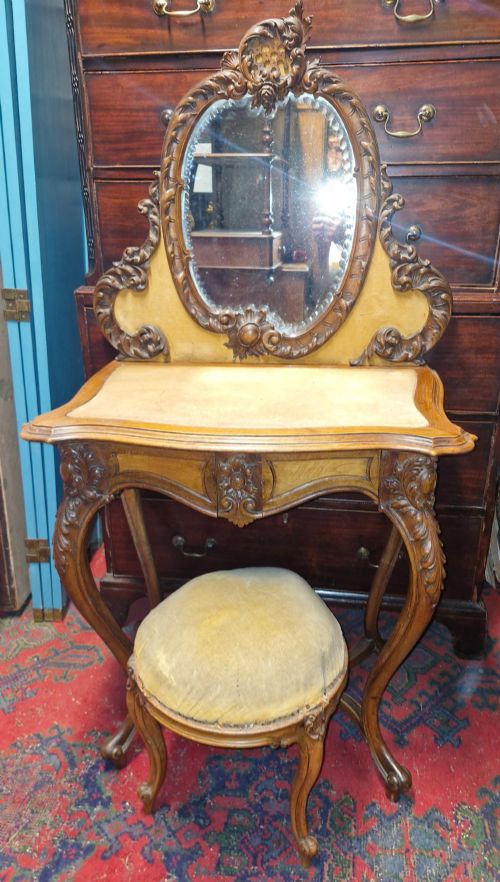
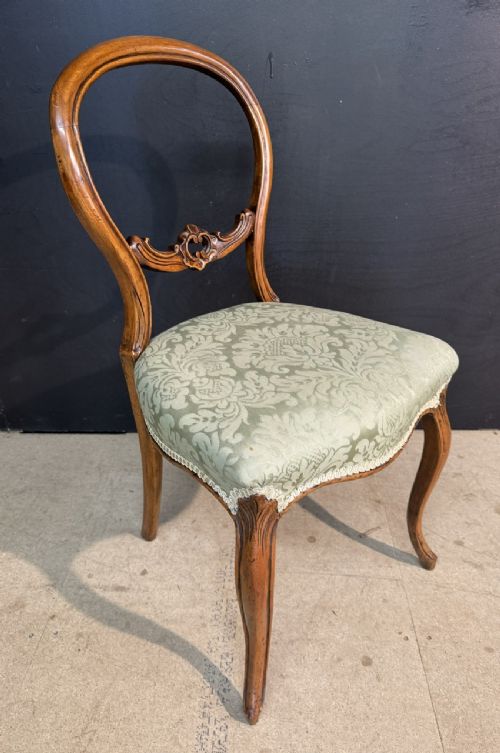
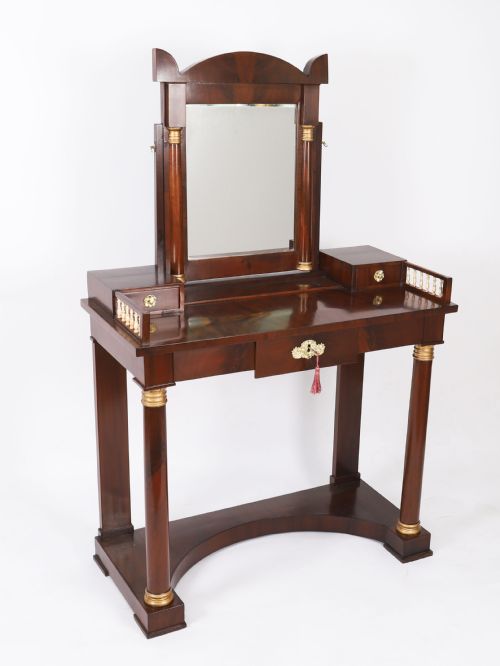
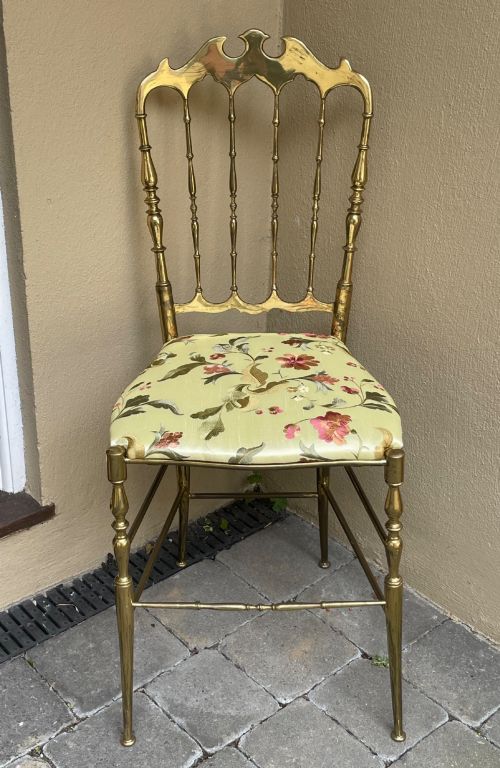
The most frequent examples on this page take the form of dressing tables and poudreuses equipped with lifting lids, compartments, and integrated mirrors. Alongside these, buyers encounter related seating such as side chairs and salon chairs designed to complement the dressing area.
Origins reflect both continental workshops and British interpretations, with many items demonstrating direct French manufacture or strong stylistic influences from Parisian cabinet makers. Woods like mahogany, walnut, and kingwood dominate the construction of these vanity desks.
Materials and construction
Cabinet makers utilised a rich palette of timbers, combining structural woods like mahogany, oak, and walnut with decorative veneers such as kingwood, tulipwood, and satinwood. Crossbanding and intricate inlay work frequently define the surfaces of these vanity desks.
Metal mounts in brass and ormolu provide structural accent and decorative detail, appearing along legs, trim lines, and mirror frames. Marble tops and leather writing inserts also occur within the selection, adding durability and tactile contrast to the wooden frames.
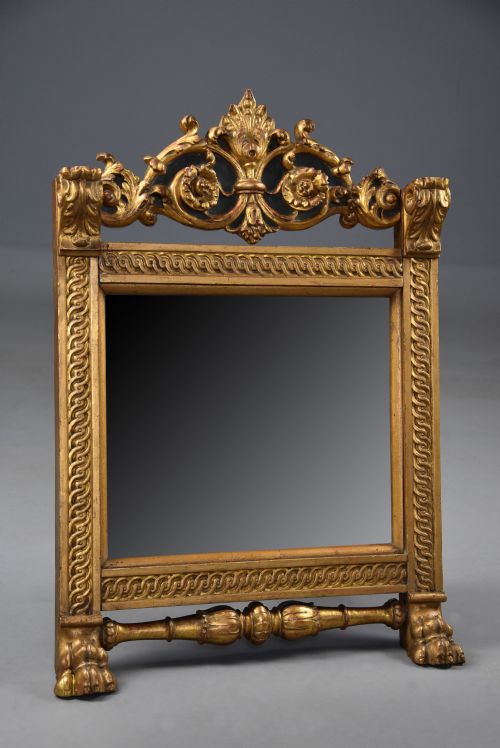
Carved wooden elements showcase traditional joinery and manual dexterity, particularly visible in cabriole legs, scroll arms, and giltwood finishes. Painted surfaces and porcelain plaques occasionally supplement the timber and metal elements.
French Style Vanity Desk Retail Price Guide 2026
Typical asking prices for french style vanity desk among the pieces listed under this phrase on Sellingantiques today, from the lower quarter to the upper quarter. They describe what is for sale here now, not the wider market.
Evaluating craftsmanship
The refinement of the timber selection and veneer patterning establishes the initial tier of quality among these vanity desks. Pieces exhibiting matched grain layouts, subtle crossbanding, and sophisticated marquetry sit distinctly apart from simpler painted or plain wood variants.
The integration and execution of metal elements signal the level of workshop attention invested in the piece. Well-cast ormolu mounts, crisp brass embellishments, and original hardware indicate superior manufacture compared to plain or replacement fixtures.
Structural integrity relies upon the precision of the joinery, particularly in moving parts like poudreuse lids, internal compartments, and associated mirrors. Seamless operation of folding elements and stable cabriole legs distinguish higher-grade examples.
Maples of London and Paris
The French Style Vanity Desk Glossary
- Poudreuse
- A type of French dressing table featuring a folding top that opens to reveal a mirror and hidden compartments for powder and cosmetics. These pieces date predominantly to the nineteenth century.
- Bonheur du jour
- A light lady's writing desk featuring a small cabinet or set of drawers superstructure on top. The form gained popularity during the nineteenth century in both walnut and mahogany.
- Ormolu
- Gilded bronze used widely for mounts and decorative trim on furniture. It adds bright metallic contrast to dark timbers like mahogany and walnut.
- Kingwood
- A dense, richly figured wood utilised for veneers in fine cabinetry. It displays dark violet-brown tones with lighter golden streaks.
- Cabriole leg
- A furniture leg that curves outward and then tapers inward with a pad or scroll foot. This shape is characteristic of rococo and revival styles.
French Style Vanity Desk: Frequently Asked Questions
What is a poudreuse?
A poudreuse is a specialised French dressing table equipped with a multi-part folding top. Lifting the centre panels reveals an integrated mirror and shallow wells intended for cosmetics and small accessories.
These pieces combine the functions of a small desk and a vanity, making them compact additions to a bedroom or dressing room.
How do I use a vanity desk today?
These desks serve well as traditional dressing tables or compact writing surfaces in modern homes. The internal compartments provide storage for modern daily items like jewellery and stationery.
Positioning the desk near natural light allows the attached or table mirrors to function effectively for grooming tasks.
Are these desks strictly French?
While many pieces originate from French workshops or bear distinct French stylistic markers, British cabinet makers also produced substantial numbers in these continental fashions. Makers incorporated French motifs like ormolu mounts and cabriole legs into domestic Victorian furniture.
Examining secondary woods and construction methods often helps clarify whether a piece was made in France or Britain.