
French Style Brass Chandelier
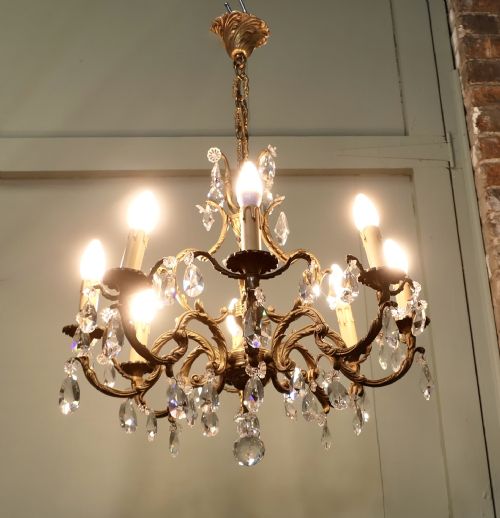
A french style brass chandelier brings weight and presence to a room, casting the warm light that only cast metal and crystal can manage.
French Style Brass Chandelier
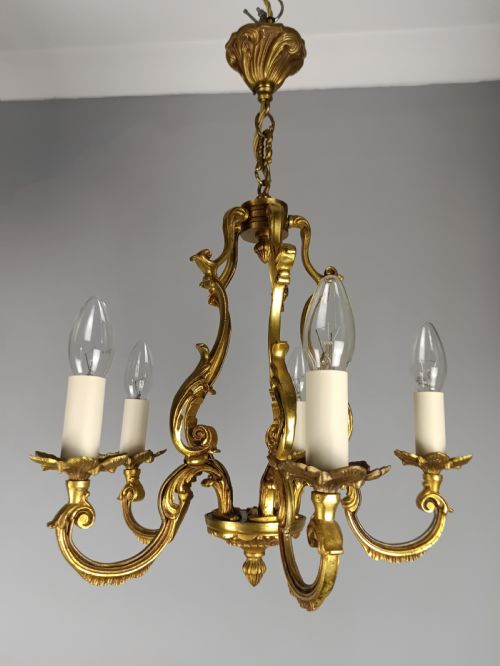
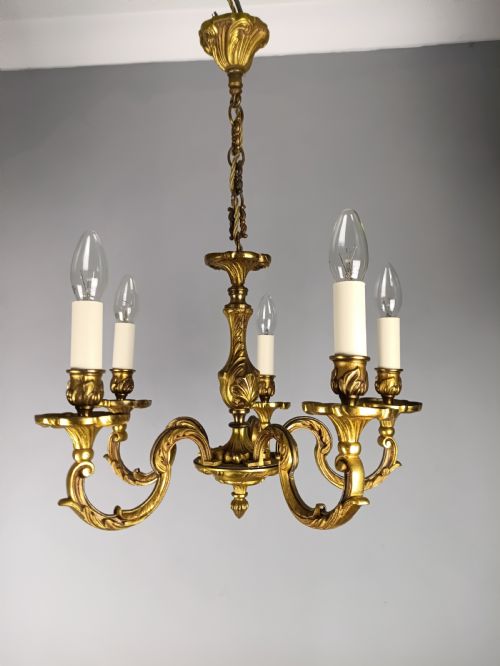
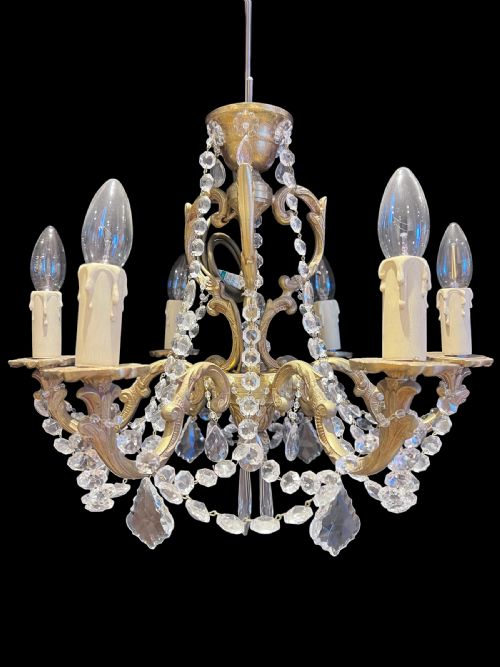
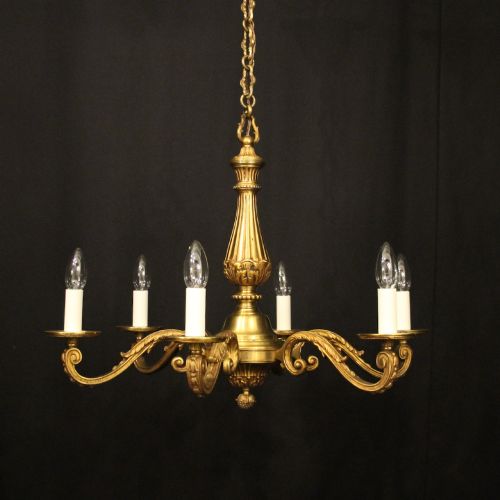
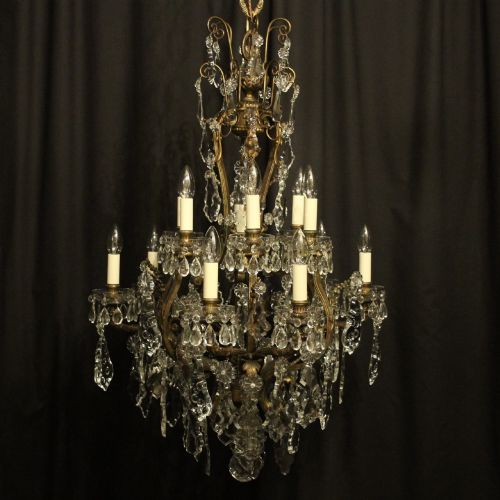
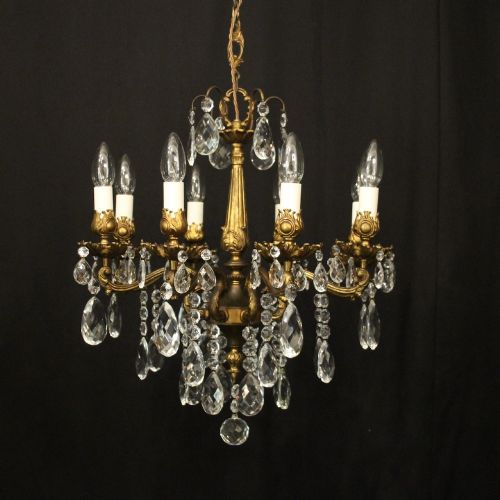
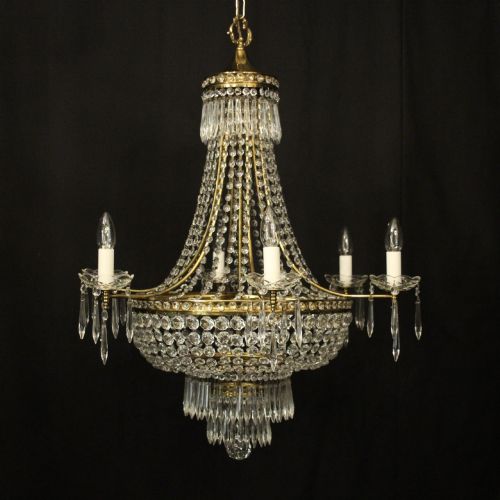
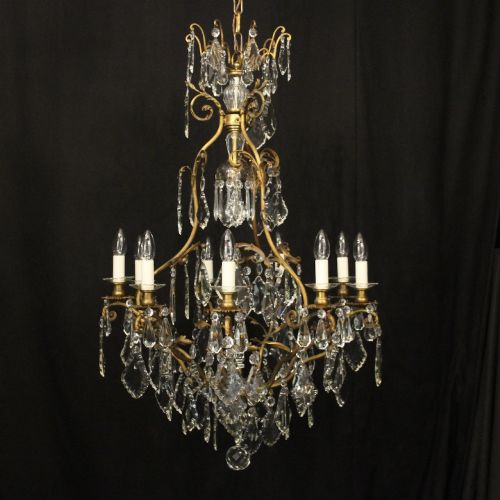
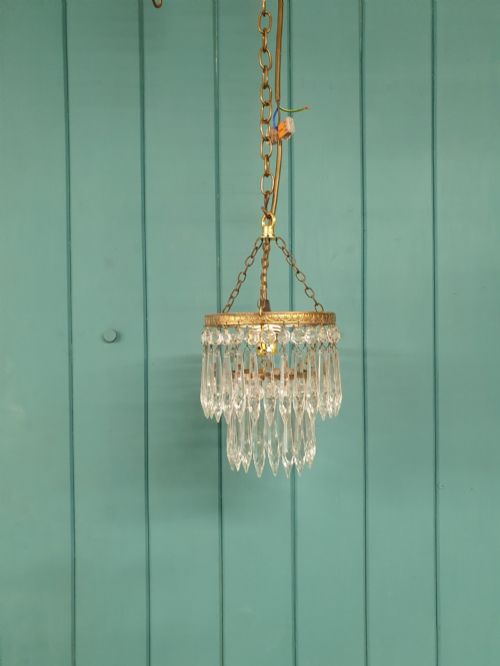
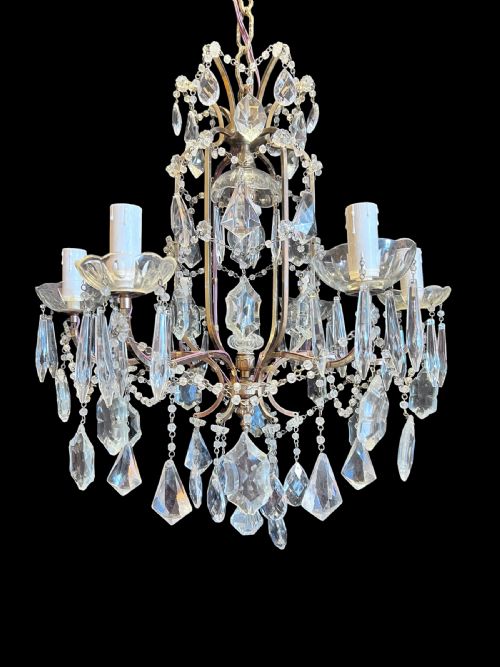
A french style brass chandelier gathers candle-arms or electric lights into arrangements of metal, bronze, and glass designed for grand spaces. When buyers search for a french style brass chandelier, they encounter pieces ranging from simple multi-arm fixtures to elaborate multi-tiered designs.
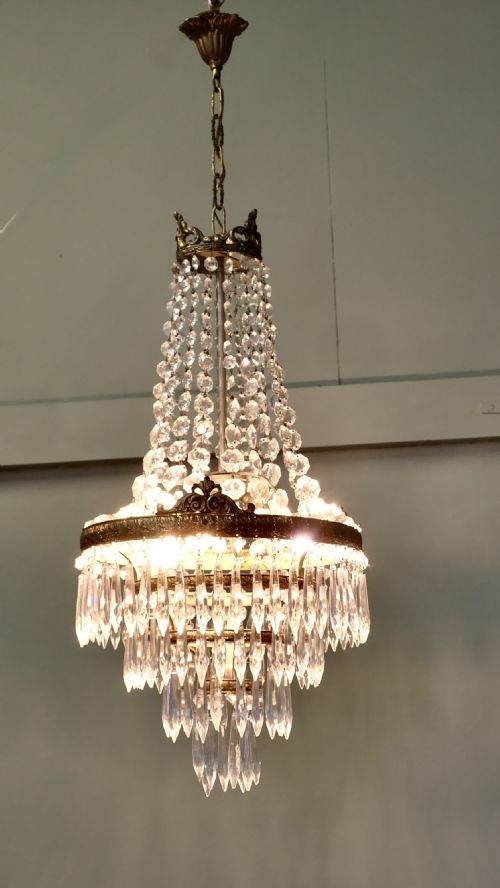
The selections span the nineteenth century through the early twentieth century, taking forms such as birdcage frames, tent and waterfall layouts, and classical revival lanterns. Most examples found here date from the Edwardian era up to the nineteen-thirties.
Makers and designers drew upon French Rococo, Empire, and Neoclassical vocabularies, applying them to domestic lighting with varying degrees of ornamentation.
Materials and Construction
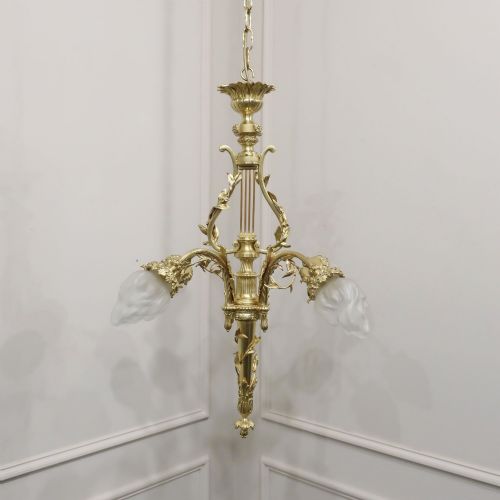
Foundries cast brass, bronze, and gilt metal into structural frames, arms, and decorative mounts, often finishing surfaces with gilding or silvering. Metalwork forms the rigid skeleton that supports the weight of glass components.
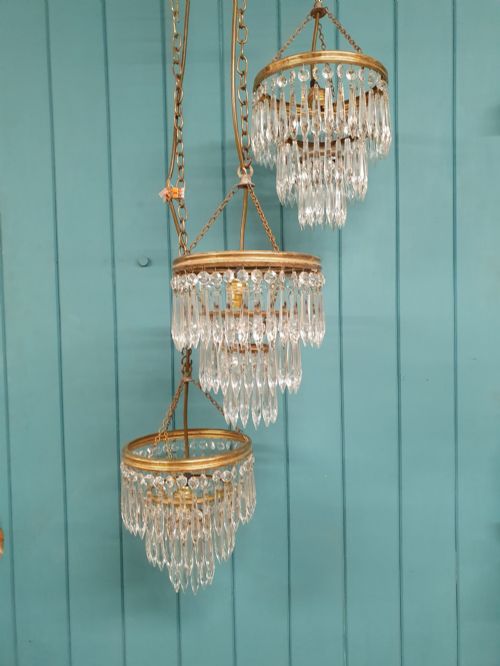
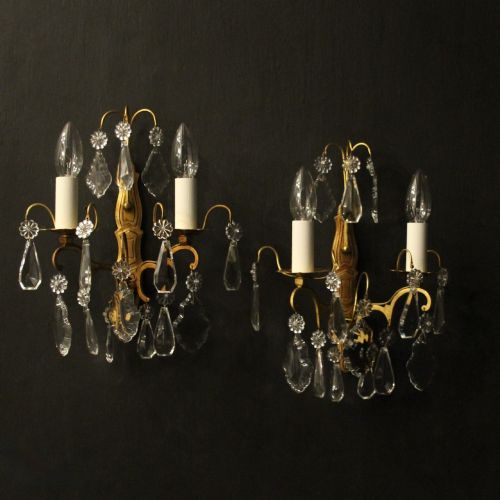
Cut glass and crystal lustres, drops, and beads hang from wire pins across the frame, catching and refracting the illumination from the bulb points. Alabaster, copper, and gesso also appear in specific decorative schemes alongside standard brass elements.
French Style Brass Chandelier Retail Price Guide 2026
Typical asking prices for french style brass chandelier among the pieces listed under this phrase on Sellingantiques today, from the lower quarter to the upper quarter. They describe what is for sale here now, not the wider market.
One winged cherub keeps silent watch over the room from a gilded perch.
Measures of Quality
The depth of chasing on cast bronze and brass components separates standard production from finer foundry work, determining how sharply leaf motifs and figures render. Heavier metal gauges and solid construction provide the structural integrity required to bear dense crystal arrays.
The completeness and quality of the glass components, from cut crystal drops to moulded domes and beads, define the visual richness of the fixture. Matching elements across every arm and tier indicate an intact, well-preserved piece rather than a later assembly.
G.E.C
The French Style Brass Chandelier Glossary
- Ormolu
- Gilded bronze produced through mercury amalgamation or electrogilding, giving metal a rich, matte gold surface. This finish protects the underlying bronze while offering a decorative sheen.
- Tent and waterfall
- A chandelier configuration where strings of crystal beads form a conical tent above a cascading ring of drops. This arrangement maximises light refraction across the lower tiers.
- Lustre
- A cut glass pendant or prism hung from the arms or crown of a lighting fixture. These elements scatter illumination around the room.
- Birdcage frame
- An open metal framework of vertical ribs resembling a cage, housing internal candle-arms and central shafts. The design directs attention toward the illuminated interior.
- Spike chandelier
- A compact hanging light featuring a central vertical spike surrounded by radiating arms. Such fixtures suit lower ceilings while retaining classical detailing.
French Style Brass Chandelier: Frequently Asked Questions
How do I hang a heavy chandelier?
Suspension requires fixing directly into ceiling joists or installing a designated weight-bearing metal hook behind the plaster. The weight of brass and crystal demands professional structural support.
Electrical connections should match the voltage requirements of the vintage wiring or updated internal fittings. An electrician ensures the installation meets safety standards before power runs to the fixture.
What is an Empire style chandelier?
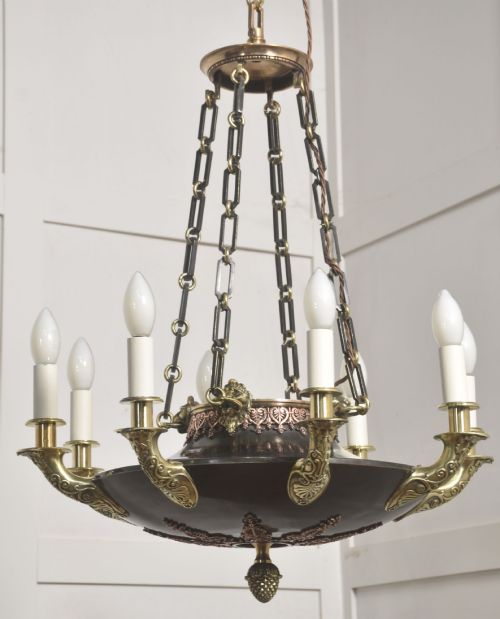
An Empire style chandelier draws on classical Roman and Greek motifs popular during the early nineteenth century, featuring strict symmetry and military symbols. These pieces often incorporate winged figures, laurel wreaths, and geometric mounts.
Later revivals replicated these imposing silhouettes using gilt brass, bronze, and heavy crystal fringes. The style suits high-ceilinged rooms requiring a formal focal point.
How should I clean crystal lustres?
Removing glass drops allows for gentle washing in warm water with a mild soap solution to clear away accumulated dust and grease. Each piece requires thorough drying with a lint-free cloth before reattachment.
Leaving the lustres in place during cleaning risks damaging the delicate wire pins connecting them to the brass frame. Working methodically section by section prevents mixing up drop sizes.
Are these fixtures wired for modern use?
Many surviving pieces retain older electrical cord or original candle tubes that require rewiring for safe domestic operation today. Professional electricians can adapt the internal channels without altering the external antique appearance.
Checking the lampholders ensures they accommodate contemporary bulb sizes securely. Modern earth grounding protects the metal frame from electrical faults.
What distinguishes Rococo revival lighting?
Rococo revival pieces embrace asymmetric curves, C-scrolls, and naturalistic plant motifs inspired by mid-eighteenth-century French design. The metalwork feels organic and fluid rather than rigidly symmetrical.
Foundries cast these frames in brass or gilt bronze with deep relief ornamentation. This expressive style contrasts with the restrained geometry of Neoclassical fixtures.