





French Shabby Chic Mirror
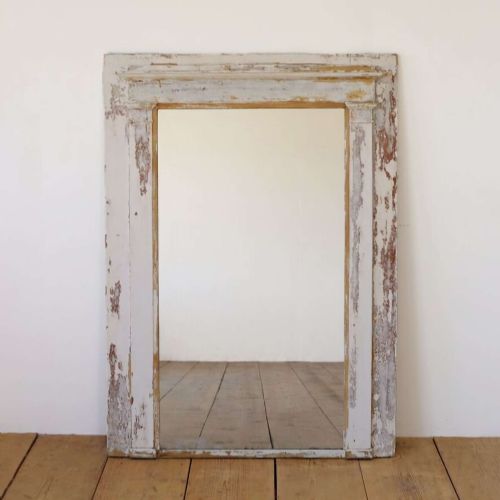
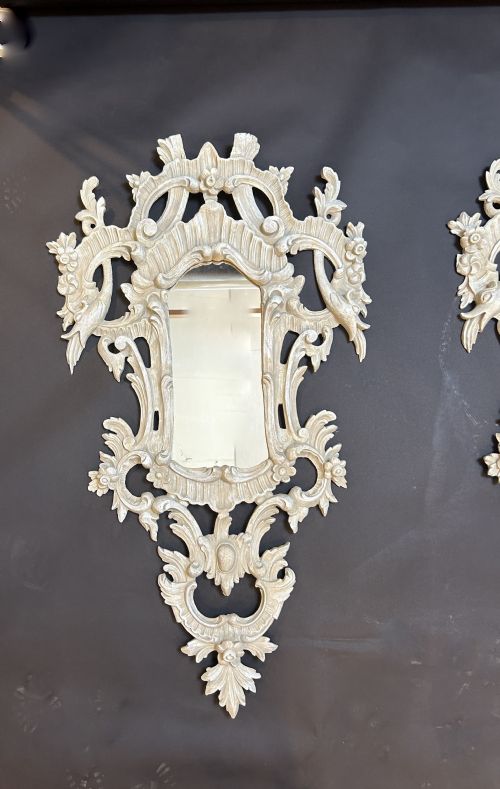
These french shabby chic mirror examples bring timeworn charm and painted elegance to a room, offering distressed surfaces and classic proportions.
French Shabby Chic Mirror
When buyers search for a french shabby chic mirror, they find wall mirrors and overmantel mirrors spanning the nineteenth century, Edwardian era and early twentieth century. The selection includes French Chateau, French Provincial and Rococo Revival styles alongside English Country and Victorian interpretations.
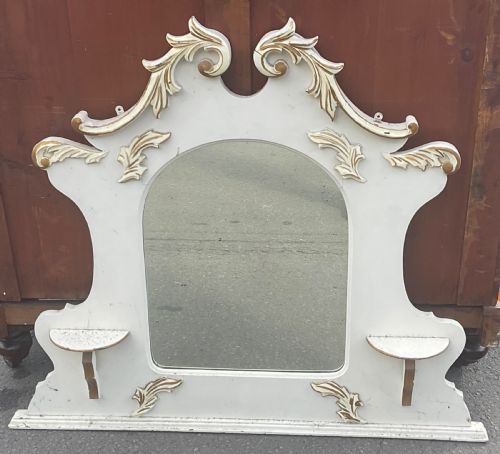
Most pieces on this page lean towards painted wood finishes with shaped or arched tops. Domestic forms range from smaller dressing mirrors to large architectural overmantel mirrors designed to sit above a fireplace.
Origins vary between continental workshops and English makers adopting continental aesthetic traditions. The prevalent format combines carved wooden frames with distressed painted surfaces and original or period mirror glass.
How they were made
Frames rely principally on solid pine or carved wood substrates built up with applied gesso to create sculptural relief work. Artisans carved scrolls, floral motifs and architectural crests directly into the wood or moulded them in gesso before finishing.
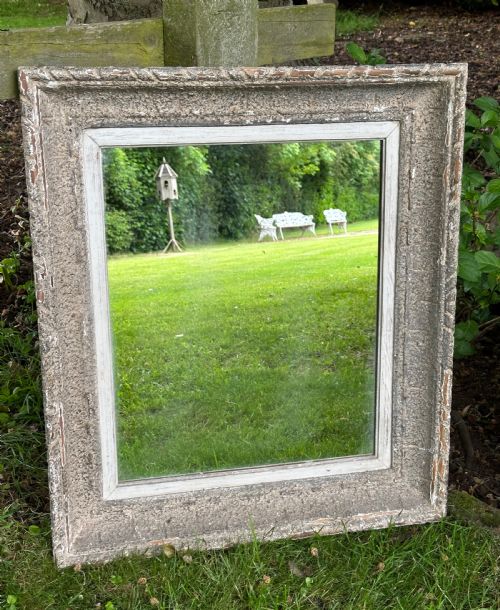
The decorative schemes utilise layered paint applications, often in white or pale tones, which have acquired natural crackle and wear over decades of use. Mirror glass plates are set within the rebated frames, secured at the rear by traditional wooden backing boards.
French Shabby Chic Mirror Retail Price Guide 2026
Typical asking prices for french shabby chic mirror among the pieces listed under this phrase on Sellingantiques today, from the lower quarter to the upper quarter. They describe what is for sale here now, not the wider market.
The predominant forms recorded across the inventory are wall mirrors and overmantel mirrors with painted finishes.
What varies in quality
Quality rests in the crispness of the original wood carving and the depth of the gesso mouldings rather than a uniform standard of finish. Pieces with finely proportioned arched crests and balanced scrollwork demonstrate superior artisan input compared to simpler utilitarian frames.
The integrity of the frame construction and the character of the aged mirror glass distinguish finer examples. Original glass retaining authentic foxing and oxidation commands greater appreciation than modern replacement plates.
The French Shabby Chic Mirror Glossary
- Gesso
- A plaster-based mixture applied to wood frames to create a smooth surface for gilding or painting. It allows intricate relief ornamentation to be modelled prior to finishing.
- Overmantel mirror
- A large mirror specifically designed to hang on the wall directly above a fireplace mantelpiece. These pieces often feature wide proportions to match the width of the fireplace below.
- Rococo revival
- A nineteenth-century design style drawing on eighteenth-century French motifs such as asymmetrical scrolls, C-scrolls and naturalistic floral elements. It heavily influences the curved frames found in this category.
- Foxing
- The age-related spots and discoloration that develop within antique mirror glass as the silver backing degrades. Collectors value authentic foxing for the atmospheric reflection it creates.
- Pine
- A soft timber commonly used as the primary structural wood for nineteenth-century mirror frames beneath layers of gesso and paint. It provides a stable yet workable base for carved details.
French Shabby Chic Mirror: Frequently Asked Questions
How do I hang a heavy overmantel mirror?
Large overmantel mirrors require secure fixing directly into wall studs or masonry using heavy-duty brackets suited to the weight of the timber and gesso frame. Professional installation is recommended to support the load safely.
Ensure the hanging wire or D-rings on the reverse are robust and inspected before mounting the piece above a fireplace.
Are the mirror plates original?
Many pieces retain their original glass, which often exhibits characteristic foxing, light scratching and soft reflections built up over a century or more. Some mirrors feature later replacement glass if the original became too degraded.
Examining the silvering at the edges helps determine whether the glass dates from the same period as the wooden frame.
How should I clean a painted wooden frame?
Dust the carved and gessoed surfaces gently with a soft, dry brush to prevent dirt accumulation in the crevices of the scrollwork. Avoid using chemical cleaners or excessive water, which can damage aged painted finishes.
Careful maintenance preserves the delicate patination and historical wear that define the character of these mirrors.
What defines a French Provincial style mirror?
French Provincial pieces reflect the simpler, more rustic interpretations of court styles used in regional homes outside Paris. They typically feature restrained carved decoration, arched tops and painted surfaces rather than heavy gilding.
This aesthetic prioritises domestic charm and graceful proportions over elaborate ornamentation.