




French Sewing Box
A french sewing box is a fitted receptacle for needles, threads and tools, prized for its intricate marquetry and clever internal compartments.
French Sewing Box
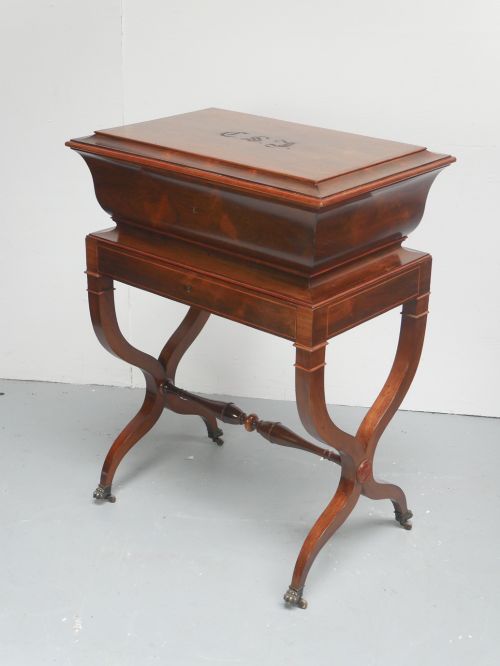
When searching for a french sewing box, buyers encounter an array of tabletop caskets, fitted work boxes and standalone sewing tables. These pieces date from the Regency and Victorian eras through to the Art Deco period of the nineteen thirties, reflecting shifting tastes in interior ornamentation.
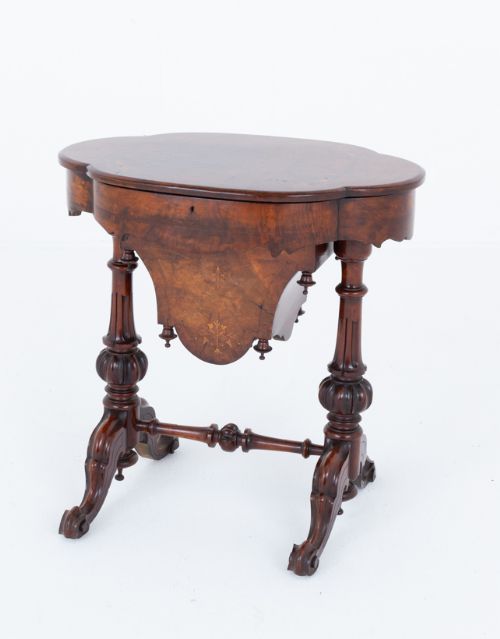
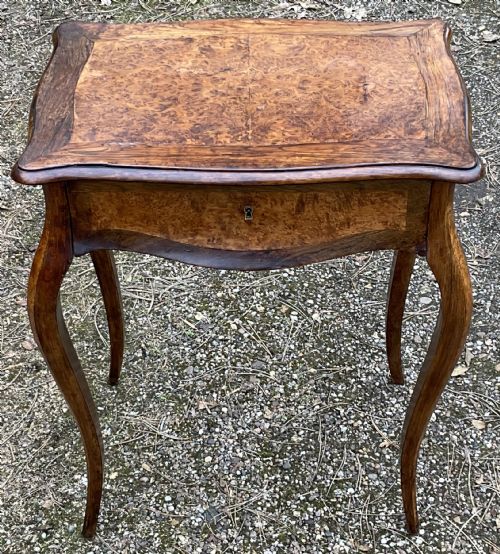
Tabletop boxes and caskets dominate the selection, often taking sarcophagus or rectangular forms. Alongside these, larger sewing tables and work tables appear, incorporating stands or drop-in storage bags for textile work.
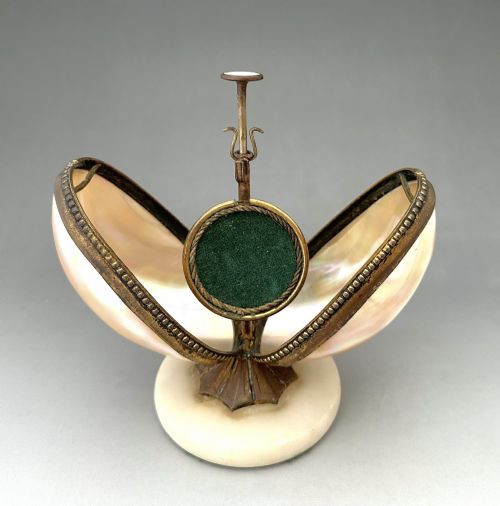
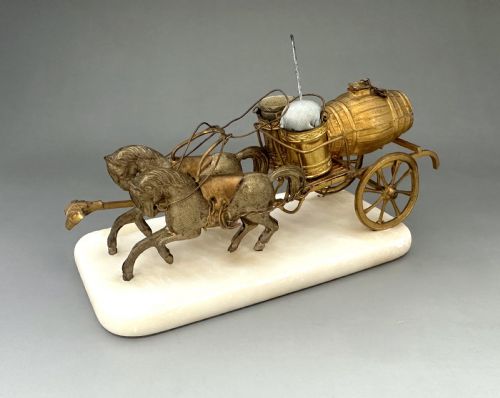
Origins trace directly to French workshops and retailers, with Palais Royal novelties representing a distinct subset of miniature companions. The surviving examples utilise fine timbers and decorative mounts to elevate a domestic implement into a luxury object.
How they were made
Cabinetmakers constructed the carcases from dense timbers including rosewood, walnut, kingwood and mahogany, frequently applying veneers of burl ash, tulipwood or ebony. Marquetry, brass stringing and boullework provide surface pattern on the finest examples.
Metalwork mounts in ormolu, brass and gilt bronze edge the lids and corners, whilst internal trays lift to reveal velvet or silk lined compartments designed to secure specialised tools.
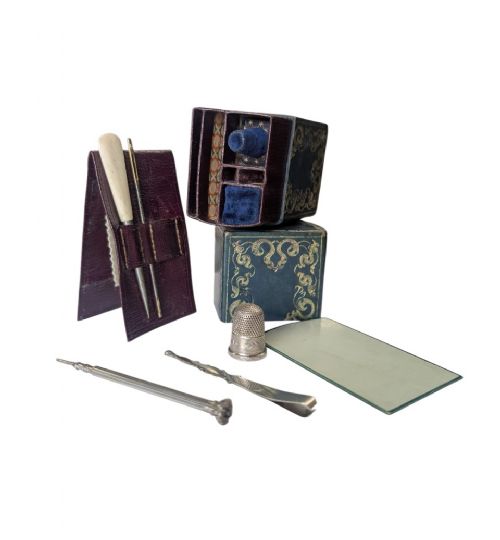
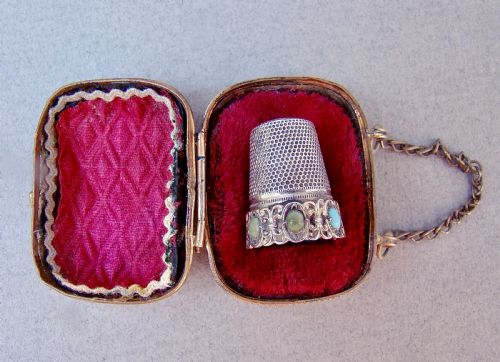
Fitted interiors house silver thimbles, mother-of-pearl or bone winders, scissors and etui cases, often secured within custom recesses.
Periods range from the Regency era through to Art Deco, encompassing Victorian revival styles.
What varies in quality
Quality rests upon the selection of timber veneers and the precision of the brass inlay or ormolu mounts. Finer pieces display crisp casting in the gilt bronze and tightly grained burr walnut or rosewood.
The completeness and originality of the internal fitments dictate the standing of a piece. Boxes retaining their matched set of mother-of-pearl or silver sewing implements command greater regard than those with empty compartments.
Structural integrity in the hinges, locks and drop-down stands separates standard production boxes from masterwork sewing tables.
Lesage
The French Sewing Box Glossary
- Etui
- A small ornamental case used for holding needles, scissors and other small implements. These fitted containers often form the centrepiece of Palais Royal novelties.
- Ormolu
- Gilded bronze used for decorative mounts and edgings on furniture and boxes. The technique involves applying a mercury and gold amalgam to cast bronze.
- Boullework
- A form of marquetry employing tortoiseshell and brass inlay, developed in France. It creates a rich, contrasting surface pattern across lid surfaces.
- Necessaire
- A comprehensive travelling case or box fitted with toilet or sewing requisites. They contain coordinated sets of silver or mother-of-pearl tools.
- Palais Royal
- A style and origin associated with luxury boutiques near the Palais Royal in Paris. These pieces often feature mother-of-pearl or shell construction.
French Sewing Box: Frequently Asked Questions
What tools belong inside a french sewing box?
Complete interiors typically contain silver thimbles, scissors, bodkins, needle cases and silk winders. Many boxes also feature small mirrors and matching jars.
These implements slot into velvet or satin lined trays that lift out to reveal deeper storage space beneath.
How do I date an antique french sewing box?
Dating relies on timber choice, hardware style and construction methods. Regency and early nineteenth-century pieces often utilise rosewood with brass inlay, while later Victorian examples favour burr walnut.
Lock stamps, key escutcheons and the style of internal silk linings provide further chronological clues.
What is a Palais Royal sewing box?
These are luxury novelty boxes originating from Parisian arcades during the early nineteenth century. They frequently feature mother-of-pearl, abalone shell or intricate bone carvings.
Collectors prize them for their miniature scale and inventive mechanical compartments.
Can I use a sewing table as a side table?
Stand-mounted sewing tables function well as compact side tables or occasional tables in a drawing room. Their fitted tops and lower work bags offer discrete storage for modern items.
Ensure the drop-in bag or lower compartment remains stable if used for daily placement.