




French Sevres Style Clock
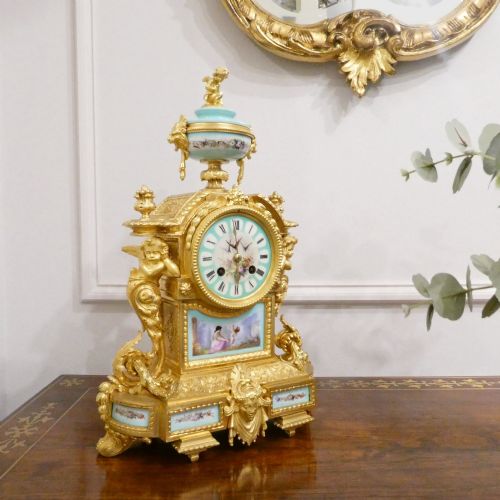
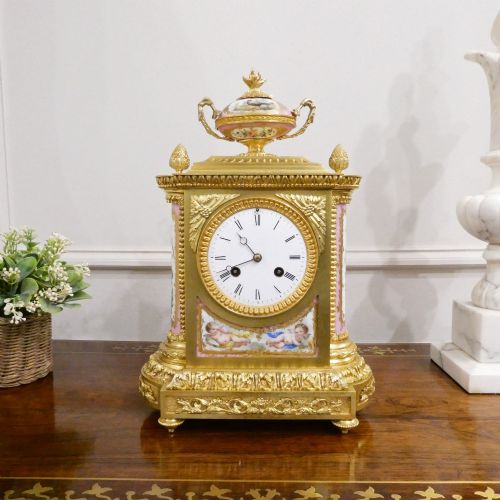
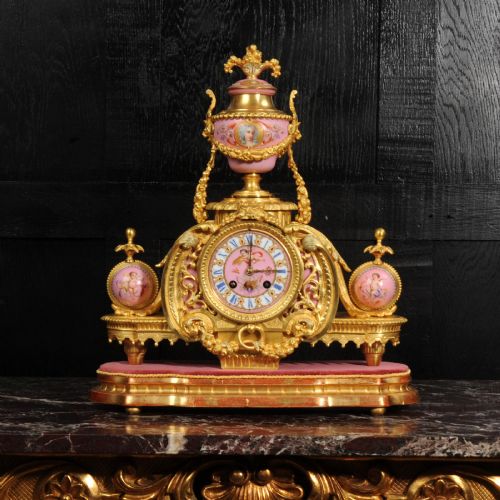
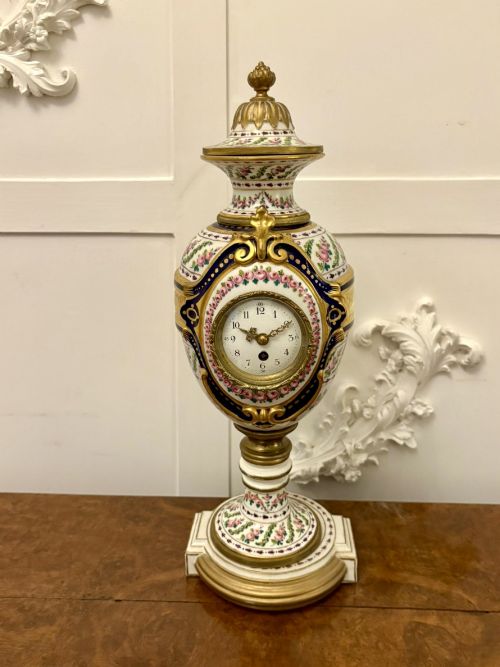
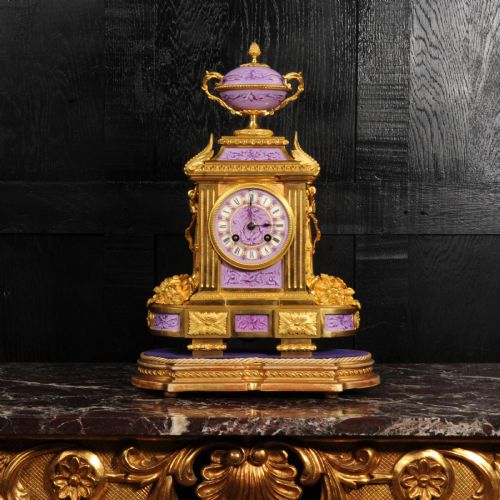
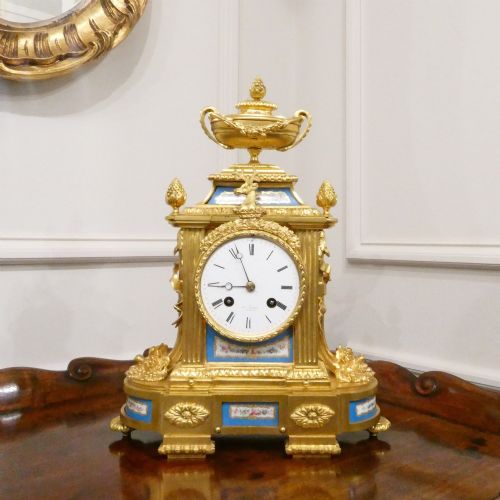
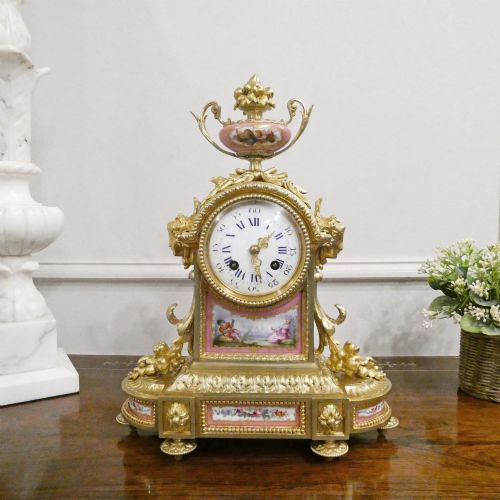
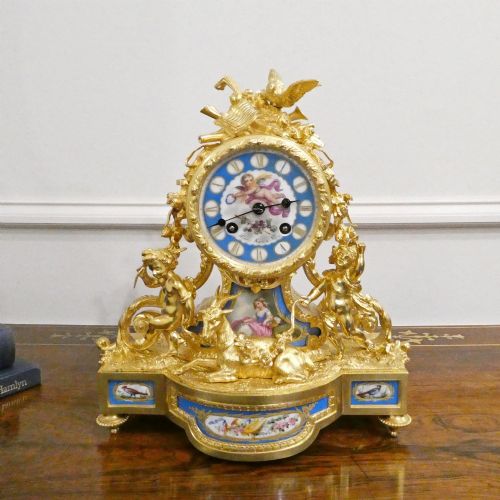
A french sevres style clock brings together heavy gilt metal and hand-painted porcelain panels to anchor a room.
French Sevres Style Clock
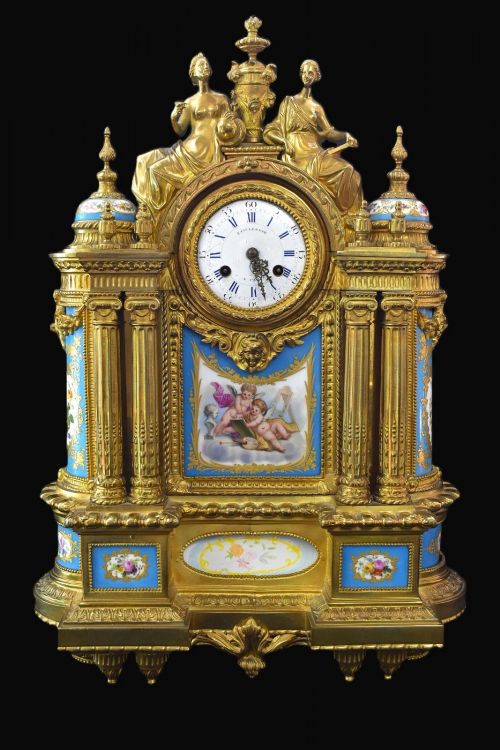
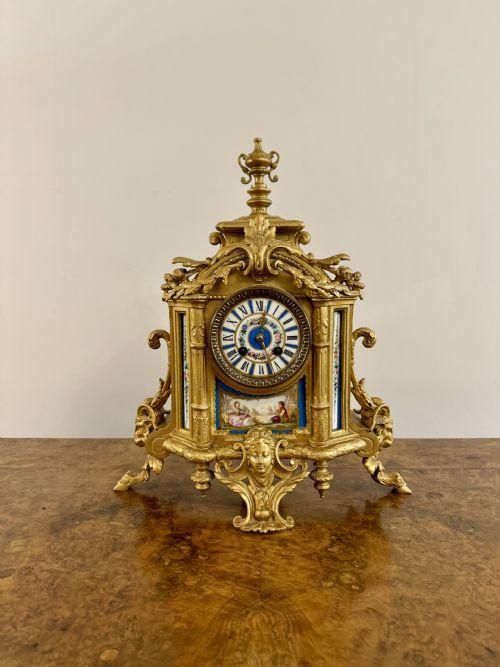
When you search for a french sevres style clock, you encounter nineteenth-century timepieces housed in ormolu, gilt bronze, or gilt metal frames paired with hand-painted porcelain plaques and dials.
The objects on this page span the Victorian era, Second Empire, and Napoleon III periods, drawing upon French Rococo Revival and Louis XVI style vocabularies.
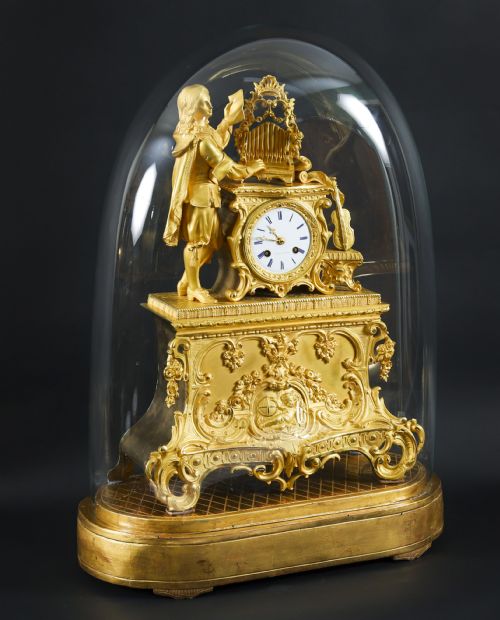
The form most frequently met is the mantel clock, often appearing alongside matching clock garnitures and sometimes protected beneath glass domes.
Materials and construction
These clocks combine cast bronze, ormolu, or gilt metal mounts with ceramic elements, utilising enamel for dial faces and porcelain for decorative panels.
Makers integrated brass clockwork movements behind glazed bezels, often mounting ceramic plates painted with figures or landscapes into the central body or base of the case.
Listings span the nineteenth century, with Victorian and Napoleon III periods most commonly represented alongside porcelain, ormolu, and glass.
Assessing quality
Quality rests in the crispness of the metal chasing and the detail of the hand-painted porcelain panels rather than mere size.
The finest examples feature signed movements by known makers, heavier fire-gilded bronze mounts, and undamaged enamel dials.
Jean-Baptiste Delettrez·Achille Brocot·Henry Marc·Japy Freres·Etienne Lenoir·Leroy Paris·PH Mourey·Le Roy and Fils·Vincenti of Paris
The French Sevres Style Clock Glossary
- Ormolu
- A gilded bronze technique utilising ground gold mercury amalgams, common on nineteenth-century French clock cases. It provides a warm, deep metallic lustre.
- Garniture
- A set of matching decorative objects, typically a clock flanked by two urns or candelabra. They were designed to sit together on a mantelpiece.
- Bleu de roi
- A rich dark royal blue glaze often found on porcelain panels. It serves as a contrasting backdrop for gilt highlights and painted scenes.
- Crystal regulator
- A mantel clock housed in a glass-panelled brass case allowing the movement and pendulum to be viewed from all sides. These gained popularity during the mid-nineteenth century.
- Drum head clock
- A timepiece featuring a circular drum-shaped housing for the movement elevated on a plinth or base. They frequently incorporate painted ceramic plaques.
French Sevres Style Clock: Frequently Asked Questions
How do I wind a french sevres style clock?
Most of these clocks utilise a key-wind mechanical movement with separate arbours for the timekeeping and striking trains. Insert the correct size winding key and turn gently until resistance is felt.
Avoid over-winding the springs, as this can cause damage to the internal mechanism. If the clock has been stationary, ensure it is set on a level surface before starting the pendulum.
Were these clocks always sold with garniture sets?
Clock garnitures were produced as matching decorative ensembles for grand nineteenth-century interiors. They provided a symmetrical arrangement across a fireplace mantel.
While many clocks survive alongside their original urns or sidepieces, others appear alone because sets became separated over time.
How do I distinguish Louis XVI style from Rococo Revival?
Louis XVI style clock cases display neoclassical restraint, featuring straight lines, architectural symmetry, urn motifs, and leaf-tip borders. They reflect an eighteenth-century revival popular during the nineteenth century.
In contrast, Rococo Revival pieces embrace asymmetry, C-scrolls, naturalistic foliage, and fluid, curving outlines derived from earlier French monarchical designs.
Should these clocks be kept under glass domes?
Glass domes protected nineteenth-century gilt surfaces and delicate porcelain panels from coal smoke, dust, and handling in period homes. Many surviving examples retain their original domes and circular wooden bases.
Keeping the clock beneath a dome helps preserve the fire-gilt finish and keeps dust out of the open mechanical movements.